
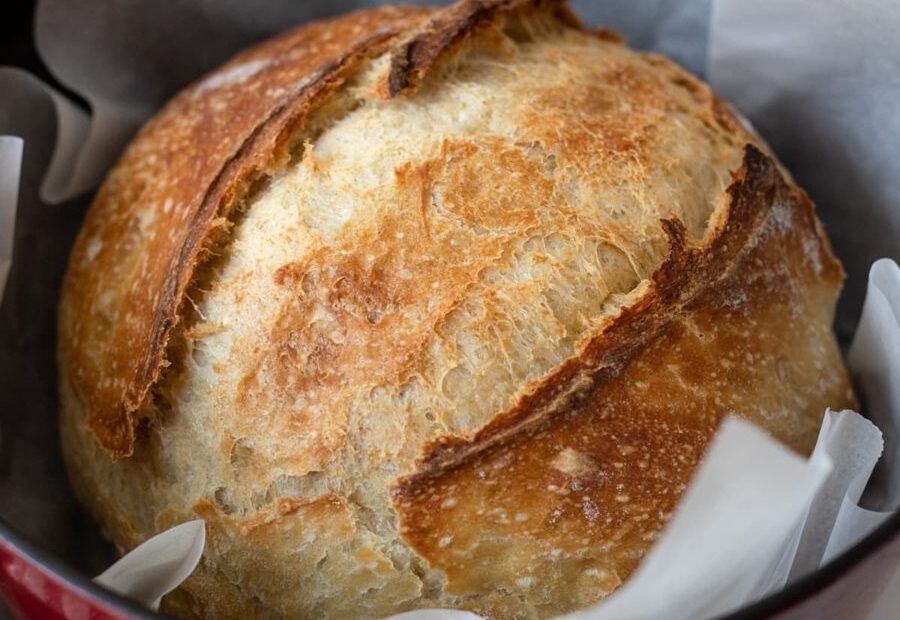
My first bread attempt was a dense brick that could have served as a doorstop. My tenth was a crackling, open-crumbed loaf that made the house smell like a bakery and my family look at me differently. The difference was not talent; it was finding the no-knead method, which removes every skill barrier beginners fear.
What is the easiest homemade bread recipe for beginners? No-knead bread: four ingredients, one bowl, almost no technique, extraordinary results. Here it is.
What Is the Easiest Homemade Bread Recipe for Beginners?
The recipe: 3 cups all-purpose flour, 1.5 teaspoons salt, 0.5 teaspoon instant yeast, 1.5 cups warm water. Mix until shaggy, cover, and let rise 12-18 hours at room temperature. That long, slow rise does the kneading for you; time develops the gluten and flavor that kneading shortcuts. Shape roughly, rest 30 minutes, then bake in a preheated Dutch oven at 450F: 30 minutes covered, 15 uncovered. The covered Dutch oven traps steam for a crackling crust and open crumb that tastes like a $8 bakery loaf.
Why this works for beginners: there is no kneading technique to learn, no windowpane test, no stand mixer. What is the easiest homemade bread recipe for beginners that forgives mistakes? This one, because time is the most forgiving ingredient. Too little yeast just means a longer rise; rough shaping still bakes into rustic charm; the Dutch oven compensates for oven inconsistencies. The failure modes are few: water too hot (kills yeast; aim for warm, not hot), or impatience (under-risen dough makes dense bread; when in doubt, wait longer).
- 4 ingredients, 1 bowl. Flour, salt, yeast, water. That is the whole list.
- 12-18 hour rise. Time replaces kneading. Mix at night, bake next day.
- Dutch oven at 450F. Trapped steam = crackling crust. The cheat code.
- 30 min covered, 15 uncovered. Cover for spring, uncover for color.
- Warm water, not hot. Hot kills yeast. Comfortably warm is right.
- Wait longer when in doubt. Under-risen is the #1 beginner mistake. Patience fixes it.
- Cool before slicing. 1 hour minimum. Cutting early ruins the crumb.
- Instant yeast simplest. No proofing needed. Mix directly into flour.
Troubleshooting the common beginner outcomes: dense brick usually means under-rising (give it more time, ensure the room is not cold) or old yeast (check the date; test in warm water with sugar if unsure). Pale soft crust means the Dutch oven was not fully preheated or the lid came off too early. Gummy interior means it was cut too soon or underbaked; verify with a thermometer (190-200F internal) until you learn the look and sound (hollow thump on the bottom).
Beyond the First Loaf
Once the basic loaf works, the variations are trivial: add a cup of shredded cheddar and diced jalapenos for cheese bread, fold in olives and rosemary for Mediterranean, swap a cup of flour for whole wheat (add a bit more water), or shape into rolls instead of a boule. The method stays identical; only the mix-ins change. Sourdough is the natural next step when you are ready, but it is a hobby, not a requirement; no-knead yeasted bread is a complete destination, not a stepping stone.
Storage: the crust stays crackling for day one, softens by day two (revive with 10 minutes in a hot oven). Slice and freeze what you will not eat in two days; frozen slices toast directly from frozen beautifully. Homemade bread has no preservatives, which is a feature nutritionally and a constraint practically; bake the size you will eat.
Quick Answers to Common Questions
Do I need a Dutch oven for no-knead bread?
It helps enormously for crust, but alternatives work: any heavy oven-safe pot with a lid, or a baking stone/steel with a pan of water for steam. The Dutch oven is the easiest path to great crust.
Why is my no-knead bread dense?
Usually under-rising: too short a rise, too cool a room, or dead yeast. Extend the rise time, find a warmer spot, and check yeast freshness. Patience is the fix.
Can I use whole wheat flour?
Yes, replace up to half the white flour; whole wheat absorbs more water, so add a few extra tablespoons. 100% whole wheat works but is denser; start with a blend.
How long does homemade bread last?
2-3 days at room temperature in a paper bag or bread box (plastic softens the crust). Slice and freeze for longer; refresh day-old bread in a hot oven.
My First Bread Checklist
- 4 ingredients, mixed shaggy. Flour, salt, instant yeast, warm water.
- Rise 12-18 hours. Covered, room temp. Time does the work.
- Dutch oven, 450F, fully preheated. Steam = crust. Do not skip preheat.
- 30 covered + 15 uncovered. Spring then color.
- Cool 1 hour before slicing. The hardest step. Respect it.
What I Would Do Next
Loaf ten changed my kitchen: the smell, the crackle, the absurd pride of slicing into something that looks like it came from a bakery. I bake two loaves most weeks now, and the 10 minutes of active work is the best cooking ROI in my repertoire. The brick phase is mandatory and brief; push through it, because loaf ten is waiting.
What is the easiest homemade bread recipe for beginners? No-knead: four ingredients, an overnight rise, and a hot Dutch oven. Ten minutes of work, bakery results.
Mix it tonight. Bake it tomorrow. Join the bread people.
The schedule that makes no-knead bread fit real life: mix the dough at 9pm (5 minutes), let it rise overnight 12 hours, shape at 9am, preheat the Dutch oven during the 30-minute rest, bake 45 minutes, cool while you make lunch. Fresh bread by early afternoon with almost no active time. For weekend baking, mix Friday night and bake Saturday morning. The long rise is flexible; 12 hours or 18 both work, so the dough waits for your schedule, not the reverse.
A kitchen scale ($15) is the single best upgrade for consistent bread: flour measured by volume varies wildly with scooping technique, while 400 grams is 400 grams every time. Bakers who weigh ingredients get consistent results; those who scoop get surprises. It is the cheapest precision in cooking, and it transforms bread from variable to reliable. Weigh the flour, and the brick phase ends permanently.
Related reading: How Do I Winterize My Home Before the Cold Season.
Related reading: What Are Cheap High-protein Meals for a Tight Budget.
Related reading: What Is the Best Way to Get Rid of Ants in the Kitchen.
For official guidance, check out FoodSafety.gov storage charts and USDA food safety guidance.



