
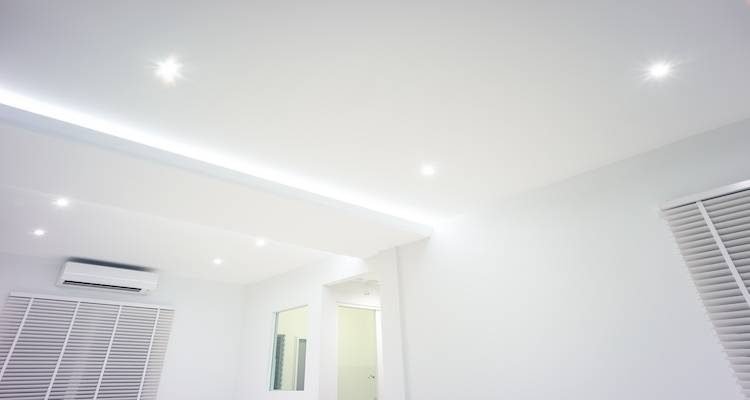
We added six recessed lights to our dark living room, and the transformation was so dramatic that guests assumed we had remodeled. The electrician was in and out in half a day, and the total was less than the sofa. Lighting is the cheapest architectural change you can make to a room.
How much does it cost to install recessed lighting? The real range: $100 to $300 per light installed, with most projects landing $150 to $200 per light. A six-light room therefore costs $900 to $1,500 professionally done.
How Much Does It Cost to Install Recessed Lighting?
The per-light cost breaks into the fixture ($15 to $50 for the can and LED trim; quality LED retrofits have gotten excellent and cheap), labor ($75 to $200 per light depending on access), and the electrical work (new circuits, switches, dimmers). Attic access above the ceiling makes everything cheaper; electricians fish wire easily and cut labor time in half. No attic access, or plaster-and-lath ceilings, pushes toward the top of the range because every wire run is a fishing expedition.
New construction versus retrofit matters enormously. How much does it cost to install recessed lighting in new construction or a full remodel? Often under $100 per light, because walls are open and wiring is trivial. Retrofit into finished ceilings is where the $150 to $300 range lives. If you are renovating anyway, add every light you might ever want; the incremental cost during construction is tiny compared to retrofitting later.
- Budget $150-$200 per light retrofit. Six lights: $900-$1,200. Attic access keeps you at the low end.
- Plan the layout before the electrician arrives. General rule: space lights 4-6 feet apart, 2-3 feet from walls. Mark positions with tape and live with them a day.
- Choose LED retrofits or integrated LEDs. $15-$30 per trim, 50,000-hour life, dimmable. The technology is mature; buy with confidence.
- Insist on IC-rated housings. Safe for contact with insulation. Non-IC cans near insulation are a fire hazard.
- Put them on dimmers. $25 dimmer switch transforms the room’s moods. Non-negotiable for living areas.
- Consider smart bulbs or switches. Tunable white light (warm to cool) is genuinely useful; bright cool for tasks, warm dim for evenings.
- Check for joists and obstacles. A stud finder and a peek into the attic prevent the electrician discovering your plumbing mid-cut.
- Get the permit if required. Many jurisdictions require permits for new circuits. Legitimate electricians handle this.
The DIY question: installing recessed lights is intermediate electrical work. If you are comfortable with circuits, breaker panels, and fishing wire, retrofit LED kits ($30 to $60 per light including housing) make it a manageable weekend project. If any of that sounds uncertain, hire it out; electrical mistakes burn houses down, and the labor cost is reasonable for the skill involved. Either way, turn off the breaker and verify with a tester. Every time.
Layout: Where Lights Actually Go
Bad recessed lighting layout is worse than none: lights marching in a rigid grid with no regard for furniture create a runway effect. Plan around the room’s use: general lighting in a loose grid for overall illumination, accent lights washing walls with art, task lights over kitchen counters and reading chairs. In kitchens, place lights over the counter edges rather than the room center, so your body does not shadow your work. In living rooms, fewer, dimmable lights beat many bright ones.
Color temperature matters as much as placement. Use 2700K-3000K (warm) for living areas and bedrooms, 3000K-3500K for kitchens and baths. Mixed color temperatures in one open space look wrong; keep it consistent. And buy all trims from the same product line; mismatched whites between manufacturers are visible.
Quick Answers to Common Questions
How many recessed lights do I need?
Rule of thumb: one light per 25-50 square feet for general lighting, spaced 4-6 feet apart. A 12×16 living room typically wants 6 lights. Task areas need denser, targeted placement.
Can I install recessed lighting myself?
If you are comfortable with electrical work, yes; retrofit LED kits simplify the job. New circuits and breaker panel work are best left to electricians. When in doubt, hire out.
Are recessed lights energy efficient?
Modern LED recessed lights use 8-12 watts each versus 65 for old incandescents, last decades, and produce minimal heat. They are among the most efficient lighting options available.
Do recessed lights add home value?
They improve perceived quality and saleability, especially in kitchens and living areas. Appraisers rarely add line-item value, but buyers consistently prefer well-lit homes.
My Recessed Lighting Checklist
- Budget $150-$200 per light. Six-light room: ~$1,000-$1,200 installed.
- Map layout with tape first. 4-6 ft spacing, planned around furniture.
- Specify IC-rated + LED. Safe with insulation, efficient, long-lived.
- Dimmers on everything. $25 switch, infinite moods.
- Consistent color temperature. 2700K-3000K living areas. Same product line.
What I Would Do Next
Our living room went from cave to gallery with six lights and two dimmers, and the $1,100 total remains one of the best spends on the house. Evening now has a setting, reading has a light, and the room finally matches the furniture in it. If your rooms feel flat no matter what you buy, the problem is probably the lighting, not the decor.
How much does it cost to install recessed lighting? $100 to $300 per light, typically $150 to $200 retrofit. Plan the layout around furniture, insist on IC-rated LED, and dim everything.
Light the room for how you live in it, and the room finally works.
A cost-saving strategy many homeowners miss: have the electrician install the housings and rough wiring during any attic or ceiling work, even if you are not ready for the finished trims. The labor-intensive part is the wiring; snapping in LED trims later is a DIY task. Staging the project this way splits the cost across time and lets you live with the layout before committing to final fixtures.
Related reading: How Can I Make a Small Bathroom Look Bigger.
Related reading: How Do I Plan a Surprise Anniversary Trip.
Related reading: How Do I Keep Avocados from Turning Brown.
For official guidance, check out the Department of Energy home efficiency guides and Family Handyman project walkthroughs.



