
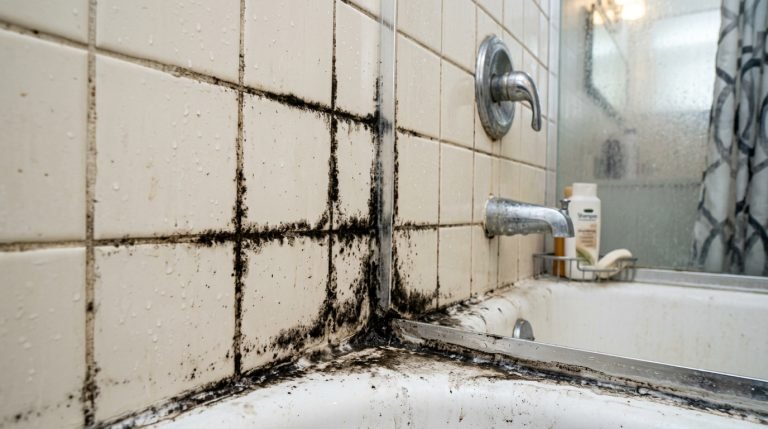
I found black mold creeping along our shower grout last winter, and my first instinct was pure panic followed by a deep internet dive that made it worse. Mold advice online ranges from spray some vinegar to evacuate immediately, and almost none of it tells you which situation you are actually in.
Here is what to do about mold in your bathroom, calibrated to reality: most bathroom mold is a surface problem you can handle safely, a small minority is a call-a-pro problem, and telling the difference is the whole game.
What Should I Do About Mold in My Bathroom?
First, assess what you are looking at. Surface mold on grout, caulk, or tile, the classic black or pinkish spotting in a shower, is almost always manageable DIY. It is feeding on soap scum and moisture on the surface, not eating your walls. Mold covering a large area (roughly more than 10 square feet), mold on drywall or ceilings that keeps returning after cleaning, or a musty smell with no visible source suggests moisture inside the wall cavity, and that is professional territory. Also call a pro if anyone in the home has serious respiratory conditions or mold allergies; the health risk calculus changes.
For surface mold, the removal process is straightforward. What should I do about mold in my bathroom on tile and grout? Scrub with a mold-killing cleaner: concrobium-type products, hydrogen peroxide, or a borax solution all work. Bleach kills surface mold on non-porous tile but does not reach into porous grout, and it does not prevent regrowth, so it is overrated for this job. Apply the cleaner, let it dwell 10 to 15 minutes, scrub with a stiff brush or old toothbrush, rinse, and dry completely. For moldy caulk, removal and replacement beats cleaning; cut out the old caulk, clean the joint, let it dry fully, and recaulk with a mold-resistant silicone.
- Ventilate every shower. Run the exhaust fan during and 20-30 minutes after every shower. This single habit prevents most bathroom mold.
- Squeegee the shower after use. Thirty seconds with a squeegee removes the moisture mold feeds on. Keep it in the shower as a reminder.
- Fix the exhaust fan if it is weak. Hold tissue to the fan; if it does not stick, the fan is not moving air. Upgrade to a properly sized fan (1 CFM per square foot minimum).
- Scrub surface mold with the right cleaner. Hydrogen peroxide, borax solution, or a commercial mold remover. Dwell, scrub, rinse, dry.
- Replace moldy caulk, do not just clean it. Cut it out, dry the joint completely, recaulk with mold-resistant silicone.
- Wash shower curtains and liners monthly. Fabric curtains go in the washing machine; plastic liners soak in the tub with cleaner.
- Keep grout sealed. Sealed grout resists moisture penetration. Reseal annually in the shower.
- Leave the shower door open after use. Airflow dries everything faster. Closed doors trap humidity.
Prevention is the real cure, because bathroom mold is a moisture problem wearing a mold costume. The exhaust fan is the hero: properly sized, vented outside (not into the attic), and run long enough. If your bathroom has no fan, a small dehumidifier or even leaving the door open with a fan circulating air helps enormously. Fix dripping faucets and showerheads too; constant moisture from a drip creates permanent mold habitat.
When to Call a Professional
Call a mold remediation professional if: the affected area exceeds about 10 square feet, mold returns rapidly after thorough cleaning (indicating moisture behind the surface), you see mold on drywall, ceilings, or inside walls, there is a persistent musty odor you cannot source, or anyone in the home has asthma, immune issues, or severe mold allergies. Professional remediation typically costs $500 to $3,000 for bathroom-scale jobs, and legitimate pros contain the area, find the moisture source, and remove affected materials rather than just spraying and painting over.
Be wary of anyone who proposes painting over mold with regular paint, or who cannot explain the moisture source. Mold without moisture is just staining; the water is always the story.
Quick Answers to Common Questions
Is bathroom mold dangerous?
Most common bathroom surface molds are allergens and irritants rather than serious toxins, but they can aggravate asthma and allergies. Large infestations or mold inside walls deserve professional assessment. When in doubt, especially with health conditions in the home, get an expert opinion.
Does bleach kill bathroom mold?
On hard non-porous surfaces, yes. On porous grout and drywall, it kills surface growth but leaves roots, so mold returns. It also does not prevent regrowth. Dedicated mold removers or hydrogen peroxide work better for bathrooms.
Why does mold keep coming back in my shower?
Because the moisture keeps coming back. Recurring mold means inadequate ventilation, unsealed grout, or a hidden leak. Fix the moisture and the mold stops; clean without fixing moisture and it returns on schedule.
How do I prevent mold in a bathroom with no fan?
Maximize airflow: leave the door open during and after showers, use a portable fan, squeegee surfaces, and consider a small dehumidifier. Long-term, installing a proper exhaust fan vented outside is the real fix.
My Mold Action Checklist
- Assess the scope honestly. Surface spots: DIY. 10+ sq ft or in walls: call a pro.
- Ventilate every single shower. Fan on during + 20-30 min after. Non-negotiable.
- Scrub with real mold killer. Dwell 10-15 min, scrub, rinse, dry completely.
- Replace bad caulk. Cut out, dry, recaulk with mold-resistant silicone.
- Fix the moisture source. Fan size, leaks, sealing. No moisture, no mold.
What I Would Do Next
Our shower has been mold-free for eighteen months now, and the difference was not a miracle cleaner. It was the $40 timer switch I put on the exhaust fan so it runs 30 minutes after every shower automatically, plus the squeegee that lives in the shower. Mold is a moisture problem. Solve the moisture and the mold solves itself.
What to do about mold in your bathroom: assess honestly, clean surface mold properly, replace bad caulk, and above all fix the ventilation. The fan is the cure; the scrub brush is just symptom relief.
Run the fan, squeegee the shower, and stop feeding the mold. It really is that simple.
Related reading: How Do I Winterize My Home Before the Cold Season.
Related reading: How Do I Know When Salmon Is Fully Cooked.
Related reading: How Can I Prevent Ice Dams on My Roof in Winter.
For official guidance, check out Family Handyman project walkthroughs and This Old House how-to articles.



