
I lived next to a drummer for a year. Not a professional drummer with a studio, a hobbyist drummer with enthusiasm and no schedule. I tried earplugs, white noise, and resentment, in that order. Then I spent $200 on actual soundproofing, and the drums went from a concert to a rumor.
How to soundproof a bedroom on a budget starts with understanding what you are fighting, because different noises need different fixes, and most cheap advice targets the wrong one.
How Can I Soundproof a Bedroom on a Budget?
The key concept is simple: sound gets in through air gaps first and through mass second. The biggest noise leak in any bedroom is not the wall; it is the gaps around the door, the window seals, electrical outlets, and vents. Sealing air gaps is the highest-impact cheap fix in soundproofing. A $15 door sweep and $10 of weatherstripping around the door frame can cut perceived noise dramatically, because a 1% air gap transmits a shocking percentage of sound. Do the gaps before you buy a single acoustic panel.
Next, add mass where it is cheapest. How can I soundproof a bedroom on a budget beyond sealing? Heavy curtains over windows ($40 to $100) dampen outside noise and look good doing it. A thick rug with a dense pad ($80 to $150) kills impact noise and echo. Bookshelves filled with books against a noisy shared wall add mass for the price of furniture you wanted anyway. Moving the bed away from the shared wall and placing soft furniture against it costs nothing and helps noticeably.
- Seal the door gaps first. Door sweep plus weatherstripping, ~$25. The highest-impact cheap fix, full stop.
- Weatherstrip the windows. $10-$20 in foam tape. Old windows leak sound like sieves.
- Hang heavy curtains. Floor-to-ceiling, dense fabric, $40-$100. Dampens outside noise significantly.
- Add a thick rug with dense pad. Kills echo and impact noise. The pad matters as much as the rug.
- Furnish the noisy wall. Full bookshelves against a shared wall add mass cheaply.
- Seal outlets and switches. Foam gaskets behind cover plates on exterior and shared walls, pennies each.
- Use acoustic caulk on gaps. Baseboards, window trim, any crack. $10 a tube, stays flexible.
- Rearrange the room. Bed on the quietest wall, soft furniture against the noisy one. Free.
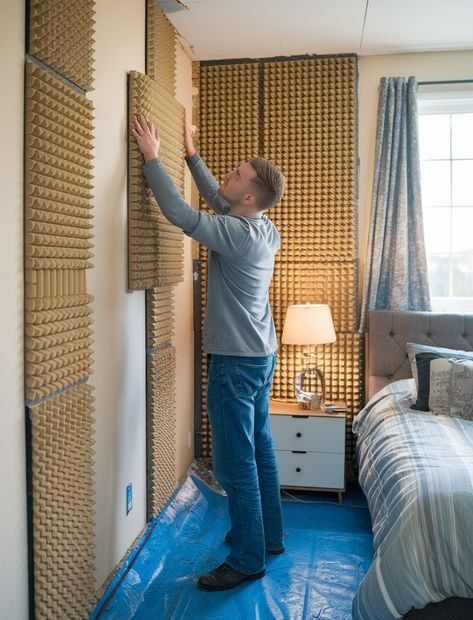
What about acoustic foam panels? They are the most misunderstood product in budget soundproofing. Foam panels reduce echo inside your room; they barely block sound coming through walls. They are for recording quality, not neighbor noise. If your problem is hearing the neighbors, spend on seals and mass. If your problem is your room sounding echoey on calls, then foam or soft furnishings help. Buy for the problem you actually have.
When Budget Fixes Are Not Enough
Honest limits: budget soundproofing reduces noise; it does not eliminate it. You can realistically cut perceived noise by 30 to 50% with sealing and soft treatments. True soundproofing, the kind that silences a drummer, requires construction: double drywall with Green Glue, decoupled walls, sealed double-pane windows. That is $2,000 to $5,000 per room and genuinely works. The budget approach makes life livable; the construction approach makes it silent. Know which one your situation needs before spending.
For sleep specifically, combine modest soundproofing with a white noise machine. The machine does not block sound; it raises the background floor so intermittent noises stop waking you. Together with sealed gaps, it is the budget sleeper’s complete system.
Quick Answers to Common Questions
Do acoustic foam panels block neighbor noise?
Barely. Foam absorbs echo inside your room; it does not add meaningful mass to block sound transmission. For neighbor noise, prioritize sealing gaps and adding mass.
What is the cheapest effective soundproofing?
A door sweep and weatherstripping, about $25 total. Air gaps transmit more sound than walls do, so sealing them is the best dollars-to-decibels ratio.
Can I soundproof a rental bedroom?
Yes, with removable solutions: door sweeps, weatherstripping, heavy curtains, rugs, and furniture arrangement. Avoid anything that damages walls; use removable acoustic caulk alternatives and tension rods.
Does white noise actually help?
For sleep, yes. It masks intermittent sounds by raising the background level, so a door slam no longer spikes above silence. It complements physical soundproofing rather than replacing it.
My Soundproofing Checklist
- Sweep and weatherstrip the door. $25. Do this before anything else.
- Seal windows and outlets. Foam tape and gaskets. Cheap and effective.
- Hang heavy curtains. Dense, floor-to-ceiling, over the noisiest windows.
- Rug with dense pad. Kills echo and footfall noise.
- Mass on the noisy wall. Bookshelves, furniture. Rearrange for free first.
What I Would Do Next
The drummer moved out eventually, as drummers do. But the soundproofing stayed, and so did the better sleep. My bedroom is now the quietest room in the house, and the whole project cost less than a decent pair of noise-canceling headphones. Seal the gaps, add the mass, and reclaim your quiet.
How to soundproof a bedroom on a budget: seal every air gap first, then add mass with curtains, rugs, and furniture. $200 and a weekend buys dramatically better quiet.
Start with the door sweep tonight. It takes ten minutes, and you will hear the difference before bedtime.
For renters and the desperate, there is also the masking layer: a white noise machine plus soft foam earplugs together handle more than either alone. The machine covers intermittent sounds like doors and voices, while the earplugs take the edge off constant low-frequency hum. It is not soundproofing, but on the nights the neighbor’s schedule collides with yours, the combination is the difference between sleep and staring at the ceiling.
Related reading: What Is the Difference Between Baking Soda and Baking Powder.
Related reading: How Much Does It Cost to Install a Ceiling Fan.
Related reading: What Are Easy Desserts with Only Three Ingredients.
For official guidance, check out the Department of Energy home efficiency guides and Family Handyman project walkthroughs.



