
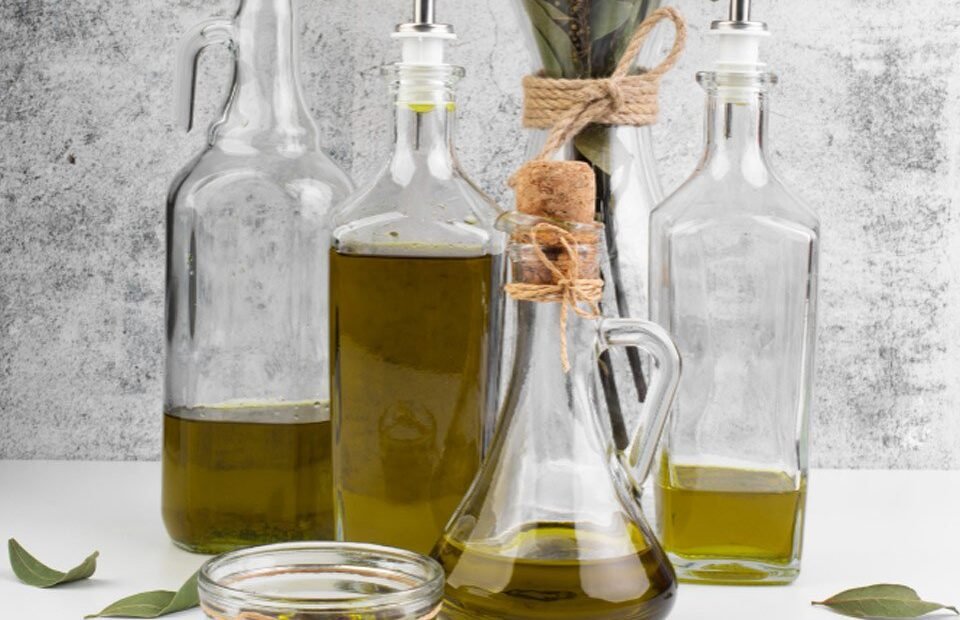
A dozen bottles line the oil aisle, every one of them claiming to be the healthy choice, and they cannot all be right. The confusion is manufactured: “healthy” on an oil label bundles together three separate questions — what the fat profile looks like, how much heat the oil survives before it breaks down, and how heavily it was processed — and different oils win each one. Separate the questions and the ranking mostly builds itself. What follows weighs the main bottles on nutrition evidence, versatility, and price, and ends with the only conclusion that survives contact with a real kitchen: the healthiest setup is not one bottle, but two or three, each doing the job it is actually good at.
The three tests every oil has to take
Fat profile. Nutrition research consistently favors oils rich in monounsaturated fats — olive and avocado are the standard examples — linking them to better heart-health markers than fats heavy in saturation, with polyunsaturated oils (canola, soybean, sunflower) generally preferred over saturated ones as well. Smoke point. The temperature where an oil starts smoking and breaking down; push past it and the oil tastes bitter and produces compounds nobody wants in dinner. An oil can be nutritionally excellent and still be the wrong tool for a screaming-hot pan. Processing. Cold-pressed and minimally refined oils keep more natural antioxidants and flavor; heavily refined oils are neutral and heat-tolerant but stripped of character. Harvard’s Nutrition Source guide to fats and cholesterol is the sober reference behind the first of these tests.
1. Extra-virgin olive oil — the everyday default
The best-studied bottle on the shelf. Large studies of Mediterranean-style eating patterns, where olive oil is the main fat, consistently associate it with healthier cholesterol numbers and lower rates of heart disease. For sautéing, roasting, eggs, and dressings it is the default answer. Its limit is thermal: a smoke point around 375°F handles medium heat comfortably but not a ripping-hot sear, where it smokes and turns bitter. Buy it with a harvest date on the label if you can; a peppery bite at the back of the throat signals fresh, antioxidant-rich oil.
2. Avocado oil — the high-heat specialist
Mild, buttery, monounsaturated like olive oil, and refined versions carry a smoke point near 500°F — the highest of any common cooking oil. This is the searing and roasting bottle, the one that makes how to make crispy fried chicken at home and hard-seared steaks possible without a smoking kitchen. The honest con is price: it costs several times what canola does, which argues for reserving it for high-heat work rather than deep frying or bulk use.
3. Canola oil — the budget workhorse
Neutral flavor, a decent fat profile with relatively low saturated fat, and a smoke point around 400°F that covers most weeknight cooking, for a few dollars a bottle. There is a reason restaurant kitchens lean on it. It wins no superfood contests and loses no practical ones either; for households watching cost per meal, it is the rational neutral oil. Peanut oil deserves a mention in this tier: about 450°F smoke point, a fryer favorite with a clean taste — with the standing caveat about peanut allergies when cooking for guests.
The numbers on one line each
For the refrigerator door, the smoke points that drive the ranking: extra-virgin olive oil around 375°F; canola around 400°F; peanut around 450°F; refined avocado around 500°F. Set against cooking reality — sautéing lives near 300 to 350°F, roasting at 400 to 450°F at the pan surface is gentler than the dial suggests, and only hard searing and deep frying genuinely approach 450°F and beyond — the practical conclusion is that olive oil covers more of real cooking than its reputation admits, and the high-heat bottle is a specialist called on for specific jobs: the steak sear, the wok, the fryer. One refinement matters: smoke points vary with an oil’s quality and freshness, and an old, oxidized olive oil smokes well below 375°F — which is a storage failure, not an indictment of the oil. When an everyday oil starts smoking early and smelling faintly of crayons or old nuts, it is rancid, and the healthy choice is the bin, whatever the label once promised.
Reading the label like the aisle hopes you won’t
Three label habits repay learning. First, “light” olive oil means light in flavor and color — it is refined olive oil, not lower in calories; every oil on the shelf is about 120 calories a tablespoon, and the differences that matter are fats and smoke points, not calories. Second, blends hide in plain sight: bottles labeled simply “olive oil” are usually a small share of extra-virgin stretched with refined oil, which is fine for cooking but should not be priced or used like the real thing. Third, harvest or best-by dates beat branding: oil is an agricultural product that declines from the day it is pressed, and a dated bottle from a modest producer routinely outperforms an undated famous one. Country-of-origin lines deserve a glance too, mostly as a freshness proxy — the shorter the journey, the younger the oil is likely to be. None of this requires expertise; it requires reading the back of the bottle with the same suspicion the front of the bottle was designed to prevent.
The specialists and the demoted
Toasted sesame oil is not a cooking oil at all but a finishing oil: a teaspoon at the end of a stir-fry or noodle dish adds more flavor than a quarter cup of neutral oil in the pan, and heat destroys what makes it special. Coconut oil is the ranking’s demotion: at more than 80 percent saturated fat — higher than butter — it belongs in specific recipes (curries, certain baking) as a specialty item, not as a daily driver, whatever its marketing says. Flaxseed oil is rich in omega-3s but has a very low smoke point; it lives in the fridge and goes into dressings and smoothies, never a pan.
What about butter, ghee, and the animal fats?
A ranking of bottled oils leaves the animal fats standing in the doorway, and they deserve an honest sentence rather than exile. Butter is nutritionally a saturated fat, similar in profile to the coconut oil this ranking demotes — and it remains irreplaceable in specific cooking, because its milk solids brown and flavor in ways no oil imitates: eggs, pan sauces, baking, the finish on vegetables. Ghee, its clarified form, removes those solids and gains a high smoke point in exchange, which is why it anchors high-heat cooking in Indian kitchens; it keeps the saturated profile while losing the browning. Lard and tallow, rendered and traditional, sit in the same saturated family — superb in pastry and frying respectively, and best treated like coconut oil: as deliberate choices for particular dishes, not default cooking mediums. The ranking’s logic does not banish them; it assigns them the role the specialists already have. The everyday default is a plant oil rich in monounsaturated fat; the animal fats are guests with famous talents, invited for specific performances. A kitchen that understands that sentence has understood the aisle.
A closing word about quantities, because the healthiest oil used by the cup defeats its own ranking. All of these fats are energy-dense in the same measure; the ranking orders them for the cooking a household actually does, it does not license more of them. The Mediterranean pattern that makes olive oil look so good in the research is not an olive-oil drinking pattern — it is a vegetable-, legume-, and fish-centered diet in which olive oil is the principal fat, used with a cook’s normal restraint. Swapping the frying medium while leaving the rest of the plate untouched buys the smallest part of that evidence. The bottle matters; the pattern matters more; and the cook who has read this far is evidently interested in both, which is the correct order of operations applied to dinner itself.
The verdict: the two-bottle kitchen
Stock one mid-priced extra-virgin olive oil for dressings and medium heat, and one neutral high-heat oil — avocado if the budget allows, canola if it does not — with a small bottle of toasted sesame for finishing if your cooking leans that way. Three bottles cover everything from salad to stir-fry. Two storage rules matter more than brand: buy sizes you will finish within a couple of months, because oil goes rancid; and store bottles in a cool, dark cabinet, not beside the stove, where heat cycles age them fast. The aisle’s dozen loud claims collapse into a simple answer — match the oil to the heat, favor the monounsaturated ones, and let no single bottle pretend to be all three. Buy the two bottles on the next trip to the store, write the opening date on each label with a marker, and let the smoke alarm retire, at long last, from its second job as the kitchen’s least diplomatic oil critic.


1 Comment