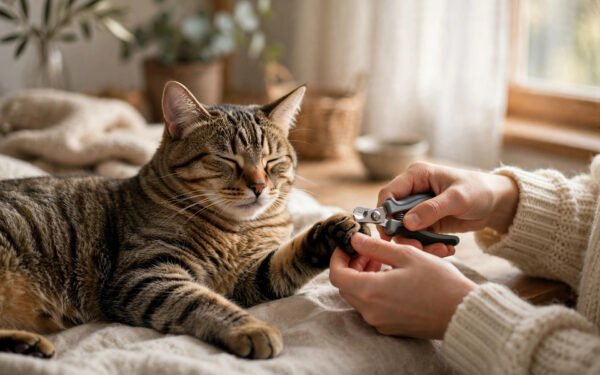
Four in the morning, again. A paw on the eyelid, a sprint down the hallway, a voice pitched exactly loud enough to end sleep. It feels personal. It is not. The yowling is a schedule your cat learned partly from biology and partly from you, and schedules can be retrained. Unlearning this one runs on a two-to-four-week clock, not an overnight fix, and the owners who succeed are the ones who treat those weeks as one steady program rather than a series of tired negotiations.
Why Dawn Is Go-Time for a Cat
Cats are crepuscular. Their bodies are wired for peak activity at dawn and dusk, the prime hunting hours of their wild ancestors. That internal clock fires up around 4 to 5 a.m. no matter what your work schedule says. To the cat, that hour is not early. It is the most natural time in the world to be awake, alert, and looking for action.
House life adds a second pressure. The average indoor cat sleeps 15 or more hours a day, much of it while you are at work. By 4 a.m. a cat has banked a full rest and has energy to spend, at precisely the hour when you are in deep sleep. Then comes the third pressure, and it is the one you control. Almost every owner of a dawn-waking cat has at some point got up and fed the cat to buy quiet. That single tired decision teaches a lasting lesson: pre-dawn noise produces breakfast. Cats repeat whatever works. They are careful students of your behavior, even when you are too sleep-deprived to notice the lesson being taught.
Reading the Pattern Before You Change It
Four common patterns explain most 4 a.m. wake-ups, and each one points to a different fix. The breakfast extortionist meows, paws, and knocks objects off the nightstand in a steady escalation until food appears. That is learned behavior first and hunger second. The cat is rarely truly starving. The vending machine has simply always opened at that hour.
The play solicitor runs a different campaign: zoomies across the bed, attacks on feet moving under the covers, toys delivered to the bedroom. That cat is under-stimulated during the day, a common picture in single-cat homes where the owner works long hours. All the saved-up play drive gets spent on the only audience available, and the audience is asleep.
The routine checker is quieter: a headbutt, a loud purr, a warm weight settling on your chest at the same time each day. For perspective on that softer side of the same animal, owners often recognize it in why your cat kneads blankets and purrs so loudly, where the same social instincts show up in a form nobody minds. With the routine checker, habit and social contact do the waking, not hunger or boredom alone.
The medical wildcard overrides all training talk. A cat that suddenly starts waking at night after years of sleeping through, especially a senior cat, needs a vet check before any behavior plan. Hyperthyroidism, high blood pressure, cognitive dysfunction, and pain such as arthritis can all disrupt a cat’s sleep. Treat a sudden change as a medical question first. Training a cat whose thyroid is driving the restlessness will fix nothing and will waste the weeks when treatment could have helped.
Week One: Rebuild the Evening, Survive the Pushback
The retraining program starts at the other end of the day. About an hour before your bedtime, play with your cat hard for 15 to 20 minutes. Use wand toys that mimic prey, with erratic movement and regular chances for the cat to catch the toy. Passive laser pointer chasing is a poor substitute, because the cat never completes a catch. Follow the play session with a meal or a substantial snack, and move dinner later to match.
That order is deliberate. It copies the cycle built into every cat: hunt, eat, groom, sleep. A cat that has hunted and eaten late in the evening is primed to groom and then sleep for a long stretch, including, with luck and consistency, through the old 4 a.m. slot. One good evening will not rewrite the schedule. Seven in a row begin to.
Week one also brings the hard part. When the cat wakes you at 4 a.m., do nothing. No feeding, no talking, no pushing the cat off the bed, because even a push is attention and attention counts as a reward. Earplugs help. Expect nights three to five to get worse before they get better. That surge has a name, the extinction burst: the cat tries harder because the old strategy has suddenly stopped working. It is the critical window of the entire program. Give in on night four and the lesson flips. The cat learns that persistence pays, and the behavior becomes far harder to shift afterward. Hold the line through the first week and most cats begin to ease off.
Protect your own sleep while this runs. Use earplugs or white noise. A closed bedroom door is acceptable, and a closed door with no response works better than an open door with occasional scolding, which is just intermittent reward in a sterner voice. Keep screens out of the picture when you are woken, since bright light makes falling back asleep harder. Remember what is at stake on your side of the bed: adults need 7 to 9 hours of sleep, and a cat stealing 90 minutes a night is a genuine health problem, not a cute annoyance.
Week Two: Take Yourself Out of the Breakfast Equation
In the second week, change who delivers breakfast. Switch the morning meal to an automatic feeder set for your real wake time, or slightly before it, such as 6 a.m. rather than 4. For cats on wet food, refrigerated timed feeders exist. The device matters less than the separation it creates. Once the machine feeds the cat, harassing the human stops producing food, and a large part of the 4 a.m. campaign loses its reason to exist.
Consistency carries this week. Same feeder time every day, no exceptions, and no early feeds offered as a peace treaty after a bad night. One early feed re-teaches the old lesson in a single morning. If the extinction burst is still running, keep the evening play and late meal exactly on schedule as well. Cats read routines quickly, and a routine that wobbles from day to day takes far longer to learn than one that never moves.
For broader background on reading feline behavior while you adjust the routine, the ASPCA’s cat behavior guidance is a solid reference, particularly on telling habit apart from distress.
Weeks Three and Four: Give 4 A.M. Somewhere Else to Go
By the third week, most consistent households see the wake-ups thin out. The remaining work is enrichment, so the early energy has options besides your face. Leave puzzle feeders out overnight. Set up a window perch, ideally with a bird feeder outside, since Texas mornings deliver busy bird traffic early. Rotate catnip toys weekly so they stay interesting instead of becoming furniture. For a truly social, play-driven cat, a compatible second cat is the strongest enrichment of all, though it is a life decision and not a sleep remedy to rush into.
Solo play options do not replace your evening session. They support it. The interactive play burns off the hunt drive and ends with food. The overnight options simply give a cat that wakes early something lawful to do until the feeder opens. Keep both layers in place through week four even after the mornings improve. Stopping the program at the first quiet week is how the old schedule creeps back, because the cat tests old habits for a while after they stop paying.
Texas Heat, Dawn Choruses, and Other Local Complications
Texas adds its own wrinkles. Summer heat pushes cat activity earlier, so in July and August shift the pre-bed play session and the late dinner a little later to anchor sleep through hot, bright early mornings. The dawn chorus is the second factor. Early birdsong and visible morning activity outside the window can trigger a cat before any hunger does. Blackout curtains cut the visual triggers, and white noise covers much of the sound.
Closed doors worry some Texas owners in summer, but homes running air conditioning all night will not overheat a cat shut out of one bedroom, and the steady hum of the system helps mask hallway footsteps and small noises that might otherwise wake you through a door. Make sure the cat’s side of the door has food, water, litter, and the overnight enrichment in place, and the arrangement is humane as well as practical.
What Never Helps, at Any Point in the Month
Never punish. Spraying water, yelling, or shutting a cat in a bathroom builds anxiety and damages trust, and anxious cats develop more behavior problems, not fewer. Never feed just to get back to sleep, not even once, because every early feeding resets the program to zero. Never read the behavior as spite. Cats do not plot revenge at dawn. There is always a working reason underneath: a hunger schedule, boredom, habit, or health.
And never train first when the change is sudden. New night-waking in an older cat is a vet visit until a medical cause has been ruled out. If the vet clears the cat, then the weekly program above applies with full force. Two to four weeks of consistent evenings, silent dawns, and machine-delivered breakfasts will not make a cat love the new order at first. They will, reliably, buy back your mornings, and a rested owner with a predictable routine is better for the cat as well as for everyone else trying to sleep in the house.