You are rolling up to a red light on a hot afternoon and the brakes answer with a thin, high squeal you have never heard before. It is easy to turn the radio up and hope it was nothing. Do not. Brakes almost always warn you before they fail, and the warnings arrive in a fairly steady order — sound first, then feel, then cost. The questions below follow the order Texas drivers actually ask them, from that first squeal to the bill at the counter.
What does it mean when my brakes squeal at a stop?
A high-pitched squeal under light braking is most often the wear indicator doing exactly what it was built to do. Most pads carry a small metal tab that touches the rotor when the pad material runs low, and that contact sings. When the sound is new, steady, and present on most stops, you likely have roughly 2,000 to 5,000 miles of pad left. That is time to book service in the next few weeks, not a reason to panic in the parking lot.
Not every squeak means worn pads. A light squeal on the first damp stop of the morning can be surface moisture that burns off in a few blocks. Dust, glazed pads, and some low-cost pads also make noise without being worn out. The pattern is the clue. A squeal that fades after the first stops is usually harmless. A squeal that stays, grows louder, or starts on nearly every stop deserves a thickness check soon, even if the car still stops well.
Is grinding an emergency?
Yes. Grinding means the pad material is gone and metal is cutting metal — the steel backing plate is scoring the rotor on every stop. Braking power drops, stopping distances grow, and the repair grows with every mile. A straightforward pad replacement that might have run about $250 can turn into a $600-plus pad-and-rotor job once the rotors are chewed up, and it can climb from there if heat and damage spread.
If you hear grinding, drive gently and directly to a shop, leave a long following distance, and avoid hard stops unless you need one for safety. Do not finish the week’s errands first. Do not wait for the weekend. Grinding is the one brake sound that charges you by the mile.
What does a soft or spongy pedal mean?
A pedal that feels mushy, sinks lower than it used to, or needs to be pumped to build pressure points to the hydraulic side of the system: air or moisture in the lines, low or leaking fluid, or a failing master cylinder. That is a do-not-drive warning until a shop has looked at it. Braking can fade fast once this starts, and a pedal that works at low speed in a parking lot may not hold up in a hard stop on the highway.
Park the car and check the brake fluid reservoir under the hood. The level should sit near the marked line and the fluid should look fairly clear, not dark and murky. Low fluid with no puddle under the car can still mean pads are very worn or that fluid is leaking where you cannot see it. Either way, a soft pedal is not a watch-and-wait symptom. Call for service, and have the car towed if the pedal feels close to the floor.
Why does my car pull to one side when I brake?
Pulling means one side is braking harder than the other. Common causes are a sticking caliper, a collapsed brake hose, uneven pad wear, or pads contaminated on one side. The car tugs toward the side that grips more, and stopping distances get longer even if the pedal feels normal. In wet weather or in a sudden stop, that tug can turn into a real control problem.
Have it checked promptly rather than learning to steer against it. A sticking caliper left alone can cook a rotor, wear a new set of pads unevenly in a few thousand miles, and overheat fluid on that corner. Tell the shop which way the car pulls and whether it happens on every stop or only when the brakes are hot. That detail helps them find the corner at fault instead of selling you parts you do not need.
Why do the pedal and steering wheel shake under braking?
A pulse in the pedal or a shimmy in the steering wheel usually means the rotor surface is no longer even. Uneven pad deposits or a warped rotor make the pads grab and release as the wheel turns. Texas driving feeds this problem: a hard slowdown from highway speed followed by sitting at a long light with hot pads clamped on one spot can lay down an uneven patch that you feel for months.
If the rotors are still thick enough, resurfacing can restore a smooth face. If they are thin, scored, or already machined once, replacement is the lasting fix. Ask the shop to measure rotor thickness and show you the number against the stamped minimum. That single measurement settles the resurface-versus-replace argument honestly.
What clicking or rattling should I worry about?
Clicks and rattles often come from loose hardware — worn clips, shims, or pads shifting in the bracket. It is rarely an instant emergency, but loose parts wear pads unevenly and can mask a more serious sound. Book an inspection if the noise is new. Fresh hardware is cheap. Rotors are not.
What can I check myself before I pay for an inspection?
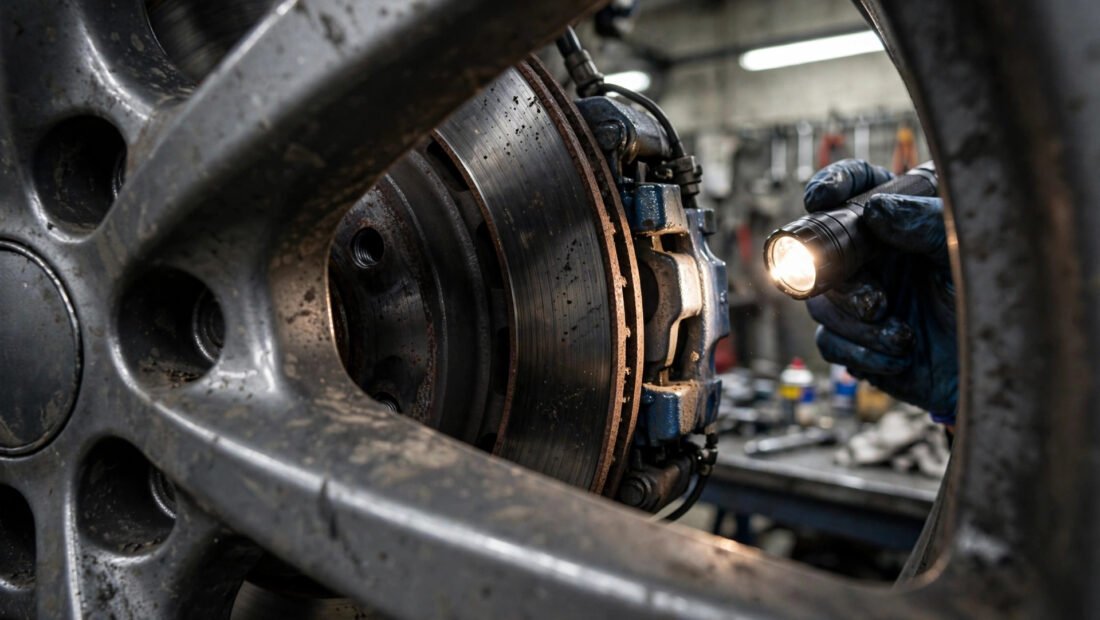
Quite a lot, with no lift and no tools in many cases. On most cars with open-spoke wheels, you can see the outer pad against the rotor. If the friction material looks thinner than about a quarter inch — roughly 3 millimeters — plan on replacement. Look at the rotor face too. Deep grooves, heavy scoring, or a sharp raised lip at the edge all point to wear that needs attention.
Check the fluid as described above, and glance at the ground where you park for clear-to-brown oily spots near a wheel, which can signal a fluid leak. Note when each symptom happens: cold or hot, light or hard braking, one speed or all speeds. Bring those notes to the shop. While you are building good habits around the car, it also helps to keep the same steady schedule for fluids and filters described in how often you should really change your oil, because shops that see a maintained car tend to give straighter answers.
How long do brake pads actually last?
Typically about 30,000 to 70,000 miles, which is a wide range because driving style matters more than the calendar. A highway driver who coasts down to exits can double the pad life of a driver who brakes late and hard through a downtown commute. Heavy vehicles, towing, and hilly routes shorten life. Mileage alone is a weak guide, so use it only as a reminder to look. Thickness is the real measure, and any shop doing a tire rotation should be willing to report it in millimeters.
When you do replace pads, you will pick a compound. Ceramic pads are the common pick for daily driving: quiet, low dust, and gentle on rotors. Semi-metallic pads bite harder and handle heat better, which suits trucks and towing, at the cost of more noise and dust. Basic organic pads cost less and wear fastest. Replace pads as a matched set on the same axle, and follow the maker’s bedding steps — a series of moderate stops with cooling time between them — so the new pads lay down an even layer and do not vibrate from the start.
What wears Texas brakes out faster?
Heat is first. Long, hot summers raise brake temperatures and wear pads faster, especially in stop-and-go traffic in Houston, Dallas, Austin, and San Antonio, where a commute can mean hundreds of brake applications a day. City pads can wear about twice as fast as mostly-highway pads for that reason alone.
Humidity is second, and it works on the fluid. Brake fluid absorbs moisture over time, and Gulf Coast humidity speeds that up. Wet fluid boils at a lower temperature, which can cause a fading pedal under heavy use. That is why a fluid flush every 2 to 3 years is standard advice for many cars here, not an upsell by default. Towing is third. Boats, trailers, and campers add weight your brakes must stop again and again. If you tow often, make sure the trailer brakes work and consider a pad compound built for heat. On long Hill Country grades, downshift and let the engine help instead of riding the brakes all the way down.
What should brake service honestly cost in Texas?
At an independent Texas shop, pads alone typically run about $200 to $350 per axle. Pads with rotors run about $400 to $700 per axle. A brake fluid flush is commonly about $100 to $150. Dealerships often charge roughly 30 to 50 percent more for the same work. Caliper replacement, when a caliper has truly failed, adds several hundred dollars per corner, so ask to see the fault before you approve one.
Get two quotes for any job quoted over about $500, and compare what each quote includes line by line: pads only, or pads and rotors, with hardware and fluid or without. Before you authorize a large bill, check RepairPal’s fair-price estimates for brake repairs for your car and area so you know whether a quote sits in a normal range. A good shop will explain the measurements, show you the old parts, and welcome that check.
When should I stop driving and get help the same day?
Stop and get help the same day for grinding, a soft or sinking pedal, a brake warning light paired with a change in feel, visible fluid leaking near a wheel, or a sudden jump in stopping distance. Book soon — within days to a couple of weeks — for a new steady squeal, mild pulsing, or pads you can see are getting thin. That split keeps you safe without turning every small noise into an emergency.
Brakes reward drivers who listen early. A squeal handled on time is a modest pad job on your schedule. The same car ignored until it grinds is a larger bill on the shop’s schedule, with worse stopping power in between. Learn the sounds, trust a change in feel, look through the wheel spokes now and then, and keep the fluid fresh. Do that, and this is one system that will almost never surprise you.