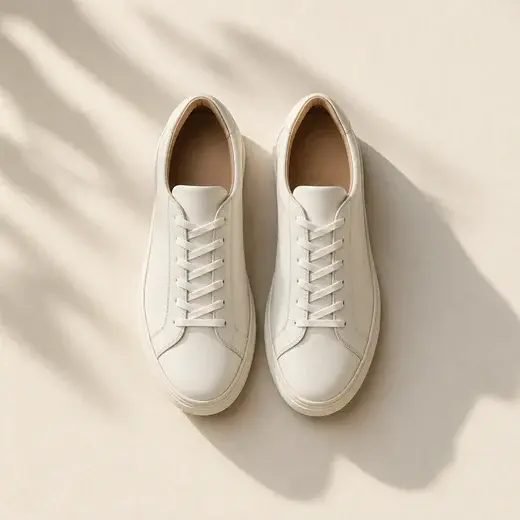
White sneakers do not get dirty in one dramatic moment. They fade by degrees — a scuffed toe on Monday, a grey film by Friday, a yellowed sole by the end of the month — until one day they are simply “the old pair.” The fix is not a heroic deep clean twice a year. It is a timeline: two minutes a day, a few minutes a week, one proper session a month, each stage doing the small job that keeps the next stage easy. Worked in order, the phases below are how a $120 pair still looks close to new a year in.
Day one, before the first wear: the $12 insurance policy
The single highest-value step happens before the shoes touch pavement. A water-and-stain protectant spray, applied on day one, costs about $12 and does the invisible work for months: liquids bead instead of soaking, dust sits on the surface instead of bonding, and most marks wipe off instead of setting. Spray in a ventilated spot, two light coats rather than one heavy one, twenty minutes apart, then let them dry fully before wearing. It is the best value in shoe care precisely because it is applied before problems start. Reapply every few weeks during wet seasons, and immediately after any deep clean, since cleaning strips the old coat. Brand guidance on which products suit which materials is collected in Nike’s guide to cleaning shoes, and the protect-first logic there applies to every brand on the shelf.
Every day, two minutes: the doorway routine
Daily care is a wipe, nothing more. Keep a soft brush or an old cloth by the door and give each shoe ten seconds when you take it off: dust and loose dirt removed tonight cannot grind into the material tomorrow. Once or twice a week, add the soles — a melamine cleaning sponge (the hardware-store magic eraser) run around the midsole takes off the black scuff marks and street film that make white shoes read as dirty even when the uppers are clean. Soles are half the visual area of a sneaker and nearly all of its “dingy” signal. Then untie or loosen the laces and pull the tongue up so the interior dries overnight; a shoe that dries fully between wears stays fresher, inside and out, and the upper keeps its shape instead of collapsing into creases.
Every week: match the cleaner to the material
The weekly ten minutes are where material knowledge pays. Leather uppers clean with a soft cloth, warm water and a drop of mild soap; they are durable and forgiving, and they tolerate a proper wipe-down. Canvas wants a soft brush and soapy water worked in circles, then air drying — never the dryer, which warps and yellows it. Knit and mesh uppers are the delicate ones: cool water, gentle soap, no scrubbing, and patience. Suede and nubuck should not meet water at all; a suede brush and eraser handle them dry. The mistake that ruins white sneakers faster than any street is the universal cleaner applied universally — bleach on leather, hot water on knit, the washing machine for everything. If you rotate between two pairs across the week, each pair also gets rest days, and rest is a cleaning tool in itself: foams recover, moisture leaves, and both pairs stay white longer than one pair worn daily — a rotation logic that anyone who has read about the best work shoes for standing all day will recognize, since standing shoes live or die by the same foam-recovery rule.
Every month: laces, insoles and the reset
Monthly, do the three small resets. Laces first: dingy laces make clean shoes look tired, so wash them in a laundry bag with a load of whites, or simply replace them — a fresh pair costs about $5 and is the cheapest facelift in footwear. Insoles out for an airing, and a sprinkle of baking soda overnight if odor has started. Then inspect the uppers properly in daylight: catch the small stain now, spot-treat it with the material-appropriate cleaner, and re-spray the protectant coat. Yellowed soles, the usual monthly complaint, respond to a paste of baking soda and a little hydrogen peroxide worked in with an old toothbrush and left in sunlight for a few hours — the sun does part of the work. What does not belong in the monthly routine: the washing machine, except for plain canvas pairs with laces and insoles removed, washed cold in a bag and air-dried, and bleach, which yellows more white materials than it rescues and has no place near leather at all.
Seasonal phases: salt, rain and summer dust
The calendar adds two special operations to the timeline. Winter is the hostile season: road salt leaves white tide-lines on leather and suede that harden if left, so winter pairs get a weekly wipe-down with a cloth dampened in a half-and-half mix of water and white vinegar, which dissolves the salt before it dries the leather out — followed, once a month, by a leather conditioner on smooth leather pairs, because salt season is also drying season. Suede in winter needs the dry brush more and the water less. Rainy weeks change the daily stage rather than the weekly one: a soaked pair should be stuffed with newspaper or shoe trees and dried at room temperature for a full day — never on a radiator or with a hairdryer, since forced heat cracks leather and warps glues — and the protectant spray reapplied once dry, because a soaking strips it. Summer’s enemy is dust, which is abrasive: the doorway brush-off matters more in dry months, and white soles pick up a grey film that the weekly sponge pass exists to remove. Seasons do not change the system’s shape; they change which stage carries the load.
Triage: when a pair is beyond saving
Honesty is part of maintenance, and some pairs should be retired to garden duty rather than restored. Yellowing that has soaked through the sole material itself — as opposed to sitting on its surface — is oxidation inside the plastic and does not scrub out; specialist sole paints exist, but on a general-wear pair the honest call is demotion. Canvas that has greyed through repeated ground-in dirt can be improved but rarely restored to white, because the pigment is now part of the fabric. Cracked leather at the flex points is structural, not cosmetic. Knowing the triage lines protects the system from its only real failure mode: escalating effort on a lost pair while the good pairs miss their cheap, timely care. Spend the two daily minutes on the pairs that are still winnable.
The small kit, assembled in one place
The system runs on about $25 of tools, and it works better when they live together in a shoebox or drawer by the door rather than scattered across three rooms. The kit: the protectant spray; a soft brush for the daily pass; a handful of melamine sponges for soles; a small bottle of mild soap and two cloths, one for leather and one general; an old toothbrush for seams and stitching; baking soda for insoles and sole paste; cedar shoe trees or newspaper for drying; and a spare set of white laces, bought before they are needed. Every stage of the timeline — daily, weekly, monthly, seasonal — draws on this box and nothing else, which is the point: care systems fail when each session starts with a hunt for supplies. Assembled once, the box converts white-sneaker maintenance from a project into a habit with a handle.
Stains by type: the four you will actually meet
Most sneaker disasters are one of four, and each has a first move. Mud: let it dry completely — washing wet mud spreads it — then brush off the crust and treat what remains with the soap wash. Grass: pre-treat with a little dish soap or stain remover and patience; grass is a dye, and it yields to dwell time better than scrubbing. Coffee and food: blot immediately, then a baking soda paste for ten minutes lifts most of it from mesh and canvas before it sets. Scuffs on leather or synthetic: a damp melamine sponge, gently, is the specialist tool — it erases most transfer marks without chemicals. The pattern underneath all four: act early, let the product sit, and escalate slowly. A stain attacked calmly in the first hour rarely survives to become a story; the same stain ignored for a week becomes a personality trait of the shoe.
The timeline, kept honest
Day one: spray. Every day: two-minute wipe and dry. Every week: material-matched clean. Every month: laces, insoles, daylight inspection, re-spray. None of these stages takes the place of the others, and none of them is a chore on its own — the whole system costs less time per month than one desperate rescue attempt on a pair left to decay. White sneakers stay white the way anything stays in good condition: in small installments, paid on schedule.