
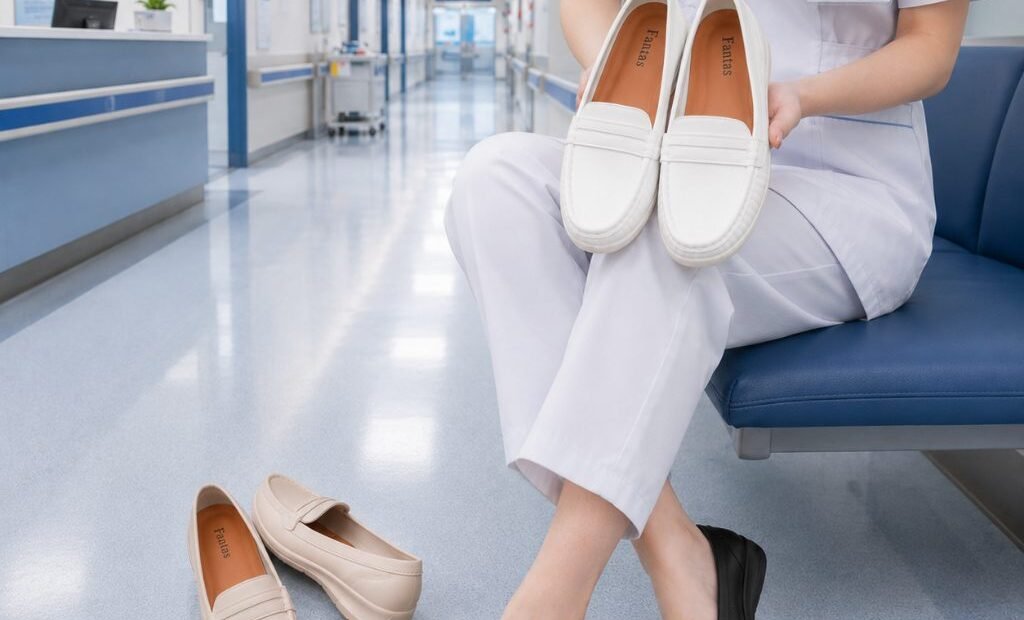
Twelve-hour retail shifts taught me that shoe advice from people who sit all day is worthless. Here’s what actually survives standing all day.
I used to think looking good required either money or some mysterious innate talent. Turns out it’s mostly systems — a few rules, a little planning, and knowing which details matter. Here’s the system for this one.
Best work shoes standing all day: What the Evidence Shows
Let’s get specific about best work shoes standing all day — what it means, why it matters, and the practical steps that make a difference. Everything below is actionable starting today.
Cushioning plus arch support — you need both. Pure cushioning (soft foam) feels great at hour one and collapses by hour six; pure support feels like boards. The winners — Hoka Bondi, Brooks Addiction Walker, Dansko XP — combine responsive cushioning with real arch structure. Try them at the end of a long day when your feet are already tired. This is one of those fixes that feels too easy to matter — until it does.
Replace every 6 months of daily standing
Foam compresses invisibly — the shoe looks fine while the support is gone. If your feet started hurting again ‘for no reason,’ check the mileage. Date the inside with a marker when you start wearing them. The people who do this consistently swear by it, and the logic holds up.
Fit: thumb’s width, wide enough, heel locked
Feet swell during long standing days — shop in the afternoon, leave a thumb’s width at the toe, ensure no pinching across the ball, and confirm the heel doesn’t slip. Most standing workers wear shoes too narrow; wide sizes exist for a reason. Small change, real payoff — that’s the pattern with this one.
Related reading: our guide to how can I prevent pilling on sweaters covers a closely connected topic worth understanding alongside this one.
Insoles can rescue decent shoes
If your employer’s dress code limits options, quality insoles (Superfeet, Powerstep) transform mediocre shoes. They’re $30 to $50 and often outperform buying new shoes. Replace insoles when they compress — they wear out too. File this under ‘boring but effective,’ the best category there is.
Rotate two pairs
Alternating pairs lets foam decompress fully between shifts — shoes need recovery days like muscles. Two mid-range pairs rotated outlast one premium pair worn daily, and your feet get subtle variation that prevents overuse patterns. Worth trying for two weeks. You’ll know by then if it’s your fix.
Compression socks are the secret weapon
15-20 mmHg compression socks reduce leg fatigue and swelling dramatically over long standing days. Nurses and retail workers swear by them. They’re unglamorous and genuinely transformative — try one week and you’ll never go back. It sounds simple because it is. The hard part is just doing it consistently.
Quick Takeaways
- Cushioning plus arch support — you need both: Pure cushioning (soft foam) feels great at hour one and collapses by hour six; pure support feels like boards.
- Replace every 6 months of daily standing: Foam compresses invisibly — the shoe looks fine while the support is gone.
- Fit: thumb’s width, wide enough, heel locked: Feet swell during long standing days — shop in the afternoon, leave a thumb’s width at the toe, ensure no pinching across the ball, and confirm the heel doesn’t slip.
- Insoles can rescue decent shoes: If your employer’s dress code limits options, quality insoles (Superfeet, Powerstep) transform mediocre shoes.
- Rotate two pairs: Alternating pairs lets foam decompress fully between shifts — shoes need recovery days like muscles.
- Compression socks are the secret weapon: 15-20 mmHg compression socks reduce leg fatigue and swelling dramatically over long standing days.
Fit First, Everything Else Second
If you take one principle from this article, make it this: fit outranks brand, price, and trend combined. An altered $30 garment beats an unaltered $300 one — every tailor will confirm this. Learn your measurements, know what flatters your proportions, and budget for alterations like they’re part of the purchase price.
In the fitting room, move: sit, walk, raise your arms. Clothes are worn in motion, not in mirrors. If it only looks good standing perfectly still, it’s not the right piece — no matter how good the still version looks.
A Common Mistake to Avoid
Choosing by looks or by the ‘memory foam’ marketing. Fashion shoes and mushy-foam shoes both fail by hour eight — one through pain, the other through collapsed support. Buy for the job: structured cushioning, real arch support, proper width. Your feet are work equipment.
If you want to go deeper on a related topic, see our guide to what are the best layering pieces for fall weather — and for a different angle on everyday wellness, our guide to what is the best way to fold t-shirts to save drawer space is worth your time.
Color Confidence
If your closet is all black and gray, adding color feels risky — start with your ‘safe brights’: the colors that suit your undertones and feel like you. One colorful piece per outfit, grounded in neutrals, is the no-fail formula. Jewel tones flatter almost everyone and photograph beautifully.
Test-drive color in cheap formats first: a $12 scarf before a $120 coat. Notice what earns compliments — other people see your colors more objectively than you do. Build outward from the winners.
For authoritative background, see Vogue’s fashion editorial coverage, and also Good Housekeeping’s beauty and fashion section for a second perspective.
Frequently Asked Questions
Are Danskos still good?
The XP 2.0 line addressed the old rigidity complaints — they’re lighter with better cushioning now. They remain a top pick for healthcare and food service, though Hoka and Brooks win on pure cushioning.
Do I need custom orthotics?
Most people don’t — quality over-the-counter insoles handle it. See a podiatrist if you have persistent pain, flat feet with symptoms, or plantar fasciitis that doesn’t resolve.
Start With What You Own
Before spending a dollar, shop your own closet with fresh eyes. Pull out forgotten pieces, try new combinations, and apply the styling rules from this article to what you already have. Most people are sitting on solutions they stopped seeing — familiarity breeds blindness.
Only after the closet audit should you make a shopping list — and make it specific: the exact gap, the budget, the criteria. Then buy the best version you can afford of exactly that item. Targeted buying is how good wardrobes are built; browsing is how cluttered ones are.
The Bottom Line
Standing-all-day shoes: cushioned plus supportive (Hoka, Brooks, Dansko), replaced every 6 months, fitted in the afternoon with room to swell, rotated between two pairs, plus compression socks. Your feet are equipment — treat them like it.



