Can jeans honestly pass at a white-tablecloth restaurant, or does everyone at the table just pretend not to notice? The truthful answer is that jeans are the most conditional garment in the evening wardrobe: the same pair reads as sharp at one restaurant and as a mistake at another, and the difference is rarely the jeans themselves. It is the wash, the cut, and — decisively — everything worn with them. There are four reliable routes to dressing jeans up, and each has genuine strengths and genuine failure modes. Weighed honestly, they cover almost every dinner that does not print a dress code.
First, the jeans themselves: the non-negotiables
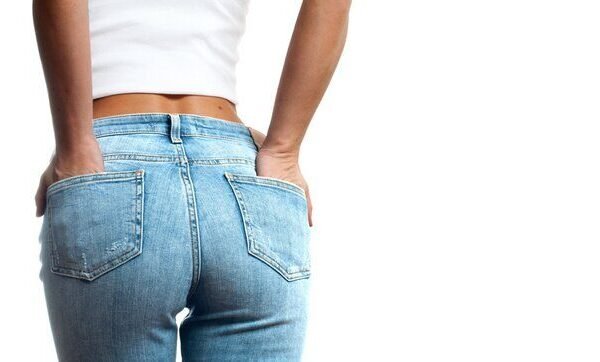
Every route starts from the same base, and the base excludes most jeans most people own. Dark wash — deep indigo or black — with no fading, no whiskering, no distressing, no rips being dressed up; those details are the visual signature of casual denim and no blazer fully covers them. The cut should be straight or slim, clean through the leg, hemmed to the shoe rather than pooling or cropped; a trouser-like silhouette in denim is the whole trick. Fit is where the base is won or lost, and the principles for finding denim that fits a real body — rise, stretch percentages, waist solutions — are covered in how to find jeans that fit curvy body types; a dinner pair should be the best-fitting jeans you own, full stop. One wash-and-inspect rule applies the night before: jeans for a nice dinner must be clean, pressed or steamed, and free of the soft creases of a week on a chair.
Route one: the blazer
Pros: the fastest category change in menswear and unisex dressing alike. A tailored blazer over a plain top and dark jeans converts the outfit’s register instantly, because the blazer’s structure tells the room that the jeans were a decision. It works across ages and body types, and it tolerates a simple base — a fine knit, a plain silk shell, a clean white shirt. Cons: the blazer must fit properly or the route reverses; a boxy, long, or shiny blazer reads as “borrowed for the occasion.” It also runs warm and formal-adjacent — at a relaxed modern restaurant, a blazer can overshoot into looking like a dress code was feared rather than understood. Best for: traditional nice restaurants, business dinners, meeting-the-parents dinners.
Route two: the evening top
Pros: for women especially, a silk camisole, a satin blouse or a structured evening top does the dressing-up from the top half, leaving the jeans as the deliberate casual counterweight — the high-low mix that modern dressiness is made of. It is cooler, lighter and more personal than the blazer, and it photographs beautifully. Cons: it is the least forgiving route. The top must be genuinely evening-grade (a cotton tee in a nice color does not qualify), the jeans must be immaculate, and the whole effect leans heavily on the finishing sections below — shoes, accessories, grooming — because there is no blazer supplying structure for free. Menswear versions exist in the fine-knit polo and the dark silk-blend shirt, with the same rules. The blazer-versus-top debate, along with the rest of the menswear playbook, is laid out from the accessory side in Ties.com’s guide to dressing up jeans. Best for: fashionable restaurants, dates, dinners where the room dresses creatively.
Route three: monochrome dark
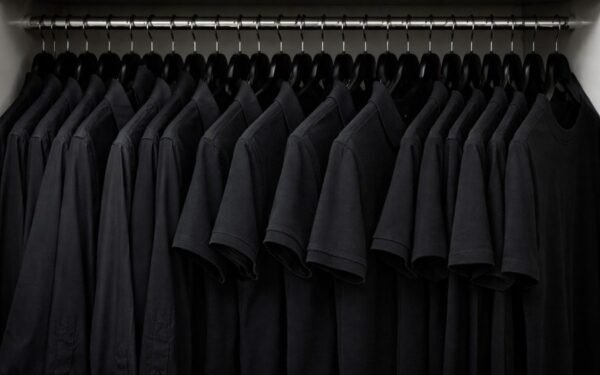
Pros: black jeans, black top, black shoes — the all-dark column removes contrast, and contrast is where casualness lives. Monochrome makes denim stop announcing itself; at evening light, a black jean in a clean cut is closer to a trouser than to a jean, and the route is nearly foolproof for men and women alike. Cons: it can read as uniform or as hiding, it is unforgiving of mismatched blacks (three different blacks in one outfit look like a laundry accident rather than a column), and it surrenders the pleasure of color entirely. The shades must match in undertone, and one texture difference — matte denim against a slight sheen above — should be built in deliberately. Best for: minimalist restaurants, gallery dinners, anywhere the room wears black.
Route four: shoes and accessories do the lifting
Pros: sometimes the top half is already fine and the outfit fails at the extremities. Heels, polished loafers or dress boots recategorize jeans on sight; trainers and worn casual shoes undo any top. Add the intention signals — a real watch, a structured bag, earrings or a cuff, a belt that matches the shoes — and the outfit crosses the line without changing a garment. Cons: this route has a ceiling. It elevates a decent base; it cannot rescue light-wash, baggy or distressed jeans, and leaning on it alone at a genuinely formal restaurant is the classic way jeans wearers get seated feeling underdressed. Best for: smart-casual dinners, bistros, the broad middle of “nice.”
The finish audit: hem, crease and the last five minutes
Every route above assumes a base level of finish that is worth auditing explicitly, because jeans sit closer to casual in the eye than any other evening garment, and small sloppiness is read as the outfit’s true intention. Hems first: the break should just touch the shoe for a polished line; a puddle of denim at the ankle is the single fastest way to look underdressed in good jeans. Second, the crease and press: a sharp front crease on a dark jean is a formal signal borrowed from trousers and it works, while the rumpled map of a week worn unwashed is the opposite signal. Third, lint and fading at the seat and knees — evening light is merciless, and a lint roller in the hallway is a thirty-second insurance policy. Fourth, the belt-and-shoe leather agreement: mismatched browns between belt and loafers is the detail nobody can name and everybody sees. None of these is the outfit. Together they are the difference between denim that was dressed up and denim that was merely brought along.
Where the routes diverge: reading the table across
One adjustment cuts across all four routes, and it is worth stating plainly because it causes quiet mismatches at real tables. In menswear, the dressed-up jean outfit succeeds through structure — the blazer, the tucked shirt, the belt-and-shoe agreement — and its characteristic failure is under-structuring: the untucked knit and the sneaker that nobody upgraded. In womenswear, the same outfit succeeds through contrast — denim deliberately set against silk, heels, jewelry — and its characteristic failure is over-casualizing the top half to match the jeans, until the whole outfit slides to brunch. Couples and groups amplify this: two people arriving in jeans read as a joint decision when their registers match, and as one dressed person escorting a casual one when they do not. Five minutes of coordination — same route, roughly, or at least the same finish audit — is the cheapest upgrade a pair can make. The jeans are shared. The intention has to be shared too, or the restaurant reads the difference.
The seasonal footnote: jeans at dinner in July and in January
The routes hold all year, but the materials vote by season. In summer, the enemy is heat at the table: swap the blazer for an unlined or linen one, let the jeans be a lighter-weight denim in the same dark wash (weight is invisible in photographs; wash is not), and let women’s versions breathe through silk and open shoes. A winter dinner inverts the problem — the restaurant is warm, the street is not — and the dressed-up jean outfit becomes a layering act: fine knit under the jacket, the coat doing the arrival work, boots that survive the pavement and still pass the finish audit indoors. Dark denim is season-proof in a way few garments are; the top half carries the weather. Dress the top for the street you will walk and the room you will sit in, in that order, and the jeans simply continue underneath, unchanged, doing their quiet work.
The two-minute reservation test
Still unsure about a specific venue? Use its own evidence. A restaurant’s website photographs, its social media crowd shots, and the wording of its own dress guidance (most post it) will show whether denim appears at its tables and in what company. Ten real diners in jeans with jackets settles the question faster than any rule — including the rules above. Research the room once, dress by its evidence, and walk in without the residual doubt that ruins more evenings than any garment could.
The restaurant’s line, and the verdict
All four routes share one governor: the restaurant. Read its photos and reviews for the room’s actual register; a tasting-menu room with a printed “smart elegant” note is not a jeans venue on any route, while most modern nice restaurants quietly accept dark denim dressed with intent. When in genuine doubt, call — one question at booking saves an evening of feeling wrong. Grooming closes every route: hair, nails and a pressed finish are the final signal that the jeans were chosen, because a deliberate outfit is groomed as a whole. The verdict: jeans pass at a nice dinner when they are dark, clean and perfectly fitted, and when at least one other element of the outfit is unmistakably dressed. The blazer is the safest vehicle, the evening top the most elegant, monochrome the most foolproof, and shoes-plus-accessories the essential finisher on every route. Jeans were never the risk. Wearing them accidentally is.