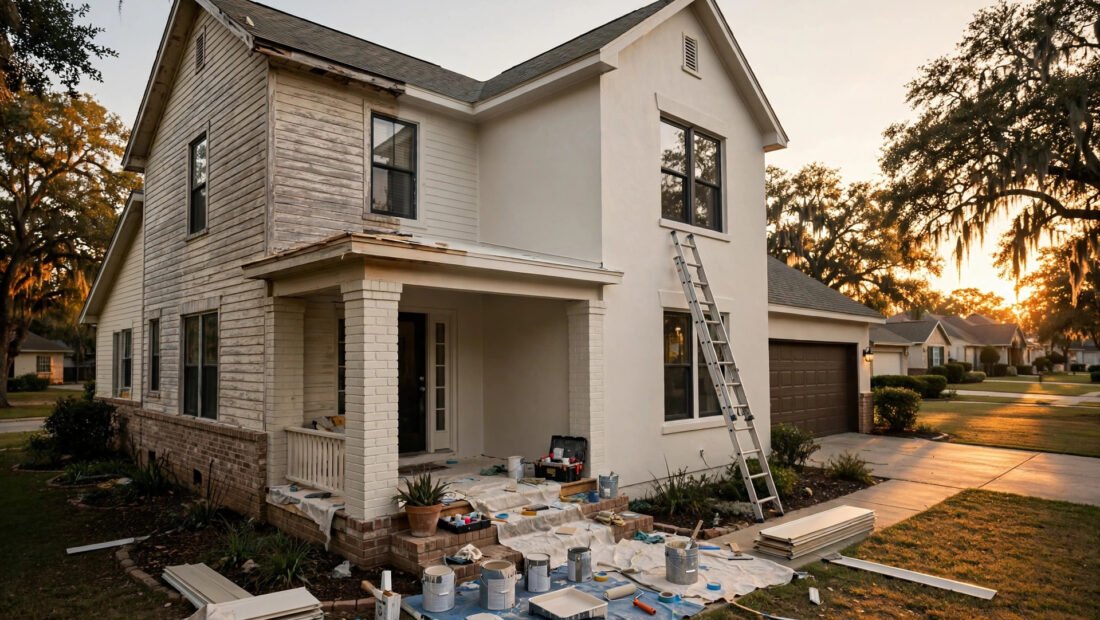
Every Texas homebuyer eventually faces the same fork in the road: the charming fixer-upper listed $60,000 below the neighborhood median, or the gleaming move-in ready home that costs more but asks nothing of you. The fixer-upper promises equity and character. The turnkey home promises weekends free of drywall dust. Both can be smart purchases — and both can be expensive mistakes — depending on your budget, your timeline, and how honestly you assess renovation costs in today’s Texas market. Here is how to think through the trade-off like an investor instead of an optimist.
The Real Math Behind a Fixer-Upper
The classic rule of thumb — buy at a discount, renovate, end up ahead — only works if you price the renovation correctly. Most first-time fixer-upper buyers underestimate costs by 20 to 40 percent. Start with the purchase price, add a realistic renovation budget built from contractor bids (not television), add carrying costs for the months you cannot live there comfortably, and compare the total to the price of a comparable updated home.
In Texas, 2026 renovation pricing runs roughly like this for a typical 1,800-square-foot home: a cosmetic refresh (paint, flooring, fixtures, landscaping) lands between $25,000 and $50,000; a mid-range kitchen and bath remodel pushes $60,000 to $120,000; and a full gut renovation with structural, electrical, or foundation work can exceed $150,000. Foundation work deserves special attention in Texas — expansive clay soils in Dallas, Houston, and San Antonio make foundation repairs common, and a $15,000 to $40,000 foundation job can erase the “deal” on a discounted listing overnight.
The honest formula: purchase price + renovation + carrying costs + 15% contingency < after-repair value. If that inequality does not hold with real bids, the move-in ready home is cheaper, full stop.
What “Move-In Ready” Actually Costs You
Move-in ready homes carry a premium — typically 10 to 20 percent over comparable fixer-uppers in the same Texas neighborhood. That premium buys three things: certainty, time, and financing simplicity. Certainty, because the roof, HVAC, and plumbing are known quantities (verify with an inspection anyway). Time, because you move in on day one instead of managing contractors for four months. Financing simplicity, because a conventional mortgage covers the whole price, while fixer-uppers often need renovation loans with extra inspections, draws, and fees.
The hidden cost of move-in ready is paying for someone else’s taste. That $25,000 kitchen premium reflects the flipper’s choices, not yours — and flippers optimize for photography, not durability. Budget-minded buyers should also remember that even turnkey homes need maintenance. Setting aside 1 to 2 percent of the home’s value annually for upkeep is the standard guidance, and our guide to improving your home’s curb appeal cheaply shows how small exterior projects protect the value you just paid a premium for.
Financing: Where the Two Paths Diverge
This is the least glamorous and most decisive difference. A move-in ready home qualifies for any standard mortgage: conventional, FHA, VA. A true fixer-upper — one with a failing roof, no working kitchen, or safety issues — may not meet minimum property standards for FHA or VA loans at all, which instantly removes a large share of buyers from competing with you but also complicates your own financing.
Buyers who need renovation funds rolled into the loan generally use an FHA 203(k) or a Fannie Mae HomeStyle loan. These are legitimate tools, but they add contractor approval requirements, draw schedules, and months of paperwork. Conventional buyers paying cash for renovations avoid the hassle but tie up liquid savings. Before falling in love with a project house, talk to a lender about which loan products actually fit the property’s condition — the answer surprises most first-time buyers.
The Texas-Specific Factors
Foundation and soil
Texas clay soil expands and contracts with moisture, cracking slabs across the state’s major metros. Any fixer-upper older than 20 years deserves a structural engineer — not just a general inspector — and sellers are accustomed to providing foundation repair documentation. No documentation on an older home is a red flag, not a neutral fact.
Insurance and flood zones
Houston and much of the Gulf Coast sit in flood-prone territory. A fixer-upper in a flood zone can carry flood insurance premiums that dwarf the renovation savings. Check FEMA maps and get insurance quotes before you offer, not after. The HUD 203(k) program page and CFPB’s explanation of renovation loans are solid starting points for understanding federally backed options.
Property taxes
Texas has no state income tax but some of the nation’s highest effective property tax rates — often 1.6 to 2.2 percent. Renovations that raise your appraised value raise your tax bill permanently. A $100,000 renovation in a 2 percent tax jurisdiction adds roughly $2,000 a year in taxes, every year.
Contractor availability
Texas metros are building constantly, which means good contractors are busy. In Austin and Dallas, reputable general contractors routinely book 6 to 12 weeks out. Your renovation timeline — and your temporary housing budget — must reflect that reality.
Who Should Buy Which?
Buy the fixer-upper if: you have cash reserves beyond the renovation budget, you can tolerate 3 to 6 months of disruption, you have access to trustworthy contractors (or real skills yourself), the discount survives honest math, and you plan to stay long enough for the sweat equity to compound.
Buy move-in ready if: you need to relocate on a deadline, your savings are tight after the down payment, you are buying with FHA or VA financing, you value predictable monthly costs over maximum equity, or the “discount” on the fixer-upper evaporates once real bids come in.
There is also a middle path many Texas buyers overlook: the cosmetic fixer — dated but structurally sound homes needing only paint, flooring, and fixtures. These qualify for standard financing, can be lived in during renovation, and offer the best risk-adjusted returns for non-professionals. If a home needs only surface work, refinishing hardwood floors alone can transform the interior for a fraction of a full remodel.
Conclusion
The fixer-upper versus move-in ready question is not really about houses — it is about which risks you are equipped to manage. Fixer-uppers reward buyers with capital, contractor relationships, and patience; they punish buyers who price renovations with hope instead of bids. Move-in ready homes charge a premium for certainty, and for many Texas buyers — especially those on relocation timelines or tight post-closing budgets — that premium is money well spent. Run the honest math with real contractor numbers, price in Texas property taxes and insurance, and choose the path whose worst case you can actually afford.
Frequently Asked Questions
How much cheaper is a fixer-upper than a move-in ready home in Texas?
Typically 10 to 25 percent below comparable updated homes, though the gap narrows in hot neighborhoods. The discount must exceed your total renovation cost plus contingency for the deal to make financial sense.
Can I get an FHA loan on a fixer-upper in Texas?
Only if the home meets FHA minimum property standards, or through the FHA 203(k) program, which rolls renovation costs into the mortgage. Standard FHA loans will be denied on homes with major safety or structural deficiencies.
What is the biggest hidden cost in Texas fixer-uppers?
Foundation repair, driven by expansive clay soils. Costs of $15,000 to $40,000 are common in Dallas, Houston, and San Antonio, and the problem recurs if drainage is not corrected.
Is it better to buy a fixer-upper as a first home?
Usually not, unless the work is cosmetic. First-time buyers typically lack contractor networks and contingency reserves, making structural or system-level renovations risky. A cosmetic fixer or move-in ready home is the safer first purchase.