
A suit can lose you a creative job, and so can a wrinkled T-shirt. The first says you did not look at where you were going. The second says you did not care about getting there. The sweet spot sits between them, and it is narrower than most candidates expect — polished enough to show respect, relaxed enough to show you belong.
The Working Checklist
Start here. If every line below is true on the morning of the interview, the outfit is probably right.
- You researched how this specific team actually dresses, not how creative jobs dress in general.
- Your outfit is one notch more polished than that team’s normal day.
- The base is clean, simple separates that fit properly.
- Exactly one piece carries the personality — a blazer with texture, good boots, a watch, or a bold but tasteful accessory.
- Everything is clean, pressed or steamed, and free of lint, stains, and loose threads.
- Shoes are clean. Grooming is neat. Fragrance is faint or absent.
- The outfit works in Texas heat outside and in a cold office inside.
- You can sit, stand, walk, and carry a portfolio or laptop without tugging at anything.
- For a video call, the top half reads clean and deliberate on camera.
The rest of this page explains how to make each line true, because the checklist is easy to read and surprisingly easy to miss in one or two places.
Decode the Company Before You Open the Closet
Creative is not one dress code. An Austin game studio, a Dallas advertising agency, and a Houston architecture firm can sit at three different levels of formality, and two firms in the same city can differ just as much. Dress for the company in front of you, not for the industry label on the job post.
Look at the company’s own site and social photos. Skip the polished careers page, which often uses stock images or the one day everyone dressed up. Look for candid team photos, event shots, and behind-the-scenes posts. Those show the real daily standard: jeans or trousers, sneakers or boots, tees or button-downs.
Check the people who will interview you, if you know their names. A creative director who wears unstructured jackets is sending a different signal than one who wears plain tees and caps. You are not copying one person. You are reading the range so your outfit lands inside it, near the tidy end.
Ask the recruiter. A short question — what does the team usually wear day to day — is normal, expected, and answered without a second thought. Recruiters would rather guide you than watch a strong candidate miss on presentation. Their answer also tells you about client exposure. Roles that meet clients, present work, or represent the firm outside the office usually sit a step more polished than roles that stay at a desk making the work.
When the signals conflict, dress for the most senior person you will meet that day. It is safer to be the slightly polished candidate in a casual room than the casual candidate in a polished one.
Outfit Formulas That Hold Up
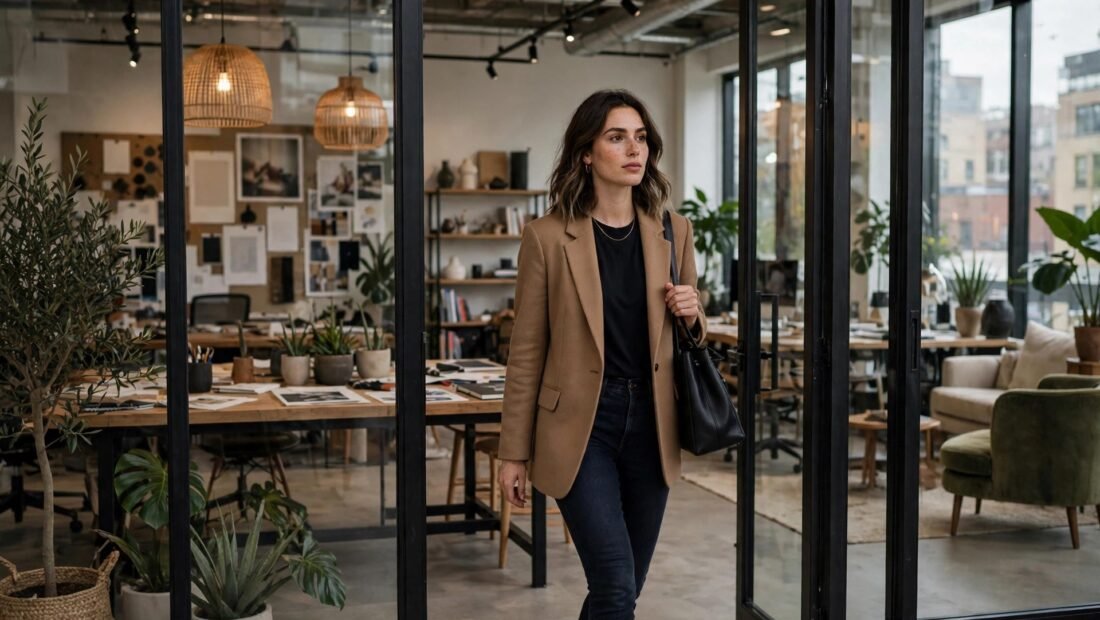
For most creative interviews, one formula covers the ground well: smart separates, one personality piece. Think dark, well-fitting jeans or chinos, a button-down shirt or a quality knit top, and an unstructured blazer or a sharp overshirt on top. Finish with clean leather sneakers, loafers, or neat boots. That combination works for about 80 percent of creative interviews because it reads as deliberate without reading as corporate.
For senior roles, larger agencies, media companies, and client-facing jobs, step it up. Tailored trousers, a crisp shirt, and a textured or subtly patterned blazer with leather shoes or refined boots lands well. Leave the tie at home unless the company is genuinely formal. In most Texas creative settings, a tie turns a good outfit into a costume.
For very casual shops — small startups, game studios, production teams — you can relax the base without dropping the care. Premium dark jeans, a clean elevated tee or henley, and an open overshirt or light jacket still show intent. The clothes are casual. The condition and fit are not.
Whatever the level, keep the palette simple. Two or three colors that work together look considered. A pile of competing patterns, logos, and bright pieces looks like you got dressed in a hurry, even if each piece was expensive.
Fit Beats Price, Every Time
A $40 shirt tailored to fit beats a $200 shirt that swims on you. That is not a slogan. It is how people actually judge clothing in a quick first meeting. They do not see price tags. They see shoulders that sit in the right place, sleeves that end where they should, and trousers that do not pool over the shoes.
Cheap fixes make the biggest difference. Hemming trousers, taking in a shirt, or shortening a jacket sleeve costs little at a tailor and changes how the whole outfit reads. If a full tailoring visit is not possible, choose the size that fits your shoulders and largest point, and avoid anything you have to keep adjusting.
Try the full outfit on at least a day early, sitting and standing. Sit in the chair the way you will sit in theirs. Reach for something. Walk a short stretch. If you tug, hitch, or fidget in your own home, you will do it twice as much under interview nerves — and it helps to stay alert to the job interview red flags Texas candidates miss, because how you present yourself is only one part of what is being judged in that room.
Dressing for Texas Heat
Texas adds a problem candidates in cooler states never face. You may cross a parking lot in 98-degree heat, then sit for an hour in an office cooled like a refrigerator. Plan for both rooms, not just one.
Choose breathable fabrics for the layer against your skin: cotton, linen blends, light merino, and open weaves. Avoid heavy synthetics that trap heat and show sweat fast. A light undershirt can protect an outer shirt and keep you more comfortable than you would expect.
Carry the layer, do not wear it across the lot. Arrive a few minutes early, cool down, then put on the blazer or overshirt once you are inside and settled. You will look composed instead of wilted, and the jacket will not be creased from a hot car seat.
Build in a pause before you go in. Five minutes in the shade or the lobby, a drink of water, and a quick check in a restroom mirror will undo most of what the heat did. Sweat happens in Texas and nobody interviewing here is shocked by August. What reads badly is arriving flustered and unprepared for a condition everyone in the building deals with daily.
Austin tech-casual runs a step more relaxed than Dallas agency polish, and Houston often sits between the two, but do not lean on city stereotypes too hard. The company’s own photos beat any city rule.
The Details People Notice
Shoes get looked at more than candidates think. Clean them the night before, including the soles and edges. Scuffed, dusty shoes undo a careful outfit in one glance. If you wear sneakers, they should be the clean minimal kind, not the pair you mow in.
Grooming does quiet work. Neat hair, trimmed nails, and clean, tidy facial hair signal the same care you are claiming for the job itself. Keep fragrance faint or skip it entirely. Small interview rooms and strong scent are a bad pairing, and some people are sensitive to it.
Your bag matters, too. A clean tote, messenger bag, or simple backpack in good shape is fine. A stained gym bag or a grocery sack of loose papers is not. Whatever holds your portfolio, tablet, or laptop should open easily and look organized inside, because you may be pulling samples out in front of the panel.
If you carry a physical portfolio, rehearse getting to each piece. Fumbling through pages while talking splits your attention and slows the meeting. Digital portfolios need the same care: device charged, files stored locally in case the Wi-Fi fails, and the first piece ready on screen before anyone asks.
What to Avoid
Do not wear a full suit to a studio that clearly does not wear them. It signals that you prepared for a different company. The exception is a firm whose own photos show jackets and formal dress — then match that room.
Do not wear band tees, graphic shirts with jokes, athletic gear, shorts, flip-flops, or anything wrinkled, faded, or frayed, no matter how casual the office claims to be. Casual teams still expect the interview version of casual.
Do not let overdressing anxiety talk you into adding pieces. A blazer, a tie, a pocket square, cufflinks, and dress shoes all at once is not safer. It is louder. Pick the level, commit to it, and stop editing.
And do not hide who you are. Tattoos, piercings, and distinctive personal style are normal in creative work and rarely the issue candidates fear. The judgment is about care and judgment, not about erasing personality. Keep the personality piece. Lose the sloppiness.
For a broader outside view before you decide, Indeed’s guidance on what to wear to a job interview covers the general rules that sit underneath the creative-specific ones on this page.
If the Interview Is on Video
Remote interviews change what the outfit has to do. The camera sees you from the waist up, in a small frame, under whatever light your room has. Dress for that frame.
Wear the full outfit anyway, including proper trousers. It changes how you sit and speak, and it protects you if you have to stand to fetch something. From the waist up, choose a top with structure — a collar, a blazer, or a knit with shape — because plain tees can read as shapeless on camera.
Watch color and pattern. Fine stripes and tiny checks can shimmer and crawl on video. Solid colors or broad, simple patterns look calmer. Sit far enough back that your head and shoulders fill the frame without crowding it, raise the camera to eye level, and face a window or a lamp so your face is lit from the front.
Do a test recording the day before, in the clothes you plan to wear, at the same time of day. Watch it once. You will spot the distracting background, the shiny forehead, and the shirt that reads white and blown-out on screen — while there is still time to fix all three.




2 comments