At 9 p.m. the puppy is asleep on your shoe, soft and quiet. At 2 a.m. that same puppy is wide awake in the crate, crying loud enough to wake the whole house. That split is normal in the first week, and it is fixable. Night crying is not a sign that crate training failed. It usually means the daytime steps were rushed or the night schedule does not match what a young puppy can physically do. Follow the week in order, phase by phase, and the nights get shorter.
Phase 0: Set Up the Crate Before Day One
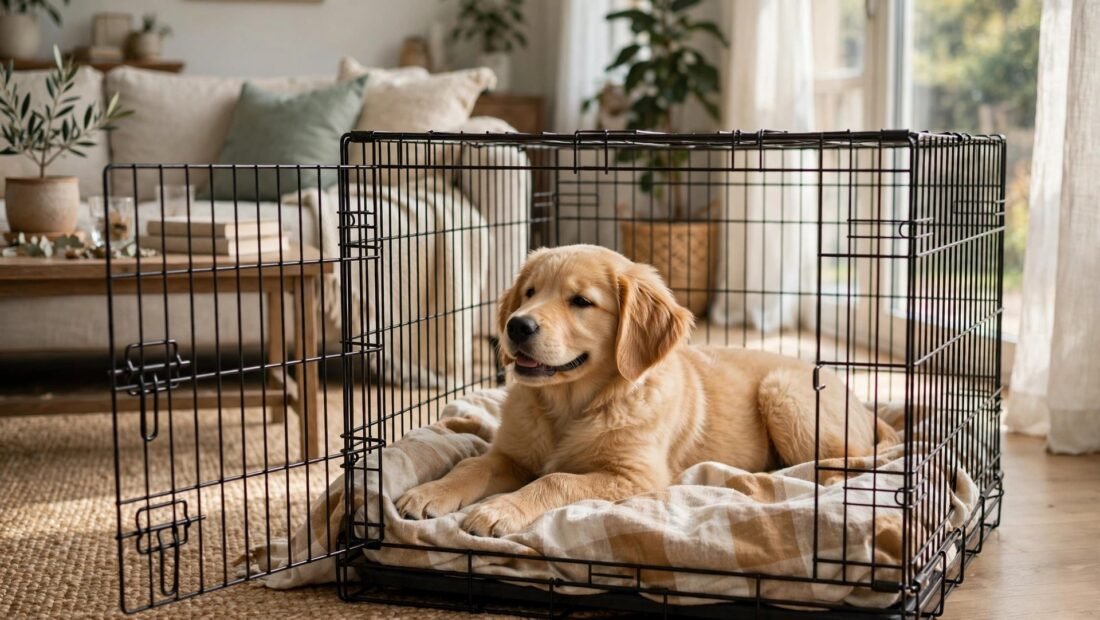
Pick a wire crate for most Texas puppies. Wire ventilates better than a closed plastic crate in warm rooms, and most wire crates come with a divider panel. Size matters more than brand. The puppy should be able to stand, turn around, and lie down flat, with no extra room to spare. Extra space breaks housetraining, because the puppy can sleep in one corner and use the other corner as a toilet.
Use the divider to make the space small now and larger as the puppy grows. Place the crate where people actually spend time, such as the living room during the day. At night, keep it in your bedroom for the first week or two so you can hear the difference between a needy whimper and protest fussing. Add washable bedding, a safe chew, and water if the puppy will be crated for more than a couple of hours. A light cover can make the crate feel like a den, but never cover it fully in summer and never block airflow.
Feed, play, and tire the puppy before any crate practice. A puppy that has just eaten, has not been outside, and is full of energy will not settle. The crate works best on a puppy that is fed, empty, and a little tired.
Phase 1, Days 1 to 2: The Crate Pays Out Good Things
Leave the door open. Do not push the puppy inside and do not close the door at all in this phase. Toss small, high-value treats just inside the door, then deeper inside as the puppy steps in on its own. Let the puppy walk in, take the treat, and walk back out. Repeat in short sessions of five to ten minutes, several times a day.
Feed every meal inside the crate with the door still open. Place the bowl at the back so the puppy chooses to stand fully inside to eat. Scatter a few treats in the bedding when the puppy is not looking, so the crate sometimes produces surprises on its own. The goal for these two days is a single clear lesson: good things happen in there, and nothing scary follows.
If the puppy will not enter at all, move the treats closer to the door and end the session while things are still calm. Forcing entry in this phase creates fear that takes days to undo. Slow work here is what makes the later phases fast.
Phase 2, Days 3 to 4: The Door Closes, Briefly
Start only when the puppy enters happily for food and treats. Let the puppy go in for a meal or a stuffed chew toy, close the door for about thirty seconds, and feed treats through the bars. Open the door before the puppy gets upset. Repeat and build the time in small steps: one minute, then a few minutes, then five minutes, always with something good to chew or lick inside.
Stay visible during this phase. Sit nearby, read, or work in the same room. The puppy is learning that a closed door is temporary and boring, not the start of being left alone. If whining starts, wait for a brief pause before opening the door. Opening during loud crying teaches that crying opens the crate. If the puppy panics, shakes, or drools, you moved too fast. Go back to shorter times the next session and build again more slowly.
End each session on a calm note. A puppy released while quiet learns that quiet is what ends crate time.
Phase 3, Days 5 to 7: More Time and More Distance
Now extend closed-door time toward thirty minutes, then toward an hour, in steps the puppy can handle. Move around the house while the puppy is crated. Step briefly out of sight, then return. Do normal chores. Come and go from the room without making a fuss either way.
Begin using a simple cue as the puppy walks in, such as the word crate or bed, paired with a treat inside. Keep departures and returns low-key. No long goodbyes and no excited greetings. By the end of day seven, most puppies handled in this order will walk in on cue, settle with a chew, and rest while you are in another room for a short stretch.
This is also where the ASPCA’s puppy training and crate guidance lines up with daily practice: short, positive sessions, gradual time increases, and no use of the crate as punishment. If you use the crate to punish, the puppy will fear the place you need it to relax in, and every later step gets harder.
Phase 4, Nights 1 to 7: A Schedule for the Crying
Night and day are different problems. An eight- to ten-week-old puppy needs a toilet break every two to three hours at night. Some waking is biology, not bad behavior, and it will not be trained away in week one.
Run the night the same way each time. Take the puppy out for a last toilet trip right before bed. Keep lights low and talk very little. Place the puppy in the crate with a safe chew and settle down nearby. If crying starts twenty minutes after bedtime and the puppy was just out, that is most often protest. Wait for a pause, then quietly check that the puppy is safe without turning crate time into playtime.
If crying starts two to three hours later, treat it as a genuine need. Take the puppy straight outside with no play, no excitement, and dim lights. Give a few quiet minutes to go, offer calm praise outside if the puppy does, then go straight back to the crate. You are a toilet-break service at night, not entertainment.
Across the week, protest crying usually fades as the puppy learns the night routine, while true toilet cries become easier to spot. In a Texas apartment with thin walls, a rug under the crate area, white noise, and a heads-up to close neighbors during the first few nights can buy goodwill while the puppy learns.
Phase 5, All Week: Potty Training Runs Alongside the Crate
The crate helps housetraining only when the outside schedule is strict. For a puppy aged eight to twelve weeks, go outside right after waking, after every meal, after play, after every nap, and every one to two hours in between. Praise and give a small treat outside, right after the puppy finishes, not back indoors later.
Clean indoor accidents with an enzymatic cleaner and say nothing to the puppy about it. An accident usually means the gap between trips was too long or the puppy was given too much free space too soon. Shorten the gap and watch more closely. Remember the daytime limit as well: about one hour per month of age is the longest a young puppy should stay crated during the day. A three-month-old puppy maxes out near three hours, not a full workday. Longer stretches need a pen setup with a toilet area and a midday break from you, family, or a sitter.
That limit matters in Texas metros where commutes are long. A Houston or Dallas workday plus traffic can stretch to ten hours away from home. Plan the midday visit before the puppy arrives. If chewing becomes the main problem as the dog gets older, read about why your dog chews everything when left alone so you can tell boredom apart from anxiety early.
Texas Conditions That Shape Every Phase
Heat changes the rules. Never crate a puppy in a garage, a car, or a sun-facing room in Texas. Temperatures in closed spaces rise fast enough to kill, even on days that feel only warm outside. The crate belongs in air-conditioned living space, every month of the year. Choose wire over plastic in summer for airflow, skip heavy covers in hot months, and check that the crate spot does not sit in direct afternoon sun through a window.
Offer water at every break and use a small attached crate bowl for longer stretches. Texas puppies lose water faster than owners expect, especially after play. Watch for heavy panting, drooling, or restlessness on hot days and move the crate to a cooler room if the first spot warms up.
Storm season adds one more reason to finish this training early. A crate-trained puppy can travel, shelter, and evacuate far more calmly than a puppy that has never rested in a crate. During hurricane season along the coast, that calm is a safety skill, not a convenience. Practice short car rides with the crate secured once the puppy settles well at home, so travel does not become a brand-new stress added on top of a storm.
What Slows the Timeline Down
The most common delay is too much, too soon: hours behind a closed door on day one. The second is mixed responses to crying, where one night the door opens at once and the next night it does not. Mixed responses teach a puppy to cry longer, because longer crying sometimes works. The third is skipping exercise and a toilet trip before crate time, then expecting a wired, full puppy to sleep.
Keep the order, keep the sessions short, and keep nights boring. Most puppies accept the crate within a week when no phase is skipped, and the crate then becomes a resting place the dog chooses on its own for years.