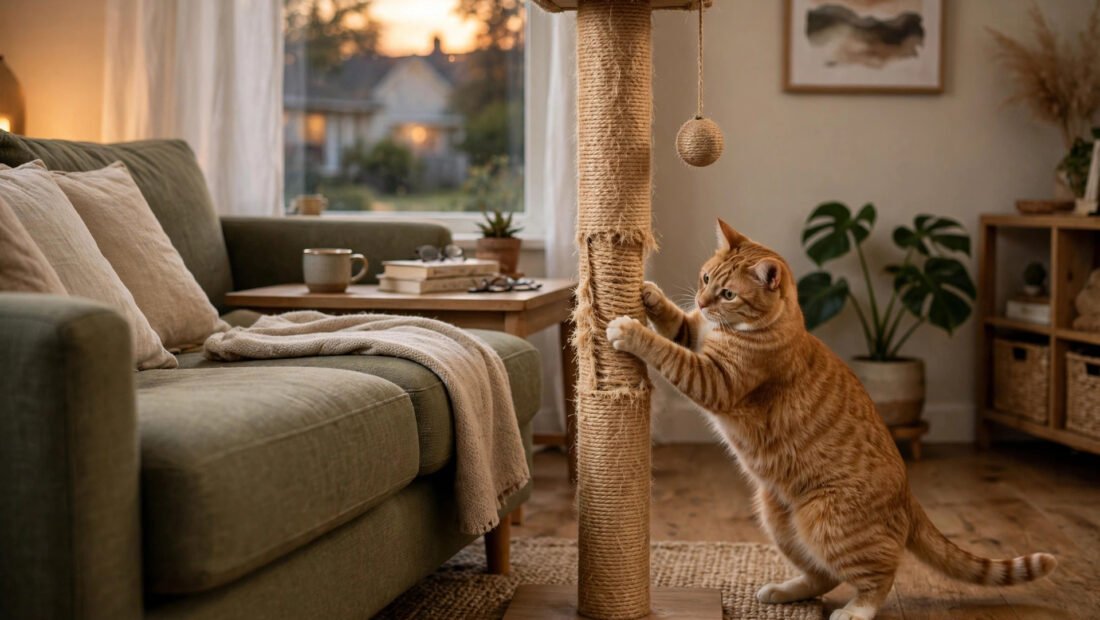
Your cat is not scratching the couch to get back at you. That reading is the first thing to let go of, because almost every failed fix starts there. A cat scratches to strip worn claw sheaths, to stretch its back and shoulders after sleep, and to leave both scent and visible marks that say this is where it lives. The couch arm is popular for a reason. It is tall, it is stable, it sits in the middle of family life, and it gives a full stretch. If you treat that normal need as bad behavior, you will keep fighting the wrong problem while the sofa keeps losing.
The Mistakes That Keep the Couch in Danger
Mistake One: Reading Scratching as Spite
Punishing scratching punishes communication itself. The claws need maintenance whether you approve of the location or not. The scent glands in the paws need to mark familiar places. The stretch is part of how a cat wakes up and moves. A cat that is scolded for all of that does not learn to stop. It learns to feel stressed in the room where it lives, and stress often makes marking more urgent, not less. The habit also goes underground. The cat scratches the same spot when the house is empty and avoids you when you are home, which looks like defiance and is really just timing.
Mistake Two: Reaching for the Spray Bottle
A spray bottle teaches two lessons, and neither one helps. When you are present, the cat learns that you are unpredictable and worth avoiding. When you are absent, it learns that the couch is safe again. The water does not connect, in the cat’s mind, to the idea that a post somewhere else would be better. It connects to you standing there. Over weeks, that erodes trust and leaves the original need untouched. The cat still needs to shed claw sheaths. It still needs to stretch. It still wants to mark the center of its territory. You have added fear without offering an alternative, so the furniture still gets used, just on a different schedule.
Mistake Three: Treating Declawing as a Furniture Strategy
Declawing needs to be described plainly. It is amputation of the last bone of each toe, not a nail trim that lasts longer. It is restricted or banned in a growing list of places. The veterinary concern that follows it is practical, not sentimental: a cat that has pain in its feet can start avoiding the litter box, because digging hurts, and a cat that has lost its first line of defense can turn to biting more readily. That trade can replace one household problem with two harder ones. This is why humane alternatives exist and why they should be tried first, in full, before anyone talks about surgery to protect upholstery. For a fuller picture of normal claw behavior and care, see the ASPCA’s guidance on cat scratching and claw care.
Mistake Four: One Scratcher, Wrong Texture, Wrong Room
A single scratcher bought on looks, placed in a spare bedroom or laundry corner, and then declared a failure is a very common story. Cats do not travel across the house to scratch in exile. They scratch where they live, where they sleep, and where people gather. If the approved surface is far from the couch the cat loves, the couch wins every time. Texture matters just as much. A cat that loves shredding upholstery may ignore smooth wood. A cat that rakes the carpet may walk past a tall sisal post without a glance. One try with the wrong combination tells you almost nothing about whether redirection can work.
Mistake Five: The Wobbly Post
Stability is not a detail. A scratcher that rocks, slides, or tips once under a full stretch becomes furniture the cat will not trust again. Scratching involves real force. The cat leans in, digs in, and pulls down. If the post moves, the experience feels unsafe, and a cat remembers unsafe objects for a long time. The couch, by contrast, never tips. It is heavy, solid, and reliable. Owners often blame the cat for returning to the sofa when the real reason is simple physics: one surface held firm and the other did not.
The Correct Way: Build a Better Place to Scratch
Redirection works when it is built on matching. You are not trying to talk a cat out of scratching. You are offering a surface that does the same job better than the furniture does. That takes four choices made in order, plus patience while the new habit takes hold.
Start With Orientation
Watch before you buy. Does your cat rear up and scratch vertically on the couch arm, stretching tall? Buy a tall vertical post, high enough for a complete stretch without crouching. Does your cat scratch low and long across the carpet or a rug, body close to the floor? Buy a horizontal scratcher or a flat pad. Many cats use both styles at different times of day, and those homes do best with one of each. Guessing here wastes money. Ten minutes of watching saves it, because orientation is the preference cats are least willing to compromise on.
Match the Material Next
Sisal suits most vertical scratchers. Its rough, fibrous surface catches claws well and holds up under daily use. Cats that already target carpet often prefer a carpet-covered scratcher, familiar under the paws even if it looks less stylish. Corrugated cardboard, usually $10 to $15, is the universal crowd-pleaser. It is cheap, light, and easy to replace when it gets shredded, which is exactly the point. A worn-out cardboard pad is proof the system is working. Keep the material consistent once you find a winner. Swapping textures every month restarts the learning you are trying to build.
Put It Where the Cat Already Lives
Location comes third, and it outranks how the scratcher looks in the room. Place it beside the beloved sofa, not across the house from it. Place another beside where the cat sleeps, because cats scratch on waking as part of stretching and marking the start of the day. If the cat has claimed a particular chair leg or door frame, the new scratcher belongs right next to that spot at first. You can move it gradually later, a foot or so at a time, once use is solid. Moving it in one big jump on day two usually sends the cat straight back to the original target.
Make Stability Nonnegotiable
Choose a base that does not move under a full stretch. For tall posts, that means a wide, heavy base or a design you can brace securely. Test it yourself before you invite the cat to use it. Push it hard from the top. If it wobbles for you, it will wobble worse under a lunging cat. Flat cardboard pads should sit on a surface where they will not skate across the floor mid-scratch. A small nonslip mat underneath solves that in seconds. This one check prevents the single incident that can put a cat off a good scratcher for good.
Reward the Right Choice, Every Time at First
A well-placed scratcher still needs an introduction. Rub catnip into sisal or cardboard if your cat responds to it. Start a play session with a wand toy near the post and let the game end at the post, so paws land on it in a moment of excitement. Praise calmly when the cat uses it, and offer a small treat in the early days. You are not bribing forever. You are marking a new habit while it is fragile. Once the post carries the cat’s own scent and visual marks, it becomes self-reinforcing, and the rewards can fade to occasional praise.
Protecting the Furniture While the Lesson Lands
Redirection is not instant, so the couch needs cover during the transition. Furniture covers or a tightly fitted throw protect the favorite corner while making it less satisfying to scratch. Double-sided tape on that corner changes the feel under the paws in a way most cats dislike, and it can come off once the post has taken over. The goal of both tools is temporary. They buy time without punishment and without a daily battle.
Claw care shortens the transition too. Trim claws every two to three weeks, taking just the sharp tip and staying well clear of the pink quick inside the claw. Shorter tips do less damage on the occasions when the cat still tests the sofa. If trimming at home is new to you, go slowly, do a few claws at a time, and stop before either of you gets tense. The step-by-step for how to trim your cat’s nails without getting scratched covers handling and timing in detail.
Nail caps offer a middle path for renters or anyone protecting leather. Soft vinyl caps glued over the claws blunt the damage while training catches up. A set typically lasts four to six weeks per application before growing out and falling off with the natural shedding of the claw sheath. They do not stop the urge to scratch, and they are not a substitute for a good post. They simply lower the cost of mistakes while the new routine settles in. Some cats need a few applications to ignore them. Most adjust quickly.
More Cats, More Scratchers
Multi-cat homes need more scratchers in more places, not one contested post in a hallway. Scratching is partly territorial, so a single station can become a resource worth guarding. Spread options across the rooms cats actually use, with at least one near shared sleeping and lounging areas and others where individual cats rest. That spread lowers tension and raises the odds that a cat waking up, stretching, and looking to mark will find an approved surface within a few steps. It also reveals preferences you would miss with a single purchase, because different cats in the same home often choose different textures and orientations.
An Honest Timeline
Most cats transfer the habit within two to four weeks of a well-matched setup. Well-matched is the key phrase. A tall, stable sisal post beside the couch, a cardboard pad by the bed, covers on the old target, and consistent praise will move most cats in that window. A wrong texture in the wrong room can fail for months and prove nothing. If progress stalls, change one variable at a time: move the post closer first, then try a new material, then add a second location. Keep the old furniture covered while you test. When the post is shredded, smelling of the cat, and used on waking without any prompting from you, the education is done and the couch can finally retire from active duty.