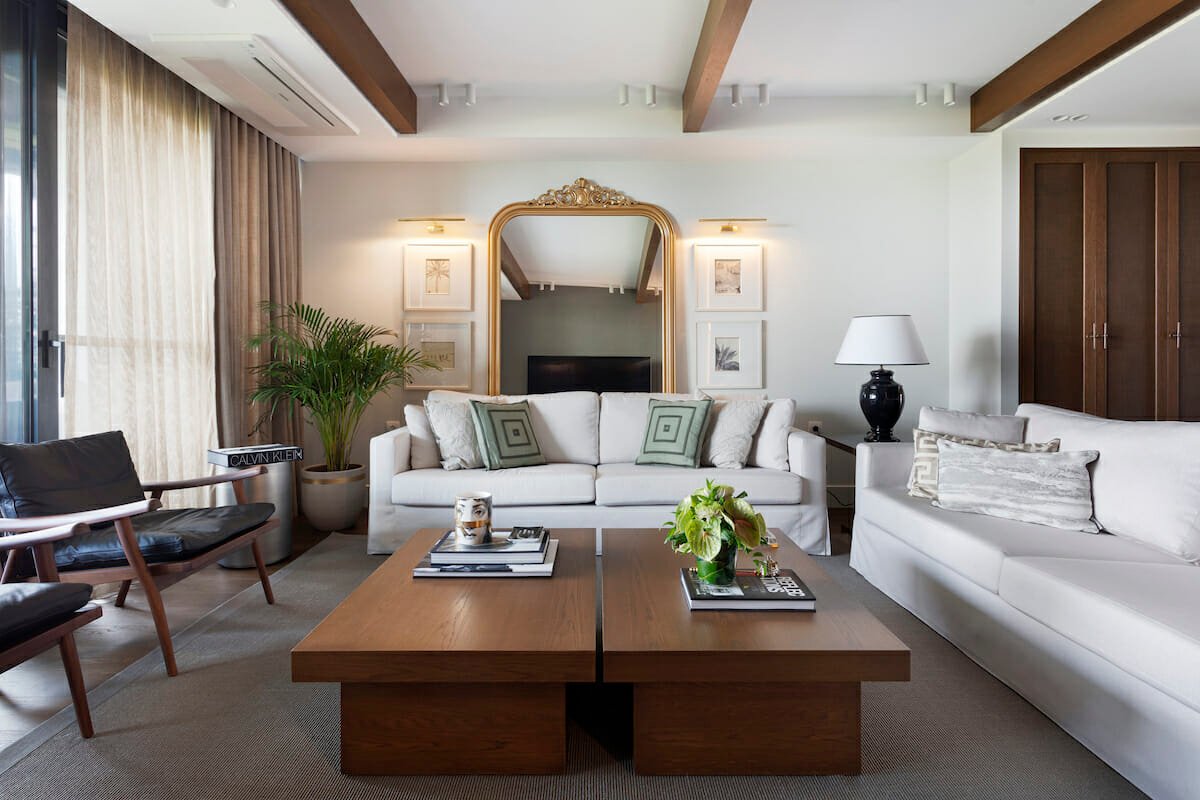
So, how much does an interior designer cost? The short answer: most US homeowners pay $50 to $200 per hour for interior design services in 2026, with full single-room projects typically running $2,000 to $12,000. According to HomeAdvisor’s national data, the average homeowner spends around $5,500 on a complete interior design project.
But “it depends” is doing a lot of heavy lifting here. Designers bill in at least four different ways — hourly, flat fee, per square foot, or a percentage of your total project budget — and the same room can cost three times more in Manhattan than in Memphis. This guide lays out every pricing model, what you’re actually paying for, and how to keep the bill under control.
The Average Cost of an Interior Designer in 2026
Here’s what typical pricing looks like across the most common billing models:
- Hourly rate: $50–$200 per hour (juniors at the low end, established designers in big cities up to $500)
- Flat fee per room: $2,000–$12,000 depending on room size and scope
- Whole-home project: $10,000–$50,000+ for full-service design
- Consultation only: $150–$500 for a 1–2 hour session
- Per square foot: roughly $5–$15 per sq ft for design services
- Percentage of project cost: 10–20% of your total renovation/furnishing budget
Those ranges come from industry surveys and pricing data compiled by home-improvement platforms like The Spruce. Your actual quote will land somewhere in these bands based on the factors below.
How Interior Designers Charge: 4 Pricing Models
1. Hourly billing
The most transparent model. You pay for the designer’s time — usually $50–$200 per hour — and you can see exactly where every dollar went. Best for small projects, consultations, or when you want advice but plan to do the shopping yourself. The risk: open-ended projects can quietly rack up hours.
2. Flat fee
One fixed price for a defined scope — say, $4,500 for a complete living room design including a floor plan, shopping list, and 3D renderings. Flat fees typically range from $1,000 for a simple refresh to $10,000+ for multi-room work. Great for budgeting, but make sure the contract spells out exactly what’s included and how revisions are handled.
3. Per square foot
Common for larger projects and commercial spaces. At $5–$15 per square foot, a 400 sq ft living room costs $2,000–$6,000 in design fees alone. Simple to estimate, though it doesn’t account for complexity — a tricky small kitchen can take more work than a straightforward large bedroom.
4. Percentage of total project cost
The designer takes 10–20% of everything you spend on the project — furniture, materials, contractor labor. On a $40,000 living room renovation, that’s $4,000–$8,000 in design fees. This model aligns the designer’s incentives with yours (up to a point), but watch out: it can reward overspending.
What’s Included in the Fee (and What Isn’t)
A full-service design fee generally covers the design work itself: space planning, color palettes, furniture and material selections, floor plans, 3D renderings, and coordination with contractors. What it usually does not cover:
- Furniture and materials: You pay for these separately — the design fee is for the expertise, not the sofa.
- Furniture markup (10–40%): Many designers buy furnishings on your behalf and add a markup. Some pass their trade discount to you instead. Ask upfront which it is.
- Contractor labor: Painters, electricians, and installers bill separately.
- Revisions beyond the contract: Most flat-fee agreements include 2–3 rounds of revisions. More than that, and you’re back on the hourly clock.
- Travel and shopping time: Some designers bill for showroom visits and travel; others fold it in. Clarify before you sign.
6 Factors That Move Your Quote Up or Down
1. Location
Designers in New York, Los Angeles, and San Francisco charge at the top of every range. The same project in a mid-size Midwestern city can cost half as much.
2. Experience and reputation
A designer with 15 years of experience and a published portfolio charges more than someone building their client list — and often earns it by avoiding expensive mistakes.
3. Scope of work
A color consultation is a few hundred dollars. A full-service renovation with contractor management is a five-figure commitment. Be honest about how much help you actually need.
4. Project complexity
Custom millwork, structural changes, and smart-home integration all add design hours. A cosmetic refresh is the cheapest way to use a designer.
5. Timeline
Rush jobs cost more. If you need everything done in six weeks, expect a premium over a relaxed four-month schedule.
6. How you buy furniture
Designers with trade accounts can often get 10–25% off retail — sometimes enough to offset their entire fee. Ask whether you’ll see those savings.
Ways to Save on Interior Design
- Book a consultation only. A $200–$400 session can give you a color scheme, layout, and shopping list you execute yourself.
- Use e-design services. Online-only design packages often run $500–$1,500 per room — a fraction of in-person full service.
- Do the legwork. Source your own furniture from the designer’s list and skip the 10–40% procurement markup.
- Phase the project. Design the whole house now, implement one room at a time as budget allows.
- Hire newer designers. Talented designers building their portfolios often charge 30–50% less than established names.
If you’re fixing up a rental property rather than your own home, the math changes — staging and durable finishes matter more than personal taste. Our property manager cost guide breaks down what professional rental management runs, which helps you budget the full landlord picture.
Interior Designer Cost FAQs
Is it worth hiring an interior designer?
For renovations over $15,000–$20,000, usually yes. A designer prevents costly mistakes — wrong paint undertones, furniture that doesn’t fit through the door, tile ordered in the wrong quantity — that can easily exceed their fee. For a single-room refresh, a consultation is often enough.
Do interior designers charge for the first consultation?
Many do — typically $150–$500 for an hour or two. Some apply that fee toward your project if you hire them. Free consultations exist but are usually sales-oriented rather than design-oriented.
What’s the difference between an interior designer and a decorator?
Designers typically handle structural and spatial planning (layouts, lighting plans, renovations) and may hold certifications. Decorators focus on furnishings, colors, and finishes. Designers generally charge more because the work is more technical.
Can I hire a designer for just one room?
Absolutely — it’s one of the most common engagements. Expect $2,000–$12,000 for full-service single-room design, or a few hundred dollars for a consultation-only plan you implement yourself.
How do I avoid surprise charges?
Get the fee structure in writing before work starts: hourly rate or flat fee, what’s included, how revisions work, furniture markup policy, and billing for travel or shopping time. If it’s not in the contract, assume it’s extra.
The Bottom Line
An interior designer in 2026 costs $50–$200 per hour on average, with most full projects landing between $2,000 and $12,000 per room. The billing model matters as much as the rate — a flat fee gives you budget certainty, while hourly billing gives you flexibility. Get the scope, revision policy, and furniture markup in writing, and consider starting with a paid consultation if you’re on the fence. Good design isn’t cheap, but bad design you have to redo is far more expensive.