Nothing stings like realizing — six months after closing — that you paid $30,000 too much for your house. In Texas markets, where bidding wars and rapid appreciation have normalized aggressive offers, overpaying is easier than most buyers think. Sellers and listing agents price strategically: sometimes fairly, sometimes aspirationally, sometimes to manufacture a bidding war from an artificially low number. Learning to tell the difference between a fairly priced home and an overpriced one is a skill, and it starts with understanding how pricing actually works.
How Listing Prices Are Set (and Why They’re Often Wrong)
Listing agents build a comparative market analysis (CMA): recent sales of similar homes nearby, adjusted for size, condition, lot, and upgrades. In theory, the list price reflects market value. In practice, three distortions creep in. First, sellers anchor emotionally — they remember what the neighbor’s renovated home sold for and ignore that theirs needs $40,000 of work. Second, agents sometimes accept an inflated price to win the listing, planning to negotiate reductions later. Third, in hot markets, agents deliberately underprice to trigger bidding wars, meaning the list price understates the likely sale price.
Your job is to build your own valuation, not to trust the list price. Pull the last 90 to 180 days of closed sales within a half-mile — same bedroom count, within 20 percent of square footage, similar age and condition. Adjust honestly: deduct for the dated kitchen, add for the new roof. If your number lands 5 percent below list, the home is optimistically priced. Ten percent or more below, and it is overpriced by any honest measure.
The Data Points That Reveal Overpricing
- Days on market. In a balanced Texas market, well-priced homes go under contract in 2 to 4 weeks. A listing sitting 60+ days with no price reduction is either overpriced or has an undisclosed problem. Check the listing history — multiple price cuts tell you the market has already voted.
- Price per square foot vs. the neighborhood. Calculate it for the listing and for the last ten comparable sales. A 15 percent premium per square foot needs a justification you can see: a larger lot, a pool, genuinely high-end finishes — not “pride of ownership.”
- Tax appraisal vs. list price. Texas appraisal district values lag the market and are not market value, but a list price 30 percent above the tax appraisal in a stable neighborhood deserves scrutiny.
- Sale-to-list ratios nearby. If comparable homes are selling at 98 percent of list, a seller asking 110 percent of comparable value is dreaming.
- AI pricing tools — with skepticism. Automated valuations are increasingly influential in how buyers perceive value; our article on how AI is changing real estate listings and home searches explains where these estimates help and where they mislead.
The Inspection and Appraisal Safety Nets
Two transaction mechanisms protect you from your own enthusiasm. The appraisal — required by your lender — is an independent valuation. If the home appraises below your offer price, you have a contractual basis to renegotiate, bring extra cash, or walk away (depending on your contingencies). Never waive the appraisal contingency unless you have the cash to cover a gap and have consciously decided the home is worth it.
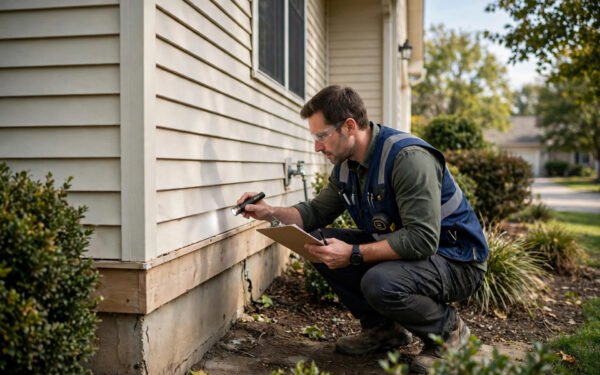
The inspection reveals the condition adjustments your CMA assumed. A home priced like it has a new roof but actually needing a $14,000 replacement is overpriced by $14,000, whatever the comps say. Price and condition must be evaluated together — a “deal” on a home needing $50,000 of systems work is no deal at all.
Texas Market Traps That Inflate Prices
New construction premiums
Builders price new homes 10 to 20 percent above comparable resales. That premium evaporates the day you become the resale — your “new” home competes with other new homes. Buy new construction for the warranty and the floor plan, not as an investment thesis.
Flood zone blindness
In Houston and coastal markets, homes in flood zones carry insurance costs that effectively reduce what the property is worth to you. A home priced at market but requiring $4,000 annual flood insurance is overpriced relative to an identical home outside the zone. Always get the insurance quote before the offer.
HOA and MUD taxes
Texas Municipal Utility Districts and HOAs add hundreds monthly in newer suburbs. Two identical $400,000 homes with $200 versus $600 monthly in combined HOA/MUD payments are not the same purchase — capitalize the difference.
Flip cosmetics
Fresh paint and luxury vinyl plank over failing systems is the oldest trick in the book. Flipped homes in Texas deserve extra inspection scrutiny: check permits for the renovation work through the city, and be wary when every surface is new but the panel, water heater, and HVAC are original.
How to Make an Offer on an Overpriced Home
Sometimes you love an overpriced house anyway — the lot, the street, the schools. That is fine, as long as you offer what it is worth, not what is asked. Offer your honest valuation with comparable sales attached; sellers respond better to data than to lowball theater. Include an appraisal contingency so the lender’s valuer backs you up. And set a walk-away number before negotiating — the buyers who overpay most are the ones who decided the price emotionally and justified it afterward. For guidance on the costs that hit after you close, what every new homeowner should know in the first month covers the expenses that surprise buyers who stretched on price.
The Federal Reserve’s housing market data and the Texas A&M Texas Real Estate Research Center’s market reports provide the macro context — inventory, price trends, and months of supply — that tells you whether you are negotiating in a buyer’s, seller’s, or balanced market. Your leverage depends entirely on that answer.
Conclusion
A house is overpriced when honest comparable sales, adjusted for condition, land 5 to 10 percent or more below the asking price — regardless of how the seller feels about it. Days on market, price per square foot, listing history, and the appraisal all test the number independently. Texas buyers face specific traps: new-construction premiums, flood insurance, MUD taxes, and flip cosmetics that inflate apparent value. Build your own valuation from closed sales, protect yourself with appraisal and inspection contingencies, and never let competition or emotion override the math. The market always reveals the truth eventually — the only question is whether it reveals it before or after you close.
Frequently Asked Questions
How do I know if a house is overpriced in Texas?
Compare the asking price to closed sales of similar homes nearby from the last 3 to 6 months, adjusted for condition and upgrades. A gap of 5 to 10 percent above honest comps signals overpricing; check days on market and price history for confirmation.
Should I trust the listing agent’s comparable sales?
Verify them independently. Agents sometimes select favorable comps to justify a price. Pull your own sales data and adjust for condition differences the listing may gloss over.
What if I love a house that is overpriced?
Offer your honest valuation supported by comps, keep the appraisal contingency, and set a walk-away number in advance. Paying a small premium for the right home is defensible; paying blindly is not.
Does a low appraisal mean the house was overpriced?
Often, yes — the appraiser’s independent valuation reflects what comparable sales support. A low appraisal gives you contractual leverage to renegotiate or exit, which is exactly why the contingency matters.