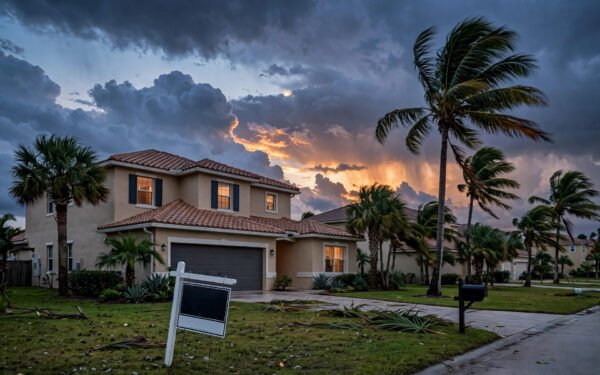

The most expensive sentence in Texas real estate is “we have to have this house,” said out loud before a walk-away number exists. Once that sentence is spoken, every later decision bends toward winning, and winning at any price is how a bidding war quietly costs a buyer $20,000 or $30,000 they will repay, with interest and property tax, for decades. The traps come first here, because avoiding them is worth more than any clever offer tactic. Then comes the number itself, the terms that win without extra price, and the appraisal-gap playbook for when the lender’s value lands below yours.
Mistake One: Setting the Ceiling After Falling in Love
Buyers tour a house twice, picture their furniture in it, and only then ask what they can stretch to. By that point the ceiling is set by emotion and defended by pride. The fix is order: set the walk-away number before the second tour, from three inputs that have nothing to do with feelings.
First, comparable sales. What have genuinely similar homes nearby actually sold for in the last 90 days? Texas is a non-disclosure state, so sale prices are not public record the way they are elsewhere; your agent’s MLS data is the anchor. Second, appraisal exposure, covered in detail below. Third, the real monthly payment. Texas property taxes commonly run around 1.8 to 2.2 percent of value in many areas, so an extra $20,000 of price carries tax and insurance on top of the loan cost. Run the monthly figure, not just the headline price. Buyers working out their true ceiling will find it useful to check how much house you can afford on a $75,000 salary in Texas as a worked example of how taxes change the answer.
Write the number down and tell your agent to hold you to it. A good buyer’s agent will talk a client out of breaking their own ceiling. That is the agent you want beside you when the phone rings with “highest and best by 5 p.m.”
Mistake Two: Waiving Protections You Have Not Replaced
In a hot market, buyers strip out every safeguard to look strong: no option period, no inspection, no appraisal protection. Each waiver does make an offer more attractive. Each one also removes an exit, and exits are what keep a bidding war from becoming an expensive trap.
The safer version of the same move is the pre-inspection. Before offering, pay roughly $300 to $500 to have the home inspected. You then know about the foundation, the roof, and the HVAC before you commit, and you can shorten or waive contingencies with your eyes open. The money is lost if another buyer wins, which stings. It stings far less than buying a house with a failing foundation because you waived inspection on a guess.
The Texas option period deserves the same care. It is the window, paid for with an option fee, during which the buyer can terminate for any reason. Shortening it is a reasonable competitive move, covered below. Waiving it entirely without a pre-inspection is gambling dressed as confidence.
Mistake Three: Treating Earnest Money and Terms as Decoration
Many buyers assume the highest price wins and put all their effort into the number. Sellers, especially sellers juggling their own move, often choose confidence over a slightly higher price attached to a shaky buyer. Weak terms lose winnable houses.
The typical ranges matter here. Earnest money of 1 percent of the price is standard in Texas. In a genuine bidding war, 2 to 3 percent signals that the buyer is serious and unlikely to walk away over cold feet; it costs nothing extra if the deal closes, because it is credited at closing. An option period of 7 to 10 days is the usual expectation, and offering closer to 5 days tells the seller you will decide quickly. Closing flexibility is free to give and valuable to receive: ask the listing agent what timeline the seller wants and match it if you can. Clean paperwork rounds it out: a full pre-approval from a known local lender rather than a bare pre-qualification, proof of funds for the down payment and any gap coverage you have promised, and no unnecessary addenda.
A short personal note about the house can break a tie between two close offers. Keep it about the home and your plans for living in it, and keep it clear of anything touching protected characteristics, which creates fair-housing problems for everyone involved.
Mistake Four: Using an Escalation Clause Without a Hard Cap
An escalation clause promises to beat any competing bona fide offer by a set increment, say $1,000 to $2,500, up to a stated maximum. Used carelessly, it hands the seller your ceiling and invites a counter that starts there. Used with discipline, it is a guardrail: it means you never guess $15,000 over the competition when $2,000 would have won, and it physically cannot push you past the cap you wrote.
The rules for using one safely are simple. Set the cap at your walk-away number and not a dollar higher. Require proof of the competing offer that triggered the escalation. Keep the increment meaningful rather than tiny. If any of those conditions feel uncomfortable, skip the clause and submit a clean fixed offer instead.
Mistake Five: Promising Unlimited Appraisal-Gap Coverage
The appraisal gap is where bidding wars are actually lost financially. Offer $440,000 on a house that appraises at $420,000 and the lender lends against $420,000. The $20,000 difference comes out of your pocket, in cash, on top of your down payment and closing costs. A buyer who promised to cover any gap, in writing, without counting their cash first, can end up unable to close and at risk of losing earnest money.
The disciplined middle path is a written cap: the buyer will cover an appraisal shortfall up to a set amount, for example $10,000, and a shortfall beyond that allows termination or renegotiation. That single sentence keeps an offer competitive, since the seller knows real cash stands behind it, while keeping the buyer’s worst case survivable. Waiving the appraisal contingency entirely is the maximum-risk option and only makes sense with verified cash reserves and strong comparable sales behind the price. Before signing any gap language, it is worth reading the CFPB’s mortgage and home buying resources on how appraisals and lending limits work.
One more tool sits between guessing and waiving: a pre-appraisal. Paying roughly $400 to $600 for your own appraisal before offering is unusual, but on a house you are determined to win it gives you a professional value opinion before you set your cap and gap terms. Combined with a pre-inspection at $300 to $500, a buyer can spend under $1,100 to replace nearly every protection they appear to be waiving.
Mistake Six: Ignoring the Monthly Cost of Winning
A buyer can stay under a price ceiling and still lose, because the ceiling was set on the wrong figure. In Texas the purchase price is only part of what a house costs each month. Property tax at around 1.8 to 2.2 percent of value is charged on the higher price you just agreed to pay, and it recurs every year. Insurance follows the value of the home upward too. An extra $20,000 added in the heat of a bidding war can therefore mean roughly $150 to $200 more per month once the loan payment, tax, and insurance are combined, depending on the local tax rate and the loan terms. Over a five-year stay that is real money, and over a full mortgage term it dwarfs the increment that felt small at the offer table.
So set the walk-away number in monthly terms as well as price terms. Decide the highest all-in monthly payment the household can carry comfortably, with room left for repairs, savings, and ordinary life, then work backward to the price that produces it at current rates and local taxes. If the bidding crosses the price that breaks the monthly ceiling, the answer is the same as when it crosses the price ceiling: stop. A house that wins the war and strains every month afterward was not won at all.
There is a quieter version of the same trap after the contract is signed. Winning buyers sometimes discover during the option period that the roof is near the end of its life or the foundation needs work, then feel too committed to use their exit. That is what the option period is for. Money already spent on inspections and option fees is gone either way; money not yet spent on a bad purchase is still yours. Walking away inside the rules, on evidence, is discipline working as designed, not failure.
After the Traps: What Winning Cleanly Looks Like
With the mistakes cleared away, the winning pattern is plain. The ceiling is set in calm, from comparable sales, payment math, and counted gap cash, and it is honored when the pressure arrives. The competition happens on terms as much as price: earnest money at 2 to 3 percent instead of the standard 1 percent, an option period shortened from the usual 7 to 10 days to about 5, a closing date matched to the seller, and paperwork that gives the listing agent nothing to worry about. Escalation and gap language, if used at all, are capped in writing at numbers the buyer has already accepted.
And if the bidding passes the ceiling, the buyer loses cleanly. Chasing a winner with a backup offer above your own number is how remorse gets built. Texas metros keep producing new listings, and another suitable house is a matter of patience. There is no second chance to unspend an overpayment. The buyers who come out of bidding wars well are not the ones who win every house. They are the ones who never lose money winning one.