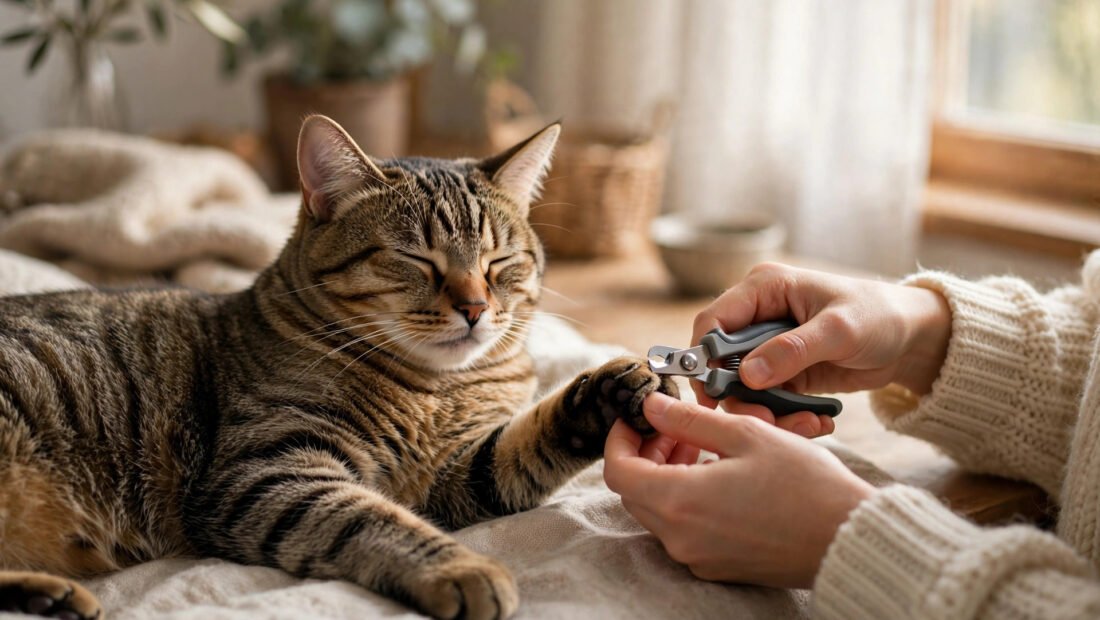
Every cat owner knows the paradox: those razor claws shredding your Texas leather couch need trimming desperately, but the last attempt ended with you bleeding, the cat under the bed, and a mutual trust deficit. Here’s the truth most guides skip — trimming cat nails without getting scratched isn’t about bravery or speed. It’s about reading feline body language, working with the cat’s tolerance instead of against it, and having a bail-out plan for every session. Done right, most cats learn to tolerate nail trims the way they tolerate everything else humans do: with mild disapproval and zero bloodshed.
Why Cat Nails Need Trimming (Especially Indoors)
Outdoor cats wear their claws naturally on rough surfaces. Indoor cats — the majority in Texas, where heat, traffic, and coyotes keep cats inside — don’t. Untrimmed nails grow into painful curves, snag on fabrics (risking torn nails, which bleed dramatically), and turn every kneading session into a needlepoint project on your lap. Aim to trim every 2–4 weeks; you’ll know it’s time when you hear clicking on hard floors.
A cat’s claw has a pink inner core called the quick — living tissue with blood vessels and nerves — surrounded by the translucent nail sheath. Cut the quick and it bleeds and hurts; the cat remembers. Your entire technique revolves around confidently avoiding it.
Gear Up Before You Start
- Cat nail clippers: scissor-style or guillotine-style both work; scissor-style gives beginners better visibility. Human nail clippers crush rather than cut — don’t use them.
- Styptic powder or pencil: your insurance policy. If you nick the quick, a pinch of styptic powder stops bleeding in seconds. Cornstarch works in a pinch.
- High-value treats: the stinkiest, most irresistible treats you own — lickable tube treats are ideal because they keep the cat occupied.
- A towel: for the “burrito method” if needed (below).
- Good lighting: you must see the quick clearly. On light-colored nails it’s the pink triangle; on dark nails, trim conservatively in thin slices.
The Low-Stress Method: Desensitization First
The mistake is going from zero to full pedicure in one session. Spend 3–5 days on prep:
- Days 1–2: while the cat is relaxed, gently touch and massage the paws. Treat after each paw. Stop before the cat gets annoyed — always end on a win.
- Days 3–4: press gently on the paw pad to extend one claw, then treat. Repeat a few claws per session.
- Day 5: introduce the clippers — let the cat sniff them, touch a claw with the closed clippers, treat. Then trim one nail. Just one. Massive treat. Done for the day.
This feels slow. It saves weeks of wrestling later. Cats that learn trims predict treats stop fighting the process — some even purr through it. If your cat travels with you, finding truly pet-friendly hotels matters too, since stressed travel cats need their claws managed before the trip.
The Trimming Technique
- Choose your moment: a sleepy, post-meal cat is ideal. Never attempt trims during zoomies or after a stressful event.
- Position comfortably: sit the cat in your lap facing away, or on a table with your body as a gentle barrier. No pinning, no scruffing — restraint escalates panic.
- Extend the claw: press the paw pad gently; the claw slides out.
- Cut at 45 degrees, removing only the sharp tip — 1–2mm on most cats. On dark nails where you can’t see the quick, take thin slices until you see a grayish oval in the cross-section, then stop.
- One paw per session is fine. There is no rule saying all 18 claws (don’t forget dewclaws) must happen at once. Two paws today, two tomorrow — the cat won’t file a complaint.
When the Cat Won’t Cooperate: The Burrito Method
For genuinely resistant cats, wrap the cat snugly in a towel like a burrito, exposing one paw at a time. Keep sessions under 5 minutes. This isn’t punishment — the snug wrap actually calms many cats (same principle as anxiety wraps). Talk softly throughout. If the cat is panting, growling continuously, or thrashing despite the wrap, stop. Forcing it teaches the cat that trims are traumatic, making every future session worse. Try again tomorrow, or trim just 2–3 nails and quit while you’re ahead.
What to Do If You Cut the Quick
It happens to everyone eventually. Don’t panic — the cat takes its emotional cues from you:
- Apply styptic powder with gentle pressure for 10–15 seconds. Bleeding stops quickly.
- Give a treat immediately. You want the lasting memory to be “treat,” not “pain.”
- End the session on that paw (or entirely). Resume another day.
- If bleeding doesn’t stop within 10 minutes, call your vet — this is rare but worth knowing.
Alternatives and When to Get Help
- Scratching posts: essential maintenance between trims, not a replacement — sisal posts let cats shed the outer nail sheath naturally.
- Nail caps: soft vinyl caps glued over claws last 4–6 weeks. Good for furniture protection, but they don’t replace trimming and some cats chew them off.
- Professional help: vet clinics and groomers trim nails for $10–$20. If your cat is a genuine danger to you (deep bites, not just scratches), this is the smart choice, not a failure. Bites that break skin need medical attention — cat bites infect easily.
The AVMA’s pet-owner resources cover nail care basics, and PetMD has illustrated guides if you want visuals before your first attempt.
Conclusion
Trimming cat nails without getting scratched comes down to preparation over courage: desensitize the paws over several days, trim when the cat is sleepy, take only the sharp tips, and never be too proud to stop after two nails. Keep styptic powder within reach, keep treats flowing, and keep sessions short enough that the cat’s last memory is a reward, not a wrestling match. Within a month of consistent, calm sessions, most cats downgrade nail trims from “mortal combat” to “mildly annoying” — which, in cat terms, is a five-star review.
Frequently Asked Questions
How often should I trim my cat’s nails?
Every 2–4 weeks for most indoor cats. You’ll know it’s time when nails click on hard floors or start snagging on fabric. Front claws grow faster than rear ones and may need more frequent attention.
Can I use human nail clippers on my cat?
No — human clippers crush the nail rather than slicing it, which can split the claw and cause pain. Use scissor-style or guillotine-style pet clippers sized for cats; they’re inexpensive and last years.
What if my cat has dark nails and I can’t see the quick?
Trim in thin slices, examining the cross-section after each cut. When you see a grayish or pinkish oval appear in the center, you’re approaching the quick — stop there. When in doubt, take less.
Should I trim my cat’s back claws too?
Yes, though they grow more slowly and need less frequent trimming. Don’t forget the dewclaws (the “thumbs” on the front paws) — they’re easy to miss and can curl into the paw pad if neglected.
My cat bites when I touch its paws. What should I do?
Respect the boundary and go slower — weeks of treat-paired paw touches before any trimming. If the cat genuinely bites hard enough to break skin, have a vet or groomer do the trims; it’s safer for everyone and costs very little.