The highest pay in Texas without a bachelor’s degree is not a trick or a loophole. Air traffic controllers, elevator installers, and master electricians sit at or past six figures, and they get there through licenses, paid training, and years on the job rather than four years in a classroom. The same pattern shows up in other fields too. A strong wage without a degree almost always rests on a skill that is hard to hire, hard to replace, and needed right away.
That does not mean the path is short. Most of these jobs ask for steady work over several years, plus night shifts, heat, travel, hard physical effort, constant self-teaching, or a calm head under pressure. The pay makes sense once you see how few people stick with it long enough to reach the top steps.
The Pattern Behind the High Pay
Look across the best paid no-degree work in Texas and a few things repeat. The job solves a costly problem. A dead electrical system shuts down a plant. A missed cyber threat can close a business. A nurse or therapist shortage leaves patients waiting. A sales rep who brings in steady work keeps a whole crew busy.
Skilled Trades and the Long Pay Climb
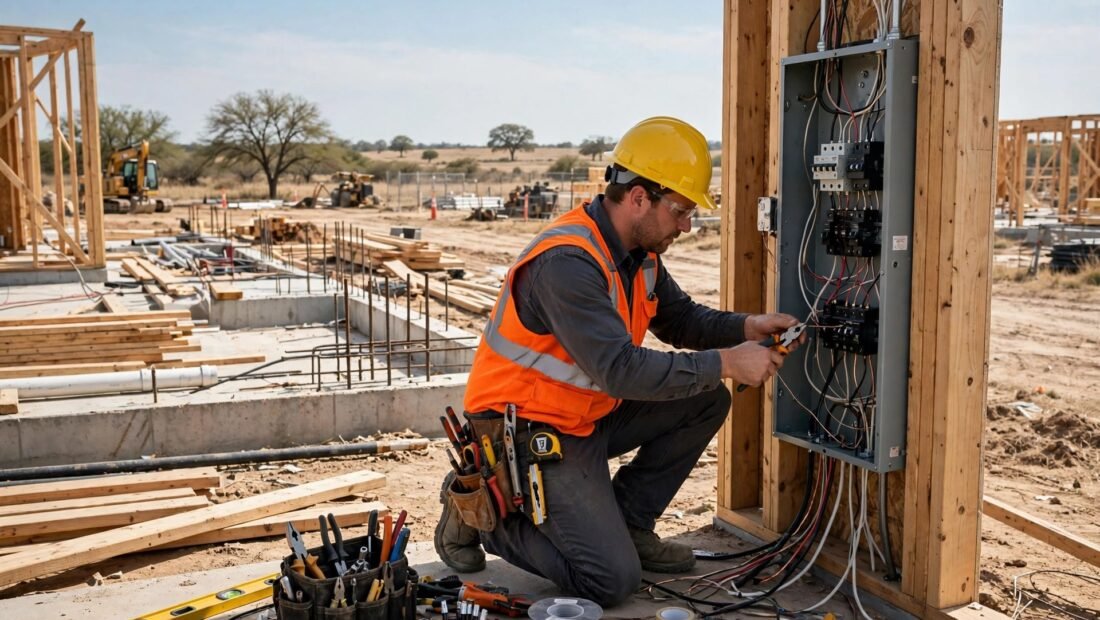
The trades are the clearest route, and electricians show the shape of it best. Licensed electricians in Texas metro areas commonly earn $60,000 to $95,000. Master electricians and those who move into industrial plants or oilfield work cross $100,000. The way in is a 4-to-5-year apprenticeship. You work for pay while you learn, starting around $35,000 to $45,000 and rising as your hours and skill build.
Plumbers follow a close path. Journeyman plumbers in Texas earn $55,000 to $85,000. Master plumbers who run their own shops can earn well into six figures, though that top end comes with the stress of finding work, pricing jobs, and managing crews. The license matters more than any single class. It tells customers and employers that the state has checked your training and that you can be trusted with work that can flood or burn a building if it is done wrong.
Why Elevator Work and Industrial Trades Sit at the Top
Elevator installers and repairers are among the best paid tradespeople in the country, often at $90,000 and above. The work is tight, technical, and bound by strict safety rules. Openings are fewer than in electrical or plumbing work, and entry can be hard to get. That limit is part of why the pay stays high.
Welders show a wider spread. A basic shop welding job pays a solid living. A skilled rig welder in the Permian Basin, willing to travel and work long turns in hard conditions, can reach the top tier. The difference is not just hand skill. It is where you work, what you can weld, and whether you can pass tough tests on the spot. Two people with the same job title can live in very different pay bands.
Tech Jobs That Test Skill First
Tech hiring in Texas still lists degrees on many postings, yet for hands-on roles employers often care more about what you can show. A cert by itself will not land a senior job. A cert plus real practice, a small portfolio, and clear proof that you can fix problems will open doors that stay shut for a degree holder with no hands-on work.
The most open door is IT support. Start with CompTIA A+ and Network+ certs, with exam fees in the $400 to $700 range for the pair of paths people most often take, and a help desk role at $45,000 to $55,000 in Dallas or Austin is a fair first step. From there, systems admin and network roles paying $75,000 to $110,000 open up after a few years of steady work. The climb depends on learning the dull parts well: backups, permissions, network faults, and calm help for upset users.
Cloud support pays more, sooner, for people who put in the lab time. AWS or Azure certs plus a set of small projects you built yourself can lead to roles at $70,000 to $90,000. Senior cloud engineers move well past $130,000. Austin, Dallas, and Houston all hire for this work. The catch is pace. Tools change fast, and you have to keep learning to hold that pay.
Cyber security follows the same rule. A Security+ cert plus home lab work can lead to a security operations center analyst job starting around $65,000 to $80,000. Energy firms, banks, hospitals, and city systems in Texas all need people to watch alerts and sort real threats from noise. Web work is close by. Junior freelance or agency dev roles in Texas start around $55,000 to $75,000, and strong developers clear $100,000 whether or not they hold a degree. A live portfolio of finished sites or apps counts for more than a list of courses.
If you are returning to work after time away, the proof matters even more. A recent cert or a fresh project gives an employer something current to judge. It also helps to know how to explain a gap in your employment history in a short, calm way, so the focus stays on the skill you bring now rather than the break itself.
Health Care Roles Built on Licenses, Not Degrees
Health care offers steady pay and steady demand, but read the labels with care. Some of the best roles here need an associate degree rather than a bachelor’s degree. Radiation therapists in Texas earn roughly $85,000 to $100,000. Dental hygienists earn about $75,000 to $95,000. Registered nurses who take the associate degree route earn $75,000 to $95,000 and up. These are not quick certs. They are full programs with clinical hours, exams, and state licenses.
Shorter routes pay less at the start but get you working sooner. Medical coding and billing certs can lead to jobs at $45,000 to $60,000, and much of that work can be done from home. Surgical techs earn about $50,000 to $65,000. Paramedics fall in a similar band, with overtime and shift work pushing totals higher in busy systems.
The trade-off is clear. The need is real across Texas, but the work can be draining. You stand for long hours, deal with sick or scared people, and follow strict rules on every shift. People who like clear steps and teamwork tend to last.
Sales, Driving, and Public Safety
Commission sales has no pay ceiling in the way hourly work does. Top business-to-business reps, medical device reps, and enterprise software sellers in Texas earn $120,000 to $200,000 and more, with no degree needed to start. That top range belongs to a small share of sellers, and it comes with risk. A slow quarter can cut your income fast. Base pay may be low. You need thick skin, a good memory for people, and the discipline to follow up when no one replies.
Real estate works in much the same way. No degree is required. You need a high school diploma or equivalent, state approved pre-license study, and a passed exam. A strong agent in a busy market can earn six figures, while a new agent can earn very little in the first year.
Other strong routes are steadier. Commercial truck drivers with a CDL in special hauling earn $70,000 to $90,000. Air traffic controllers who clear the federal academy route reach a national median past $130,000, though entry is strict, age limits apply, and training washout is real. Power plant operators earn solid pay for shift work that demands care and focus. Police officers and firefighters in major Texas cities earn $65,000 to $90,000 with overtime, plus pension benefits that add long term value beyond the yearly wage.
What Entry Really Costs and How Long It Takes
The money gap is large. A bachelor’s degree at a Texas public university can run $40,000 to $100,000 or more in total cost, before you count four years of earnings you did not collect. An apprenticeship or cert path often costs under $5,000 in total while paying you from the first month. That head start is why a 23-year-old journeyman with no student debt can be ahead of a 23-year-old graduate for years, even if the graduate later catches up.
Time to full pay matters too. An electrician needs four to five years to reach journeyman pay. A cloud worker may reach a strong wage in two to three years but must keep studying to hold it. Ask not just what a job pays at the top, but what it pays in year one, year three, and year five.
Before you pay for any private trade school, compare its total price, completion rate, and job placement help with a union or employer run apprenticeship. Paid training that leaves you in debt with no license at the end is a poor trade. Public and workforce routes are slower to enter at times, yet they tend to cost far less. A good first stop is the Texas Workforce Commission’s career resources, which lists training help and local programs tied to jobs Texas employers are trying to fill.
Picking a Lane That Fits Your Life
Start with fit, not just pay. Trades reward people who like working with their hands and seeing a finished job at the end of the day. Tech rewards people who enjoy solving puzzles alone for long stretches and teaching themselves new tools. Health care rewards people who stay steady when others are stressed. Sales rewards people who can hear no all morning and still make the next call with energy.
One last group is worth naming plainly. Skilled trades in Texas still employ far fewer women than men. Women make up under 5 percent of electricians and plumbers. Because of that gap, many unions, employers, and training programs run active outreach, mentoring, and support for women entering the trades. Pay scales on licensed work are set by the job and the step, not by who holds the tools. For a woman who likes hands-on work and wants high pay without a degree, that open door is real and still underused.
None of these routes promise six figures on day one. What they offer is a clear ladder. Learn the license or cert that employers trust, take the entry job that builds real skill, stay long enough to reach the higher steps, and keep proof of your work current. In Texas, that ladder reaches as high without a bachelor’s degree as it ever has, provided you pick a rung you can stand on and climb it all the way.