The color is perfect in the bathroom mirror and crawling past the lip line by lunch. A crisp red at eight in the morning turns into a soft, blurry edge by noon, with tiny streaks settling into the fine lines above the upper lip. Heat, balm timing, and creamy formulas are quietly pushing the color outward all morning, and in Texas that push starts early. A lipstick that sits still at 70 degrees turns fluid at 98 degrees, and a tube left in a hot car can change texture for good. Store lipstick cool, and fix the habits below before you buy another shade.
Feathering, also called bleeding, happens when the oils and waxes in lipstick warm up, loosen, and travel along the small lines that fan out from the mouth. Those lines deepen with age, sun, and repeated pursing — straws, smoking, even habitually pressing the lips together while thinking. Glossy, sheer, and creamy lipsticks move fastest because they carry more mobile oil. Matte and long-wear formulas move least. The mistakes come first here, because most bleeding is not a bad lipstick. It is good lipstick placed on a slick surface, with no barrier, in the wrong formula for the weather.
Mistake One: Balm Right Before Color
Dry lips need moisture, but timing decides whether balm helps or ruins the hold. Put balm on and apply lipstick a minute later and the color sits on a slippery layer. Every smile and coffee sip drags it a fraction outward, and by midday the edge is gone.
Apply balm a full 10 minutes before lipstick so it can sink in. Then blot the excess off with a tissue. You want lips that feel soft and hydrated, not glossy. Lipstick grips blotted, hydrated lips. It slides on slick ones. If your lips are flaky that morning, fix the flake first in the shower, where steam softens skin, with a very gentle rub. Do not scrub raw and then expect color to sit evenly. Raw, irritated lips grab pigment in patches and sting under long-wear formulas.
Night care prevents the morning scramble. Remove all lip color at night with micellar water or a cleansing oil, because leftover pigment settles into lines overnight. Two or three times a week, use a gentle sugar scrub if flakes build up. Finish with a thick balm or a hydrating lip mask before bed. Lips that start the day smooth hold a sharp line with far less effort.
Mistake Two: Skipping the Barrier Outside the Line
Most people work only on the lips themselves and leave the skin just beyond the edge bare. That bare skin is exactly where the color travels. Fine lines there act like tiny channels, and lipstick follows them the moment it warms up.
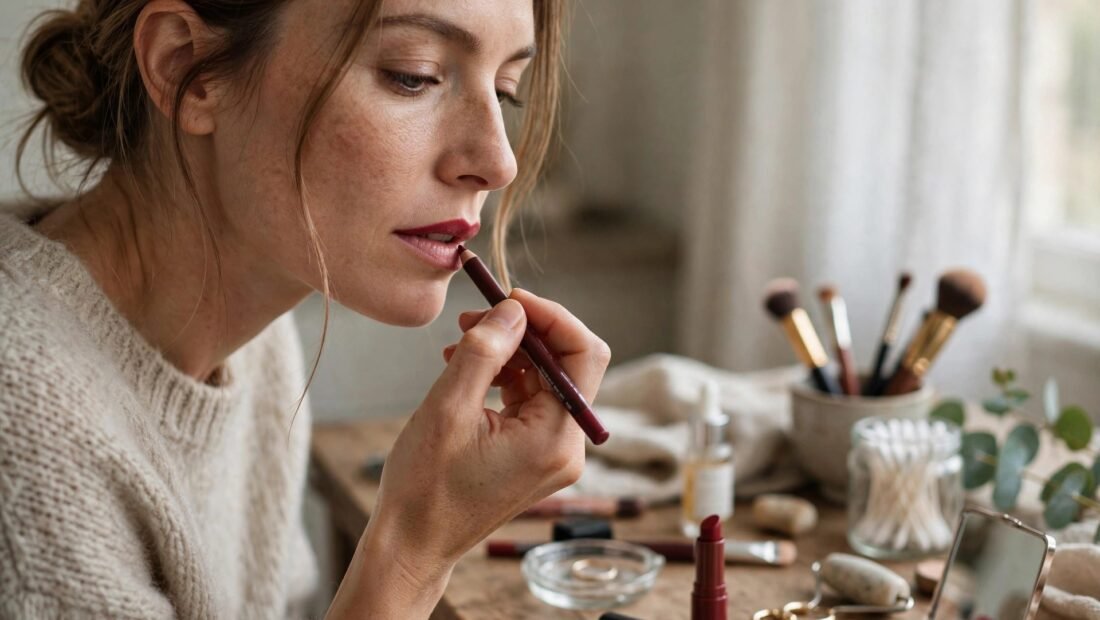
Prime the perimeter instead. Pat a thin ring of concealer or foundation just outside your natural lip line, then set it lightly with translucent powder. The makeup fills the shallow lines and leaves a dry surface that slows migration. A dedicated lip primer or a waxy lip-line filler does the same job if you prefer a single-purpose product. A clear lip liner — a colorless waxy pencil traced just outside the edge — is even simpler. It works under any shade, needs no color matching, and builds a dam the lipstick has to cross. For most people who feather, that one pencil changes the result more than a new lipstick does.
Finish the barrier at the end, not just the start. After color is on, run a small flat brush with a touch of concealer around the outside edge. It sharpens the line and reinforces the ring you built before. This is also where why foundation turns cakey by afternoon becomes relevant — heavy, caking base around the mouth cracks, and cracked base gives lipstick new paths outward. Keep the base near the lips thin and well set.
Mistake Three: Lining Only the Edge, or Skipping Liner
An outline alone is a thin fence. Once the lipstick in the center wears from eating and talking, the outline is all that remains, and the look turns into a ring with a pale middle. Worse, a soft outline pencil can melt and move with the lipstick it was meant to contain.
Line first, then fill the whole lip with the same liner. Choose a shade that matches your lipstick or your natural lip color. Trace the natural line honestly — a slight lift at the cupid’s bow and the center of the lower lip looks natural, but pushing the corners out reads as costume. The full fill matters because liner is waxier and drier than lipstick. It anchors the color above it and preserves the shape even as the top layer fades. If you dislike the feel of liner across the whole lip, fill at least the outer third, where bleeding starts, and use a stain as the base in the center.
If you truly will not use liner, the concealer-and-powder barrier plus a matte primer is your fallback. It works, but it is less reliable in peak heat than a waxy liner dam. On a 100-degree day with a creamy shade, liner stops being optional.
Mistake Four: One Thick Coat and No Setting
A single heavy coat puts the most mobile product on the mouth at once. Thick layers warm, pool at the edges, and transfer to cups, teeth, and skin. They also wear unevenly, so touch-ups pile more cream on top of a broken edge and feed the bleed.
Use the older, slower method because it works. Apply a thin first coat. Blot with a tissue. Lay a single layer of tissue over the lips and dust translucent powder through it, so a fine amount reaches the color without turning it chalky. Then apply a second thin coat. The powder between coats cuts shine, absorbs a little oil, and sharply reduces how far the second coat can travel. Two thin coats outlast one thick coat by hours and keep a cleaner border the whole time.
Touch-ups need the same discipline. If you spot a creep at lunch, do not paint more creamy lipstick over it. Blot the migrated color away with a damp cotton swab, re-trace the liner barrier, and press a fresh thin coat only inside the line. Keep a nude liner pencil and blotting papers in your bag for exactly this fix. It takes a minute and restarts the edge instead of thickening the problem.
Mistake Five: Wearing a Summer-Wrong Formula
Formula choice is a weather choice in Texas. Matte liquid lipsticks and long-wear stains are the most feather-proof options because their volatile parts evaporate and leave pigment locked down. Traditional creamy bullets, satin finishes, and glosses bleed the most. Sheer tints sit in between and still need a barrier on lines that run deep.
You do not have to give up a creamy finish you love. Contain it. Put a matte stain down as a base, fill with liner, then dab the creamy shade only in the center of the lips, away from the edge. Or save glossy creams for air-conditioned evenings and cooler months, and wear long-wear mattes for daytime heat from May through September. Check expiration and storage too: a bullet that has sweated in a hot bag, separated, or picked up a waxy smell will behave badly no matter how carefully you apply it. For general product safety context, the FDA’s cosmetics safety guidance is worth a quick read before you stock up.
A small, focused kit beats a drawer of shades for bleed-prone lips: a clear lip liner, a matte stain for a base, translucent setting powder, and a precision concealer brush for cleanup. The total can stay under $40, and the clear liner alone earns its place in the first week.
The Prep-and-Lock Routine That Holds All Day
With the mistakes named, the routine is short enough to add barely two minutes to your morning.
The night before, clean the lips fully and moisturize. In the morning, smooth any flakes gently, apply balm, and give it those full 10 minutes while you do the rest of your face. Blot. Build the outside barrier with concealer and powder or a clear liner. Line and fill the whole lip. Add the first thin coat of color, blot, powder through tissue, and add the second coat. Clean the outside edge with the concealer brush. Then leave the lips alone. Pressing them together repeatedly in the first few minutes smears the edge you just built.
Sun care belongs in the routine as well. Lips have very little natural pigment and burn easily, and sun damage deepens the very lines that cause feathering. Use an SPF lip balm during the day when you are not wearing full color, and pat sunscreen carefully along the upper lip area under makeup. Retinoid products used around — not on — the lips can support collagen over months and soften the look of perioral lines, used as directed and stopped if irritation builds. For deep-set lines that no longer respond to topicals, a dermatologist can discuss in-office options. That is a medical conversation, not a makeup fix, and it should come after the barrier routine has had a fair trial.
Go easy on plumping glosses that rely on irritants such as strong menthol or capsicum-like ingredients. The swelling they cause is irritation, and repeated irritation does lip tissue no favors. A hydrating treatment with hyaluronic acid, used weekly, can temporarily smooth the surface and help color sit more evenly without that trade-off.
When the sequence becomes habit, the result stops depending on luck or on one miracle product. The edge you draw at the mirror in the morning is still the edge you see after lunch, after coffee, after a hot walk to the car — color inside the lines, where you put it.