Everyone wants to be a gaming YouTuber until they learn the truth: the algorithm doesn’t care about your dreams, the first 50 videos will average double-digit views, and “just be entertaining” is not a strategy. But here’s the other truth — gaming remains one of YouTube’s biggest categories in 2026, new channels still break through every month, and the barrier to entry has never been lower. Starting from zero today is entirely possible. It just requires treating it like a craft and a business from day one, not a lottery ticket.
This is the no-fluff playbook: niche, gear, content strategy, and the unglamorous consistency that actually builds channels.
Step 1: Pick a Niche You Can Own (Not “Gaming”)
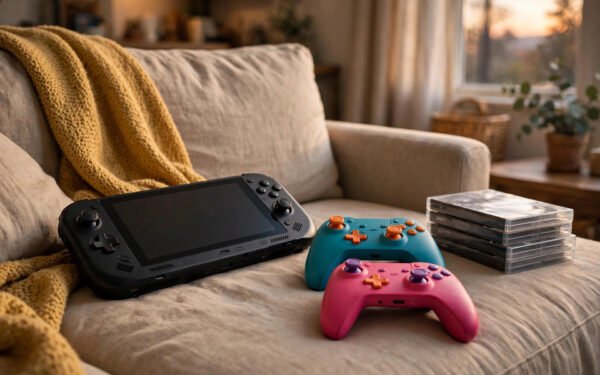
“Gaming channel” is not a niche — it’s a continent. The channels growing in 2026 are specific: budget PC building for a named audience, 100%-completion guides for one game series, retro handheld reviews, cozy farming-sim deep dives, competitive breakdowns for one esports title. Specificity does two things: it tells YouTube exactly who to recommend you to, and it makes you the obvious subscribe for a defined viewer.
The test: can you name 50 video ideas in your niche right now? If yes, the niche has legs. If you stall at 12, it’s too narrow or you don’t know it well enough. And pick something you’ll still enjoy at video 100 — burnout in a niche you chose for trends is the number-one channel killer.
Step 2: Gear — Spend Almost Nothing at First
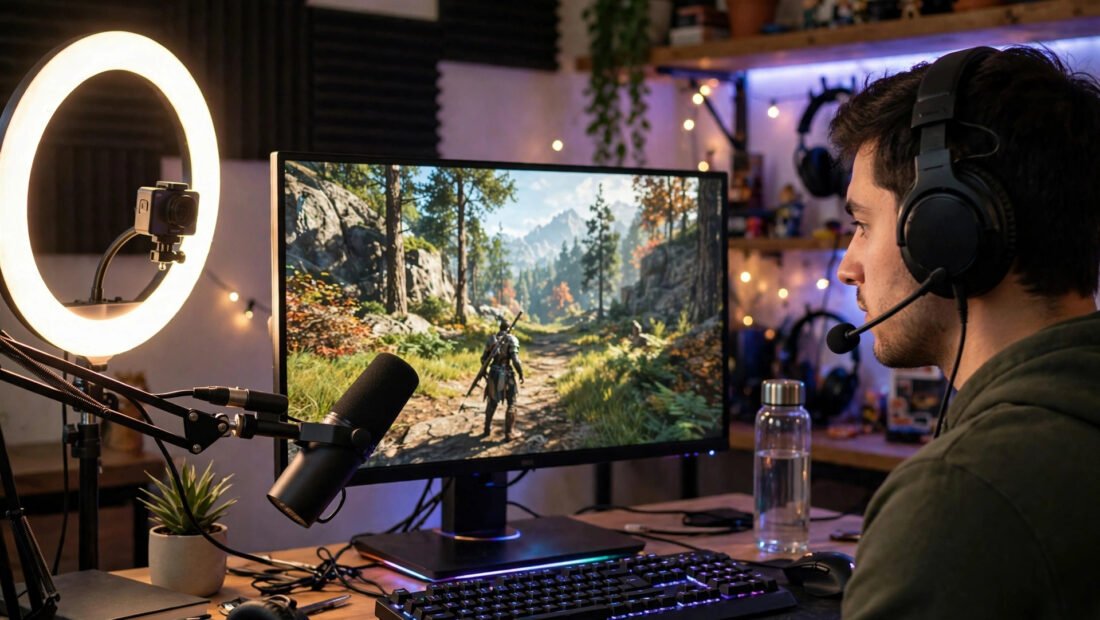
Your phone or a basic headset mic, free OBS Studio for recording, and DaVinci Resolve (free, professional-grade) for editing are enough to start. Audio quality matters more than video quality — viewers forgive 1080p, they don’t forgive hissy, echoing audio. A $30–$50 USB mic is the single best early upgrade. Capture cards, stream decks, and fancy cameras come after you have an audience, not before.
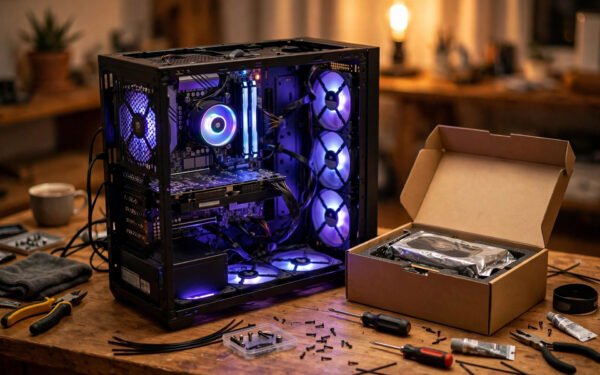
For your recording setup costs, our breakdown of what a basic desktop computer setup costs helps budget the PC side, and it’s worth knowing how much electricity a gaming PC uses per month if you’ll be rendering videos for hours — Texas summer electric bills punish always-on editing rigs.
Step 3: The Content Strategy That Actually Works
Forget “post consistently and the algorithm will find you.” Post searchable content consistently. In 2026, small channels grow through search and suggested video, not the homepage. That means:
- Target specific searches: “How to beat [boss] in [game]” or “[game] best settings for low-end PC” — queries with clear intent where a good video can rank. Use YouTube’s search suggest to find them.
- Titles and thumbnails are 80% of the game: A brilliant video with a weak title gets no clicks. Study thumbnails in your niche: big readable text (3–4 words), expressive faces or clear game imagery, high contrast. Make 3 thumbnail variants per video when starting — you’ll learn fast what your audience clicks.
- Hook in 15 seconds: State the payoff immediately (“By the end of this video you’ll never lose to this boss again”), then deliver. No 90-second animated intros. Ever.
- Retention over everything: YouTube promotes videos people finish. Cut ruthlessly — every boring 10 seconds costs you viewers. Watch your retention graphs and fix the exact moments people leave.
Publish on a schedule you can sustain for a year: one quality video per week beats five rushed ones followed by burnout. Most channels that break through do so between videos 50 and 150. Plan for that timeline emotionally and financially.
Step 3b: The Shorts Funnel Strategy
In 2026, ignoring Shorts is leaving growth on the table — but posting random clips isn’t a strategy. The winning pattern: create Shorts that tease your long-form videos (the best 30 seconds of a boss fight with “full guide on my channel”), post 2–3 per week, and pin comments linking to the full video. Shorts subscribers convert to long-form viewers at low rates, but the absolute numbers still move the needle, and Shorts revenue (while small per view) adds up. Just don’t become a Shorts-only channel by accident: 10M Shorts views can monetize you, but long-form watch time is what builds a loyal, sponsor-friendly audience. Use Shorts as the trailer, not the movie.
Step 4: The Business Side (Do This Early)
Monetization via the YouTube Partner Program requires 1,000 subscribers and 4,000 watch hours (or 10M Shorts views) — a milestone that takes most gaming channels 6–18 months. Plan income accordingly: $0 for a long time. When sponsorships come, disclose them — the FTC’s endorsement guides legally require clear disclosure of paid relationships, and violations can actually get you fined. YouTube’s own Partner Program policies detail monetization rules; read them before you need them.
Also learn basic copyright hygiene now: game publishers generally allow Let’s Plays and reviews, but music claims are the silent killer — use YouTube’s audio library or licensed tracks, because a copyright strike can derail a growing channel overnight.
Step 5: Survive the Desert (Months 3–9)
Every gaming YouTuber hits the phase where effort vastly exceeds results. The ones who make it share three traits: they treat analytics as feedback, not judgment (a video flopping tells you about the packaging, not your worth); they engage genuinely in their niche’s community (comments, collaborations with similar-size channels, Reddit/Discord presence); and they improve one specific skill per month — thumbnails in March, hooks in April, audio in May. Compounding 1% improvements across 12 months is how zero becomes 10,000 subscribers.
Conclusion
Starting a gaming YouTube channel from zero in 2026 works if you treat it as a long game: own a specific niche, start with gear you already have, make searchable videos with ruthless hooks and thumbnails, handle the business basics early, and commit to 50+ videos before judging results. The creators who break through aren’t the most talented — they’re the most consistent, the most analytical about their own analytics, and the most patient through the desert. Your first video will be bad. Publish it anyway. Video 50 is where the real channel begins.
Frequently Asked Questions
How much money do small gaming YouTubers make?
Most channels under 10,000 subscribers make little to nothing — ad revenue might be $50–$200/month at that size. Meaningful income typically starts around 50,000+ subscribers with consistent views, plus sponsorships and affiliate revenue.
What equipment do I need to start a gaming channel?
A PC or console, free OBS software, a decent USB mic ($30–$50), and free DaVinci Resolve for editing. Upgrade only after you have consistent viewers — gear doesn’t fix bad content.
Is it too late to start a gaming YouTube channel in 2026?
No. Gaming is YouTube’s largest category and new channels break through monthly — but they win with specific niches and searchable content, not generic “gaming” channels. The bar for quality is higher than ever; the opportunity is still real.
Should I do long videos or Shorts?
Both, strategically: long-form builds watch time and loyal subscribers; Shorts build fast discovery. Many successful 2026 channels use Shorts as trailers funneling viewers to full videos.
Can I get copyright strikes for gaming videos?
Gameplay footage is generally fine, but in-game music triggers most claims and strikes. Mute licensed music in settings when recording, and use royalty-free tracks for intros and background.