The two dogs meet in the driveway, tails up, noses working, and everything seems fine. It is tempting to call that a successful introduction and open the front door. Do not. That driveway moment is only the trailer. The real introduction happens across the fourteen days after it, in feeding rooms, hallway passes, shared walks, and quiet evenings when both dogs decide what this new arrangement means.
What follows is the process in order, phase by phase. Each phase earns the next one. Skipping ahead is how calm first meetings turn into guarding, standoffs, and fights over a chew in week two.
Phase One: Before Anyone Arrives (Days Before the Meeting)
Start with an honest check of the dog you already have. A second dog will not fix separation anxiety, heavy resource guarding, or aggression toward other dogs. Anxiety and tension pass between dogs easily, so a stressed resident often produces a stressed newcomer. If your current dog growls over food, snaps at visitors’ dogs, or panics when left alone, work on that first, ideally with a qualified trainer.
Next, choose a match for temperament, not just looks. A calm adult often balances a bouncy young dog better than another high-energy twin would. A gap of two or more years in age helps avoid the push-and-test dynamic that close-age pairs can fall into. Size matters less than manners, but a 90-pound young dog and a frail 10-pound senior will always need close management around play.
Run the money before you run the meeting. Two large dogs in Texas easily run $3,000 to $5,000 a year for food, vet care, and prevention. Boarding for two in Texas metro areas runs about $60 to $100 a night. Training, gates, a second crate, and a second set of everything add up in the first month. Set the home up before the new dog arrives: two feeding spots in separate areas, two water bowls, two sleeping spots, baby gates ready, and high-value chews and favorite toys picked up. Nothing valuable should be lying around for the first shared hours.
This early setup work overlaps with how to socialize a shy rescue dog, since a nervous newcomer needs the same calm structure: quiet space, predictable routines, and no forced greetings with strangers in the first days.
Phase Two: The First Meeting, Away From Home (Day One, First Hour)
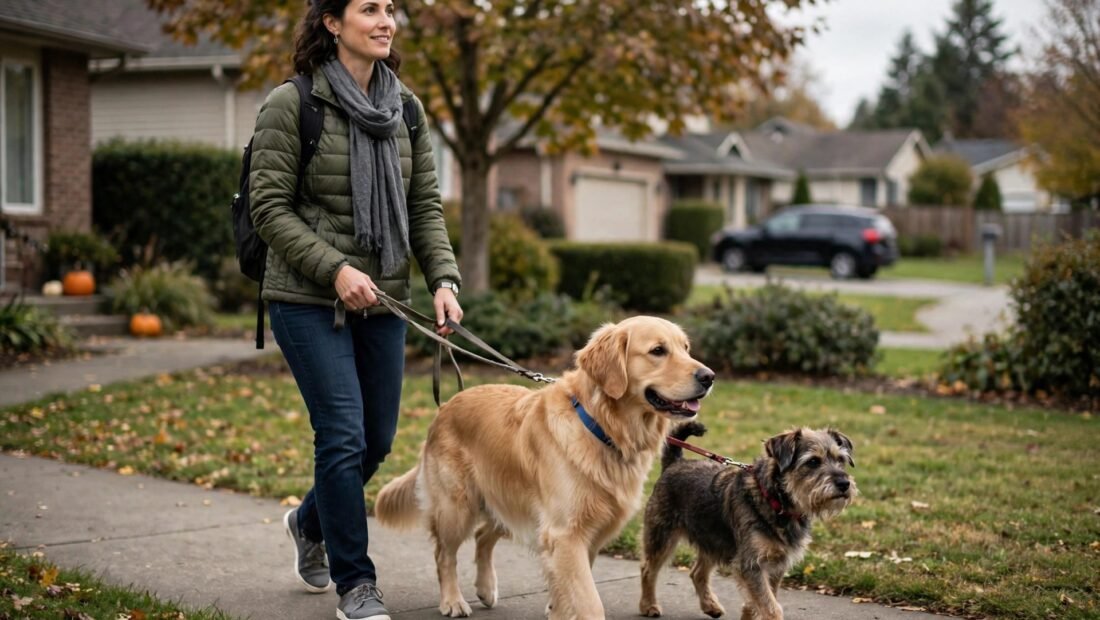
Meet on neutral ground, such as a quiet park or a wide sidewalk that neither dog treats as home turf. Bring a helper so each dog has its own handler and its own leash. Do not start in your yard or living room, where the resident dog has the strongest claim.
Walk in parallel first. Head the same direction with the dogs 15 to 20 feet apart for 10 to 15 minutes. No face-to-face greeting yet. Walking side by side at a distance lets both dogs smell the air, settle their breathing, and learn that the other dog is just part of the scenery. Movement eases tension. Standing still and staring builds it.
Close the gap slowly, only while both dogs stay loose: soft eyes, relaxed tails, bodies that wiggle rather than stiffen. Then allow a brief sniff of about three seconds, praise calmly, and move apart again. Repeat that short greeting a few times. Short and pleasant beats long and intense every time.
Finish by walking to your home together and entering side by side, as if you are all returning from one normal walk. The new dog walks in as a walking companion, not as an intruder carried through the front door. Guidance in the American Kennel Club’s guidance on multi-dog households rests on this same order: controlled meeting on neutral ground first, home access second.
Phase Three: Decompression (Days One to Three)
The first three days belong to the 3-3-3 rule: three days to decompress, three weeks to settle into routines, and three months to feel fully at home. Expect the new dog to sleep a lot, eat cautiously, and show only part of its true character. Expect the resident dog to be watchful. Both are normal.
Keep resources fully separate. Feed in different rooms with doors closed. Keep separate water bowls and beds. Put away bones, long-lasting chews, and prized toys when the dogs are together, since food and treasured objects are the top trigger for early fights.
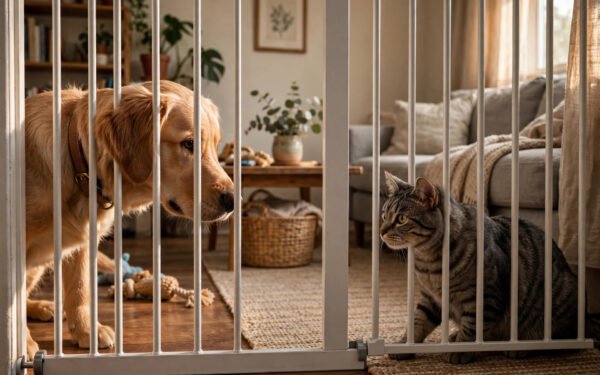
Supervise every shared minute, or separate with gates. There is no failure in using a gate. It is how you prevent a small misunderstanding from becoming a memory both dogs carry. Keep the resident dog’s routine almost unchanged: same walk times, same feeding spot, same evening place beside you. That stability tells your first dog that the newcomer has not cost it anything.
Give each dog time with you alone every day: a solo walk, a short training game, quiet petting. The resident needs proof it has not been replaced. The new dog needs to bond with you directly, not only through the other dog. Sleep separately at night, with the new dog crated or in its own area. Overnight freedom together is earned over weeks.
In Texas heat, keep these early walks short and early. Two dogs, one of them stressed and new, should not be learning house rules on a long midday walk in August. Go before the pavement heats, carry water, and do the bonding work indoors in the cool.
Phase Four: Structured Togetherness (Days Four to Fourteen)
Days four through fourteen are where the relationship is built or strained, and your management decides which. Keep feeding, sleeping, and high-value chews separate for the full two weeks, even if the first days looked perfect. Most early conflicts arrive once the new dog relaxes enough to test boundaries, often around day five to day ten.
Grow shared time in calm forms first: parallel walks, training side by side with distance, resting in the same room with gates open but supervision active. Teach and refresh basic cues with each dog alone before you ask for them together. A sit that works solo may vanish when the other dog is crowding the treats, so train solo, then add the second dog at a distance.
Read the small signs daily. Good signs include play bows, loose mutual sniffing, taking turns in a chase game, choosing to rest in the same room, and settling near each other by choice. Let that develop without crowding in to celebrate it. Your job is to keep the setting safe and then stay out of the negotiation.
Warning signs need more management, not punishment: stiffening over a toy or a resting spot, hard staring, blocking a doorway or blocking access to you, one dog pursuing while the other keeps moving away, and growling over space. Add separation, remove the contested item for both dogs, shorten shared sessions, and rebuild distance. If those signs are still common after the first month, bring in a certified trainer.
Red flags call for professional help right away and strict separation until you get it: a bite that breaks skin, a sustained fight rather than a brief scuffle, one dog too frightened to eat or move normally, or tension that grows week by week instead of easing. Never let dogs fight it out. Serious aggression between housemates needs a veterinary behaviorist, and safety management comes first.
Phase Five: Settling In (Weeks Three to Twelve)
Weeks three to eight are when most well-managed pairs find their rhythm. Shared walks can lengthen. Supervised play can grow. You can test brief unsupervised time in the same room while you step out and return, building the length slowly. Keep separate feeding for good; many happy multi-dog homes feed apart for life because it removes the easiest fight before it starts.
By three months, the newcomer should know the house sounds, the walk routes, the meal times, and its place in the daily pattern. The resident dog should have its old privileges intact plus a companion it can choose to be near. If jealous-looking behavior shows up, such as pushing between you and the new dog, treat it as guarding of you as a resource. Answer it with structure: separate attention times, no forced group cuddles, and calm rewards for waiting at a distance.
Plan for the doubled practical load that settles in now. Vet care, heartworm prevention, and food all double. Travel needs a new budget, since boarding two dogs costs far more than boarding one, and Texas summer walks for two active dogs mean earlier starts or split outings so neither dog overheats. Training also doubles in one specific way: refresh cues separately whenever a skill slips, because group practice hides which dog actually knows the cue.
Keep a simple daily note during these weeks. Write down meal times, any growls or stiff moments and what happened just before them, who rested where, and how each dog ate and slept. Patterns that are hard to see in the moment become clear on paper: guarding that only happens at night, tension that only rises when a certain chew appears, or a new dog that relaxes everywhere except one hallway. Share those notes with your vet or trainer if you ask for help, since clear records lead to better advice than a general worry that things feel off. The notes also protect you from judging the whole process by one bad evening.
Done in this order, the driveway greeting becomes what it should be: a pleasant first page, not the whole story. Give the process its fourteen days of structure and its three months of patience, manage food and rest like a professional, and step in early at warning signs. Most dogs can learn to share a home well when the humans set the pace instead of hoping the dogs will sort it out alone.