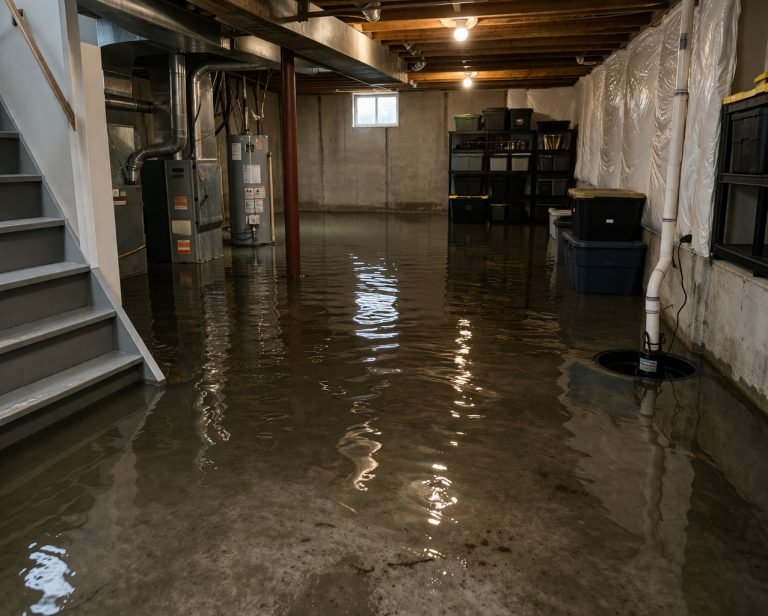
I came home to two inches of water in the basement after a storm dropped four inches of rain in three hours. The panic was real, the smell arrived within a day, and the total cost hit $3,500. What I learned in the miserable weeks after: the first 24 hours determine whether it is a cleanup or a catastrophe, and most of the critical steps are unglamorous.
What to do if your basement floods after heavy rain, in the order that matters.
What Should I Do If My Basement Floods After Heavy Rain?
First, safety before salvage. Do not wade into standing water until you have killed power to the basement at the breaker (electrocution in flooded basements kills people every year), and wear rubber boots and gloves; floodwater carries sewage, chemicals, and bacteria. If the water is near electrical panels or outlets, call an electrician before entering. Document everything with photos and video before touching anything; your insurance claim depends on this record.
Then remove the water fast. What should I do if my basement floods after heavy rain to minimize damage? Pump or extract within 24 hours: a wet/dry vac for inches, a rented submersible pump for deeper water, or a professional water extraction service ($500-$1,500) for major floods. Every hour of standing water increases damage exponentially. Move salvageable items to dry areas, discard anything porous that sat in contaminated water (carpet padding, cardboard, upholstered items rarely survive safely), and get air moving with fans and dehumidifiers immediately. Mold starts within 24-48 hours; speed is the entire game.
- Safety first: kill power, wear protection. Breaker off before wading. Boots, gloves. Floodwater is contaminated.
- Document everything before cleanup. Photos and video for insurance. Do not skip this in the panic.
- Extract water within 24 hours. Wet vac, pump, or pro service. Speed prevents mold.
- Discard contaminated porous materials. Padding, cardboard, soaked upholstery. Not worth the health risk.
- Dry aggressively: fans + dehumidifiers. Mold starts in 24-48h. Air movement is everything.
- Disinfect hard surfaces. Bleach solution or antimicrobial on concrete, studs, hard floors after drying.
- Call insurance promptly. Know your coverage: flood vs water backup are different policies.
- Find the water’s path. Grading, gutters, sump pump, foundation cracks. Fix the source, not just the symptom.
The insurance reality check matters enormously: standard homeowners insurance typically does NOT cover flooding from heavy rain (that is separate federal flood insurance), but often DOES cover water backup from sewers and drains (usually as a rider) and sudden pipe bursts. Know which policy applies before the adjuster arrives. If you are in any flood-prone area, the backup rider ($50-$100/year) is the cheapest valuable insurance in homeownership.
Preventing the Next Flood
After cleanup, fix the source, because basements that flood once flood again. The prevention hierarchy: regrade soil so it slopes away from the foundation (6 inches of drop over 10 feet), extend downspouts 4+ feet from the house, keep gutters clean, install or upgrade a sump pump with battery backup (power fails during the storms that cause floods; the $300 battery backup is the difference between dry and disaster), seal foundation cracks with hydraulic cement or epoxy injection, and consider interior drain tile for chronic problems ($3,000-$6,000, but definitive).
Our flood’s source was a failed sump pump during a power outage, the most common basement flood story in America. The battery backup we installed afterward has saved us twice since. Prevention is a system: grading, gutters, pump, backup power. Each layer catches what the last one misses.
Quick Answers to Common Questions
Does homeowners insurance cover basement flooding?
It depends on the cause. Sudden pipe bursts: usually yes. Sewer backup: often yes with a rider. Heavy rain/groundwater flooding: typically no without separate flood insurance. Know your policies before disaster.
How long does it take to dry a flooded basement?
3-7 days of aggressive drying with fans and dehumidifiers for typical floods. Concrete and framing must reach normal moisture levels; surface-dry is not dry. Moisture meters ($30) verify.
Can I save wet carpet?
Carpet itself can sometimes be saved with professional cleaning; carpet padding almost never should be. If water was contaminated (sewage, heavy runoff), replace both.
Should I get a sump pump battery backup?
Yes, absolutely. Most sump failures happen during power outages in storms. A $200-$400 battery backup system is the highest-value flood prevention purchase.
My Basement Flood Checklist
- Kill power, gear up. Breaker off, boots and gloves on.
- Photo everything. Insurance documentation before cleanup.
- Extract water in 24h. Pump, vac, or pro. Speed beats mold.
- Dry aggressively. Fans + dehumidifiers for days, not hours.
- Fix the source. Grading, gutters, sump + battery backup.
What I Would Do Next
The basement is dry now, with a battery-backed sump pump, regraded soil, extended downspouts, and a water alarm that texts my phone. The $3,500 lesson bought a system that has handled every storm since. Basements do not flood randomly; they flood predictably, at the weakest point of your water management. Find yours before the rain does.
What to do if your basement floods after heavy rain: ensure safety, document, extract fast, dry aggressively, and then fix the source. The first 24 hours decide everything.
Then install the battery backup. The next storm is already scheduled.
The cleanup phase has its own order of operations that prevents secondary damage. After water extraction, remove baseboards and drill weep holes in drywall a few inches above the floor to let wall cavities drain and dry; drywall wicks water upward, and trapped moisture behind it guarantees mold. Pull up wet carpet and padding (padding is almost never salvageable), and run dehumidifiers continuously for 3-5 days, emptying them or setting up drain hoses. A moisture meter ($30) tells you when framing is actually dry, because surfaces lie: dry to the touch can still be wet inside.
For the insurance claim, keep a detailed log: dates, every phone call with names, all receipts for emergency purchases (pumps, fans, hotel if displaced), and before/during/after photos. Most policies require you to mitigate further damage, so document your mitigation efforts too. And get multiple quotes for any professional remediation; emergency pricing in the first 48 hours is the most expensive pricing, and a day of comparison shopping (while fans run) can save 30% or more on the restoration bill.
Related reading: How Long Does Cooked Chicken Last in the Fridge.
Related reading: What Is the Easiest Homemade Bread Recipe for Beginners.
Related reading: How Much Does a New Water Heater Cost Installed.
For official guidance, check out This Old House how-to articles and Family Handyman project walkthroughs.