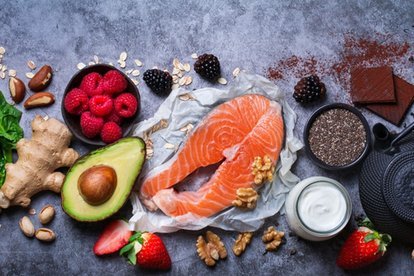
It is 10 p.m., you are stressed about tomorrow, and you are standing at the pantry eating crackers straight from the packet — not because you are hungry, but because eating is the lever within reach. The relationship between food and anxiety runs in both directions: anxiety changes what we eat, and what we eat measurably nudges how anxious we feel. No food treats an anxiety disorder, and this article will not pretend otherwise. But the everyday end of the question — which foods genuinely help a wired nervous system run calmer, and which quietly pour fuel on it — has real, practical answers. Here are the main options, weighed.
Option 1: The blood-sugar stabilizers — the unglamorous champions
The single most underappreciated food-anxiety link is not a nutrient. It is the glucose rollercoaster. A sugary, refined-carbohydrate meal spikes blood sugar and then drops it, and the drop triggers counter-regulatory hormones — adrenaline among them — whose physical signature (racing heart, jitteriness, a sense of unease) is nearly identical to anxiety itself. Anxious people, who monitor their bodies closely, feel that dip as a wave of dread and reach for more sugar, booking the next dip. The fix is structural rather than exotic: meals built on the slow team — whole grains, legumes, vegetables, protein, and fat at the same sitting, so glucose rises like a ramp instead of a cliff. If you change one thing from this entire article, make it breakfast: a protein-and-fiber morning (eggs, Greek yogurt, oats, nuts) instead of a pastry is the difference between a level morning and a 10:30 a.m. false alarm. The budget version of the same pattern is covered in how to eat healthy on a tight budget.
Option 2: Omega-3-rich fish — the best-evidenced specific food group
If one food category earns its anxiety reputation in the research, it is oily fish. Salmon, sardines, mackerel, anchovies, and trout deliver EPA and DHA omega-3s, and analyses of clinical trials have found a modest but real anxiety-reducing effect from omega-3 supplementation, strongest at meaningful doses — with food sources carrying the usual advantages of arriving packaged with protein, vitamin D, and B12. Two fish meals a week is the standard translation of that evidence into a diet. Sardines deserve their sentence: they are the cheapest, lowest-mercury, most sustainable vehicle for the same oils, and the barrier is purely reputational — on toast with lemon and chili they are genuinely good, and millions of Mediterranean lunches are not wrong.
Option 3: The fermented foods — promising, not proven
The gut-brain axis is the most fashionable idea in nutrition science, and fermented foods — live yogurt, kefir, kimchi, sauerkraut, miso — are its edible ambassadors. The evidence is genuinely interesting and genuinely incomplete: animal work is strong, human studies are smaller and mixed, and anyone claiming certainty is selling it. What can be said: diets rich in fermented foods and fiber have been linked in observational work to lower social anxiety measures, the mechanism (microbiome effects on inflammation and neurotransmitter precursors) is plausible, and the foods themselves are nutritious regardless. Include them because they are good food with a plausible bonus, not because they are medicine.
Option 4: Magnesium- and B-vitamin-rich foods — the quiet deficiencies
Leafy greens, beans, nuts, seeds, and whole grains carry magnesium, a mineral involved in the body’s stress-response regulation, and one many adults under-consume. B vitamins — from eggs, dairy, legumes, greens, and meat — underpin neurotransmitter production, and deficiency states, particularly B12 and folate, are associated with mood and anxiety symptoms. The honest framing: correcting a shortfall helps; megadosing beyond sufficiency has little to offer. Food-first covers most people, and a deficiency question belongs to a blood test rather than a supplement shelf.
Option 5: Chamomile and the ritual drinks — small effects, real ritual
Chamomile has actual trial evidence behind it for generalized anxiety — modest, from a small number of studies, but more than most herbal claims can say. Green tea contains L-theanine, an amino acid associated with calm alertness. Yet the largest benefit of a warm evening drink may be the ritual itself: a repeated, deliberate pause that tells the nervous system the day is ending. Do not underrate ritual in anxiety management; the nervous system runs on cues, and a nightly cup of something warm and uncaffeinated is a cue with centuries of field testing.
Option 6: The Mediterranean pattern — the option that contains the others
Step back from individual foods and a larger candidate appears: the overall dietary pattern. Mediterranean-style eating — vegetables, legumes, whole grains, olive oil, fish, fermented dairy, with sweets and processed meat at the margins — is simply Options 1 through 4 running simultaneously as a cuisine instead of a supplement list. Observational research consistently associates this pattern with lower anxiety symptoms, and dietary-intervention research in mood disorders (strongest for depression, thinner for anxiety specifically) points the same direction. The pattern’s practical advantage is adherence: it is a way of eating that tastes like food rather than a protocol, and it displaces the rollercoaster meals by structure instead of by vigilance. Nobody sustains a checklist; people sustain cuisines. If the individual options above feel like homework, adopt the pattern and let it smuggle them all in.
A note on dark chocolate, nuts, and the snack drawer
The foods people reach for when anxious deserve a fair hearing rather than a ban. Nuts and seeds are legitimately on the helping side — magnesium, healthy fats, protein that steadies blood sugar — and a handful is a genuinely good stress snack. Dark chocolate carries flavonoids that mood research finds mildly interesting, and its real benefit may be simpler: it is a small, deliberate pleasure that ends, unlike the open packet of crackers eaten standing up. The distinction that matters is not virtue but design. Eating chosen, portioned, and sat down for is a break; eating as anesthesia — continuous, unregistered, chosen by the panic rather than the person — is the pattern that feeds the evening crash and the self-criticism that follows it. Keep the chocolate. Change the choreography.
The other side of the ledger: what reliably makes anxiety worse
Any honest comparison weighs the subtractions too, and three dominate. Caffeine is the big one: it is a stimulant that mimics and amplifies anxiety’s physical symptoms, and a meaningful share of “anxiety” in heavy coffee drinkers is, in part, caffeine wearing a costume — the experiment of halving intake for two weeks is free and diagnostic. Alcohol is the second: it sedates in the evening and rebounds as anxiety in the small hours and the following day, and the nightcap-for-nerves pattern borrows calm at punishing interest. Sugar crashes, covered above, complete the trio. For many people, removing these three frictions helps more than any addition on this page.
And the simplest entry of all: water
It feels almost insulting on a list of nutritional strategies, but mild dehydration measurably degrades mood and concentration and amplifies the perception of difficulty and threat — in controlled studies, even modest fluid loss in healthy young adults worsened anxiety and fatigue scores before it produced strong thirst. The relevance to this article’s opening scene is direct: the stressed person at the pantry at 10 p.m. is frequently also the person who drank two coffees and half a glass of water since morning. Before auditing superfoods, audit the glass. A baseline of regular water across the day is the cheapest item on this entire page, and for a surprising number of people it is the one whose absence was masquerading as a character trait.
The verdict — and the boundary
Weighed together: build the base on blood-sugar stability (the slow team at every meal), eat oily fish twice a week, let fermented foods and greens fill the gaps, use the evening ritual drink, and audit caffeine, alcohol, and sugar crashes with more suspicion than you audit superfoods. That pattern will not cure anxiety, but it removes a daily physiological headwind that anxious people are often fighting without knowing it. And the boundary must be stated as plainly as the advice: persistent anxiety that interferes with work, sleep, or relationships is a health condition with effective treatments, and food is a supporting player in that treatment, not a substitute for it — the NIMH’s overview of anxiety disorders is the right next read for anyone recognizing themselves in that description. Eat like it matters, because it does — steadily, slowly, and with the stimulants audited — and notice over a few weeks what your particular nervous system does in response, because individual reactions to caffeine, sugar, and specific foods vary more than any list can. Your own log of food and mood, kept loosely for a fortnight, is worth more than another month of generic advice — because the final authority on what steadies you is not this article, a study, or a slogan, but the recorded evidence of your own ordinary days. Then get the rest of the help too.