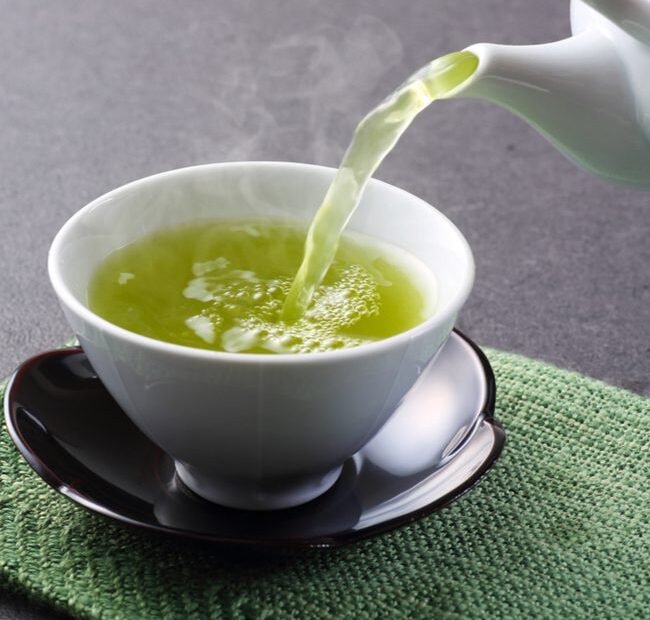
Can a plain cup of tea actually do anything you could measure — or is green tea just flavored water with excellent public relations? It is a fair question, because the claims made for it range from the modest to the miraculous, and the truth sits in a specific, narrower place than either the hype or the dismissal. Green tea will not melt fat, cure disease, or substitute for sleep. But it is one of the few everyday drinks with real, studied chemistry behind it — and what it does, it does for identifiable reasons you can understand cup by cup.
What is actually in the cup
Green tea comes from the same plant as black tea, Camellia sinensis. The difference is processing: black tea leaves are fully oxidized, which darkens them and changes their chemistry, while green tea leaves are steamed or pan-fired early to stop oxidation. That preserves a family of compounds called catechins, the best-studied of which is EGCG, credited with much of green tea’s antioxidant activity. A cup also brings a modest dose of caffeine — roughly 30 to 50 milligrams, against about 95 in a cup of coffee — and an amino acid called L-theanine, which barely appears in other drinks. Almost everything interesting about green tea comes from the interplay of those three: catechins, caffeine, and theanine. The NCCIH’s evidence summary on green tea is the most level-headed public rundown of what has and has not been shown, and it is worth reading before believing any label.
The heart: the strongest case
Of all the claims, the cardiovascular one rests on the firmest ground. Large population studies in Japan, where green tea is a daily habit for millions, consistently link regular consumption with lower rates of heart disease and stroke. Population studies cannot prove cause, but the proposed mechanisms are concrete: catechins appear to help blood vessels relax and respond normally, and green tea consumption has been associated in trials with small reductions in LDL cholesterol and blood pressure. “Small” is the honest word throughout this article. Nobody’s cardiologist is prescribing tea instead of medication. But a daily habit that nudges several risk markers slightly in the right direction, at near-zero cost and risk, is a genuinely good trade — especially when the cup it replaces was soda or a sugary coffee drink.
Metabolism and weight: real, but keep your expectations small
Green tea does raise fat oxidation and metabolic rate slightly — caffeine and catechins together have a measurable thermogenic effect. In trials, green tea preparations have produced weight differences on the order of a couple of pounds over a few months compared with controls, sometimes none at all. That is the size of the effect: a gentle tailwind, not an engine. Where tea genuinely helps weight is indirect and practical. It is a flavorful, essentially calorie-free drink that gives your hands and mouth something to do at the moments you would otherwise snack, and swapping one daily soda for unsweetened green tea removes more calories in a week than the catechins will ever burn. Treat it as a supporting player in a pattern of eating and movement — not a fat-burning shortcut, and be deeply suspicious of any product that sells it as one.
The brain: calm alertness, explained
Ask regular drinkers why they switched from coffee and a common answer is that green tea wakes them up without making them jittery. That is the theanine at work. L-theanine promotes a relaxed-but-alert mental state — in brain-wave terms, more alpha activity — and it smooths out caffeine’s edges, so the combination tends to produce steadier attention than caffeine alone. This is also why matcha, which is whisked whole leaf rather than an infusion, feels stronger: you consume the leaf itself, so you get more of everything, including caffeine closer to coffee territory. For afternoon work, green tea’s gentler curve has one more advantage: a cup at 3 p.m. is far less likely than coffee to still be circulating at bedtime, though sensitive sleepers should still keep it to the morning.
Brew it right, or waste the good part
Green tea is the easiest good drink to ruin. Boiling water scorches the leaves and drags out bitter tannins, which is why so many people conclude they do not like it. Use water around 175°F (80°C) — just off the boil, with small bubbles forming — and steep for two to three minutes. Longer is not stronger in a good way; it is mostly more bitter. A $15 variable-temperature kettle pays for itself in drinkable cups if you brew daily, but letting the kettle sit for a minute after boiling gets you close enough. Loose leaf generally beats the average tea bag on freshness, and the bag is fine if it gets you drinking it. What you add matters as much as the brew: sugar and honey can quietly turn a near-zero-calorie drink into dessert, and a squeeze of lemon is the one addition with a real upside — vitamin C helps stabilize and absorb the catechins.
Timing and the fine print
Two practical warnings separate a good habit from a careless one. First, tea’s tannins reduce how much iron you absorb from plant foods, so if you are low on iron or eat mostly vegetarian, drink your tea between meals rather than with them. Second, concentrated green tea extract — the pills and the mega-dose powders — is a different risk category from the beverage. Regulators and the NCCIH have noted reports of liver problems linked to high-dose extracts, particularly taken on an empty stomach; the traditional drink itself, a few cups a day, has centuries of ordinary use and a clean safety record. Keep the habit in the teapot, not the supplement bottle. And no, green tea cannot replace water — it is mildly caffeinated and counts toward your fluids, but plain water should still be most of what you drink.
What about the bigger claims — cancer, blood sugar, living longer?
This is where honesty matters most, because green tea attracts grand claims. On cancer: in laboratory dishes, catechins do interesting things to cells, but human evidence is inconsistent, and regulators have not approved green tea for cancer prevention or treatment. Anyone who tells you a beverage prevents cancer is selling certainty that does not exist. On blood sugar: a few trials show small improvements in fasting glucose, not enough to change management of diabetes, though unsweetened tea is obviously a smart default drink for anyone watching sugar — mostly because of what it is not. On longevity: the Japanese cohort studies do show tea drinkers living somewhat longer with less cardiovascular death, but tea drinkers in those studies also tend to eat differently, smoke less, and live differently in a dozen ways that researchers can only partly adjust for. The fair summary is that green tea belongs to a pattern of life that ages well. Drinking it puts you in that pattern; it does not single-handedly create it.
How much is too much? Brewed green tea is gentle enough that the practical limit is usually its caffeine: at 30 to 50 milligrams a cup, even four or five cups total less caffeine than two coffees. People who are pregnant are generally advised to keep total caffeine modest, and very high intakes of strong tea can interfere with how the body uses folate — one more reason the sane range is a few cups, not a gallon. If plain water still makes up most of your day’s drinking and tea fills the flavored-drink slots, you are squarely in the territory the evidence supports.
Choosing and keeping tea that is worth drinking
Quality differences are real but need not be expensive. Japanese sencha is grassy and bright; Chinese dragon well is smoother and nuttier; gunpowder tea is bolder and forgiving of sloppy brewing; jasmine green tea is scented and the easiest entry point for people who find plain green tea austere. Buy in small amounts, because green tea stales faster than black — its freshness window is months, not years — and store it airtight, away from light, heat, and the spice rack, whose smells it will happily absorb. If hot tea is a hard sell in summer, cold brewing solves it: leaves in cold water in the fridge for six to eight hours produces a sweeter, smoother, less bitter drink with somewhat less caffeine, and it is nearly impossible to mess up. One more practical note: the same leaf can usually be steeped twice. The second cup is milder but far from empty, and treating leaves as single-use is a habit imported from tea bags.
Where the benefit really adds up
Notice the pattern: no single effect is dramatic, but the effects stack in the same direction — a slightly better lipid profile, a calmer kind of alertness, a calorie-free ritual that displaces worse drinks, antioxidants with every cup. If you enjoy the taste and the pause it creates, two to four cups a day is a reasonable, evidence-friendly habit. It also raises a natural comparison: if tea is this useful, what about its stronger caffeinated cousin? For the other side of that ledger, see whether drinking coffee every day can harm your heart. Green tea daily is not a miracle. It is something rarer in the wellness world: a small, honest benefit that costs almost nothing to collect.