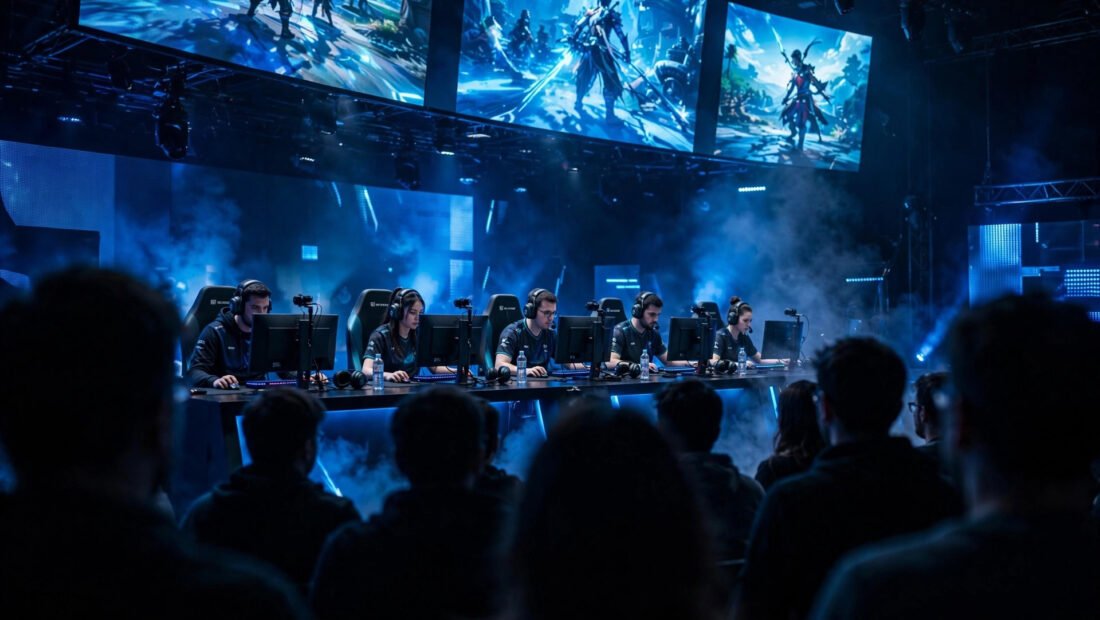
From the outside, esports looks like pure talent: fast hands, packed arenas, plays that seem too quick to be planned. From the inside, it looks like a training schedule. The players who climb are rarely the ones who simply play the most hours. They are the ones who spend ninety days in the right order: one game, real fundamentals, a community that plays organized matches, and practice that is reviewed instead of just repeated. Those ninety days will not make a beginner a professional. They can turn a beginner into a genuinely competitive player in a local scene, which is the honest first goal and the base every longer climb stands on.
Days One to Ten: Pick One Game and Commit
The first decision is the one beginners resist most. Pick one game and stay with it. Skill in competitive games is specific: timing, maps, characters, and habits from one title carry only partly into another. Splitting the first month across five games leaves a player shallow in all of them. Choose a free-to-play title with a real competitive scene if money is tight, since strong scenes offer ranked ladders, community tournaments, and plenty of teaching material at no cost.
Enjoyment is a practical test, not a soft one. Practice means returning to the same game on tired days, after losses, for months. A title you respect but do not enjoy will not survive that. Match the game to your strengths as well. Fast aim and quick reactions point toward shooters. Patience, planning, and team coordination point toward strategy and team-based titles. Spend the first days in tutorials and unranked play. Resist ranked queues until the controls stop needing thought. Comfort comes first, because everything later builds on it.
Days Eleven to Thirty: Learn Your Role and Drill the Basics
Once the game feels familiar, narrow down again. Learn one role deeply instead of sampling every role the game offers. In a team game, that means one position and a small set of characters for it. In a solo game, it means one style played well. Depth teaches the game faster than variety does, because the same situations return and each return shows a little more detail.
Then drill fundamentals before flashy plays. The highlight moves that fill video clips rest on plain skills done without error: accurate aim, clean movement, awareness of the map, and sound choices with money, time, or position. Set aside a short block in each session for one basic skill, with a clear and small target. Thirty focused minutes on a single weakness teaches more than hours of unfocused matches. Mechanics practiced wrong are mechanics that must later be relearned, so slow, correct repetitions early are worth more than fast, sloppy ones. By the end of the first month, the goal is modest and real: know your role, know the basic plays, and stop losing games to simple errors you can name.
Gear in Its Honest Place in the First Month
Gear belongs in the first month, but near the bottom of the list. What a beginner needs is a setup that does not fight them: a stable frame rate with no wild swings, a mouse that tracks reliably, and a headset that lets team voices come through clearly. A steady connection matters as much as any device, since lag and stutter erase practice gains in ways skill cannot fix.
What a beginner does not need is a $3,000 rig. Expensive hardware buys almost nothing a new player can use, because the gap at this level is knowledge and habits, not frames. Money held back now can later go toward the one or two upgrades that match the game and the player’s actual needs, chosen with experience instead of hope. Players still testing which games hold their interest can browse the best new video games for casual players in 2026 for a wider view before locking in, as long as the browsing ends and the commitment begins.
Days Thirty-One to Forty-Five: Enter Ranked Play and Find Your Level
The second month starts with ranked play, taken seriously but not personally. Early ranked games place you. Losses during placement are information, not verdicts. Play enough matches to reach a stable rank, then treat that rank as a starting line you can measure against. Write it down, along with the date. A climb you can see on paper is easier to trust than a feeling after a good or bad night.
Keep sessions structured. Warm up briefly, play a set number of matches, and stop while you can still think clearly. Ranked play on tilt, the frustrated state where each loss fuels a worse next game, teaches bad habits at speed. A simple rule protects the whole month: after two straight losses played angry, take a break. The ladder will still be there tomorrow, and the player who returns rested keeps what the tired player gives away.
Days Forty-Six to Sixty: Find the Community and Play Organized Matches
Solo queues teach individual play. Organized play teaches the competitive game itself. The second half of this phase is for finding the places where organized matches happen: the game’s Discord servers, open ladders, community tournament pages, and local scenes at schools, gaming centers, and city leagues. Many communities run beginner-friendly events with exactly this step in mind. Background on how the wider scene grew, from arcades to arenas, is covered in Encyclopaedia Britannica’s coverage of esports and competitive gaming, useful context for a player deciding how far to take the pursuit.
The first organized matches feel different, and that difference is the lesson. Communication becomes a skill rather than background noise: calling information early, listening under pressure, and playing a plan made with teammates instead of five private plans at once. Roles harden. Preparation matters, because opponents arrive with set plays. Expect to lose to coordination before you lose to aim. That is normal, and it marks the real start of competitive learning. Join one regular group or weekly event and stay with it through the rest of the ninety days. Familiar teammates and familiar opponents both teach faster than a new crowd every night.
Days Sixty-One to Seventy-Five: Train Like It Is Practice
The final month changes the balance from playing to training. Matches still fill most of the time, but each week now carries a deliberate review block. Watch your own replays, especially losses that felt close. Pause at each death or lost round and ask one plain question: what choice, made ten seconds earlier, changes this result? Patterns appear quickly. Most players find the same two or three errors repeating under different skins.
Pick one weakness at a time and train it for a week or two. Chasing five fixes at once fixes none of them. A player who gives two weeks to positioning will see the change in the replays, then move to the next weakness with proof that the method works. Schedule sessions like appointments, with start times and end times, and keep a short written log: date, focus, result. The log sounds dull. It is also the clearest record of progress a beginner can own, and it settles arguments with discouragement better than memory does.
Days Seventy-Six to Ninety: Protect Sleep and Test Yourself
By the last two weeks, the habits around the game matter as much as the habits inside it. Protect sleep like equipment. Reaction time, memory, and mood all sag on short sleep, and no drill returns what a tired brain cannot hold. Keep a regular sleep window, end late sessions on time, and treat rest days as part of the plan rather than a failure of will. The body is not separate from performance at any level of play.
Use the closing stretch to test the work. Enter an open tournament or a community league night. Play a set of ranked matches with the same focus used in training. Then compare the honest markers against day one: rank, replay errors, and how organized matches feel. The point of the test is not a trophy. It is a clear read on where ninety days landed you and what the next ninety should attack. Finishing the block with a written note on strengths, remaining weaknesses, and the next single focus turns a good quarter into a plan for the next one.
The Honest Ledger Under the Whole Timeline
None of this should be sold as a road to a professional contract. Most dedicated players plateau below the pro level, and that is not a flaw in the players. Ranked ladders are full of people with years of focused play, and the top of any major game holds a tiny number of spots. A beginner who climbs from lost to competitive in a strong local scene has achieved something real, even if no scout ever calls.
College scholarships for esports do exist at some schools, and they are worth knowing about for student players. They belong in the hope column, not the plan column. A plan built on a scholarship that may not arrive is a fragile plan. The same care applies to the question of age. Too late is the wrong question for amateur competition. Leagues, ladders, and community events run at every level, and plenty of players start as adults and find a level that challenges and rewards them. Pros often start young, but competition does not belong only to pros.
What the ninety days reliably buy is skill that transfers: communication under pressure, calm review of your own errors, discipline with a schedule, and the experience of improving at something hard on purpose. Those returns arrive whether the climb continues or stops at a level you enjoy. Set the first goal where it belongs: from beginner to genuinely competitive in your scene. The ninety days, run in order and without skipping the dull parts, are how that start is made.