The website says tandem jumps from $199. Your card charge says $389. Neither number is a lie, exactly. The gap between them is five line items nobody lists on the homepage: the day you picked, the altitude you chose, the location you booked, the video you added at the desk, and the basic running costs of an airfield that never appear as a line at all. Work through the booking in the right order and the final charge stops being a surprise.
Step 1: Set Your Real Budget Against the National Range
Start with the honest range. A first tandem skydive, strapped to a certified instructor, costs $200 to $300 at most dropzones in the United States, with a national average around $250. One established pricing breakdown puts the average at $250 to $300, with weekday reservations at the low end and walk-ins and premium coastal locations at the high end. A weekday jump with a reservation typically runs $199 to $259. A weekend or walk-in jump runs $259 to $299. Premium locations, including Hawaii and coastal sites, run $300 to $400. A higher altitude jump runs $280 to $350. A second tandem for a returning jumper runs about $179 to $229.
Set your ceiling before you open a booking page. If your ceiling is $300 all-in, a weekday standard jump with no extras fits, and a weekend premium jump with video does not. Knowing that in advance is what keeps the desk upsell from deciding for you. As a real-world anchor, Skydive Arizona, one of the largest dropzones in the country, charges $259 for a standard tandem from 13,000 feet, squarely inside the national range.
Step 2: Pick the Dropzone on Reputation, Then on Price
Choose the operator before you choose the date. Look for membership and standards tied to the United States Parachute Association, current reviews, and clear published pricing. A legitimate tandem price covers about thirty minutes of ground training on how to exit the aircraft, hold a freefall position, fly the canopy, and land, plus all equipment: the tandem harness, the main and reserve parachutes, and the automatic activation device. It also covers your instructor, a USPA-rated professional attached to you for the entire jump, and the aircraft ride to altitude.
Price still matters, but in the right order. A $199 jump at a reputable dropzone beats a $149 jump at a careless one every time. Running a dropzone means aircraft, fuel, insurance, rated instructors, and riggers, all serious fixed costs that sit inside a fair ticket price. A price far below the national range has to come out of somewhere, and maintenance and staffing are the wrong places.
Check the practical limits while you compare. Jumpers must be 18 or older at most dropzones, though some states allow 16 to 17 with parental consent. Weight limits of 220 to 240 pounds are standard for tandem equipment. Be honest about weight when booking, because the limit is a parachute engineering constraint, not a judgment about you.
Step 3: Choose Your Day and Book Ahead
Timing is the easiest saving in the whole purchase. Weekdays with an advance reservation are the cheapest way to jump. Weekend walk-ins pay the premium rate for the same aircraft, the same instructors, and the same sky. Booking ahead almost always saves $20 to $40 on its own, and the reservation discount combined with off-peak weekday pricing is the easiest $40 to $60 you will save on the whole experience.
Groups improve the math further. Groups of ten or more often receive $20 off per person. Many dropzones also offer student and military discounts with identification, so ask before you pay rather than after. None of these savings requires jumping at a worse dropzone or at a lower altitude. They only require a calendar and a phone call made a few days early.
Step 4: Pick Your Altitude With Your Eyes Open
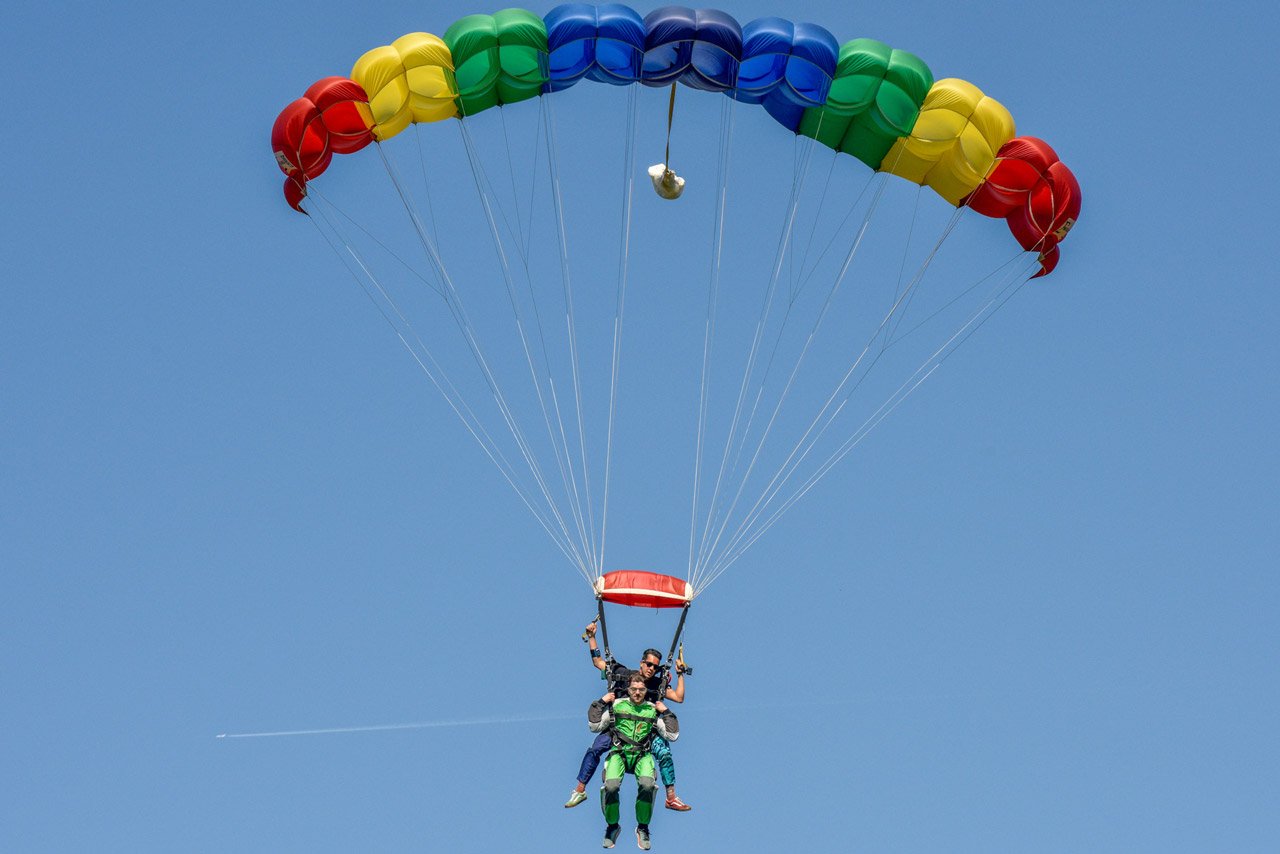
A standard jump exits at 13,000 to 14,500 feet and gives you 40 to 60 seconds of freefall. A high-altitude jump exits at 15,000 to 18,000 feet and gives you up to 85 seconds of freefall, for about $30 to $80 more than the standard price. That is the whole trade: roughly twenty-five extra seconds of freefall for the price of a modest dinner.
For a first jump, the standard altitude is plenty. The newness of the exit, the noise, and the view fill sixty seconds completely, and most first-timers cannot judge the difference between sixty and eighty-five seconds while it is happening. If your budget is tight, skip the altitude upgrade and keep the money for the video, which you will still own years later. If money is not tight and you expect this to be a once-only jump, the longer freefall is a fair price for the one version of the day you will get.
Step 5: Decide on Video Before You Arrive
Photos and video are the add-on most likely to explain a card charge well above the homepage price. Media packages run $80 to $200 extra, and they are the highest-margin extra in the business. At Skydive Arizona, photos cost $115, video costs $115, or both together cost $129, which shows how sharply package pricing can favor the bundle over separate items.
Decide at home, not at the desk. For a first jump, most people who skip the video regret it, because freefall cannot be recreated and a phone in your pocket is not an option during the jump. Glasses and contact lenses are not a barrier, since dropzones provide goggles that fit over glasses. Budget $100 to $150 extra if you want media, add it to your ceiling from Step 1, and the total stays honest. What is usually not included in the base price is short: photos and video, a tip for your instructor, and sometimes a small card-processing fee. Ask for the out-the-door total when you book and write it down.
Step 6: Plan the Day Itself, Not Just the Jump
Allow half a day at the dropzone. Training takes about thirty minutes, but weather holds, aircraft scheduling, and other jumpers ahead of you mean three to five hours on site is normal. Bring food, water, and patience, and do not stack a tight commitment right after your booking. A jump pushed back two hours by wind is routine, not a failure.
The fear most first-timers name beforehand rarely matches the event. The stomach-drop sensation people dread does not really happen, because you reach terminal velocity quickly and freefall feels like floating on strong wind rather than falling. Most people do not get sick or pass out. On safety, the figures are calmer than the reputation. Recent years have seen roughly 0.5 to 0.6 fatalities per 100,000 jumps overall, and tandem jumping, with highly experienced instructors and dual-parachute systems, sits around one in 500,000. The drive to the dropzone is statistically the riskiest part of the day. None of that makes jumping risk-free. It does put the risk in proportion.
There is also no maximum age working against you. People in their eighties jump regularly, though some dropzones ask for medical clearance past sixty or sixty-five, so older jumpers should raise the question when booking rather than on the day. Insurance works in the background of the price as well. The dropzone covers its own liability, and that cost is part of your ticket. Your own health coverage is a separate matter, and checking it for adventure-sport exclusions before you jump takes minutes and prevents a nasty surprise after an injury.
The same plan-ahead habit that saves money here applies to any trip built around booked activities, including how to plan a national park road trip on a budget, where the headline price and the real total also part company unless every line is counted early.
Step 7: Know What Comes After, Before You Fall in Love With It
One tandem settles the curiosity for most people, and at about $250 that is a complete and fair ending. If the jump hooks you, price the next stage before enthusiasm writes the checks. An Accelerated Freefall first-jump course runs $200 to $275. A full A-license program of 25 jumps runs $2,500 to $3,500. Once licensed, a per-jump ticket runs only $25 to $40, but your own gear changes the picture entirely: used gear starts around $6,000, and new gear runs up to $11,000. Most people spend $3,000 or more before a first solo jump.
Treat that ladder as information, not a sales path. There is no obligation hidden in a tandem ticket, and returning for a second tandem at $179 to $229 is a perfectly good middle step. The sport rewards people who move at the speed of their budget as well as their nerve.
Follow the seven steps in order — set a ceiling, pick a reputable dropzone, book a weekday ahead, keep standard altitude, decide video at home, allow half a day, and price the future before chasing it — and the charge on your card will match the number in your head. A first parachute jump costs about $250 for the jump itself. The rest of the bill is choices, and choices made early are always cheaper than choices made at the desk.