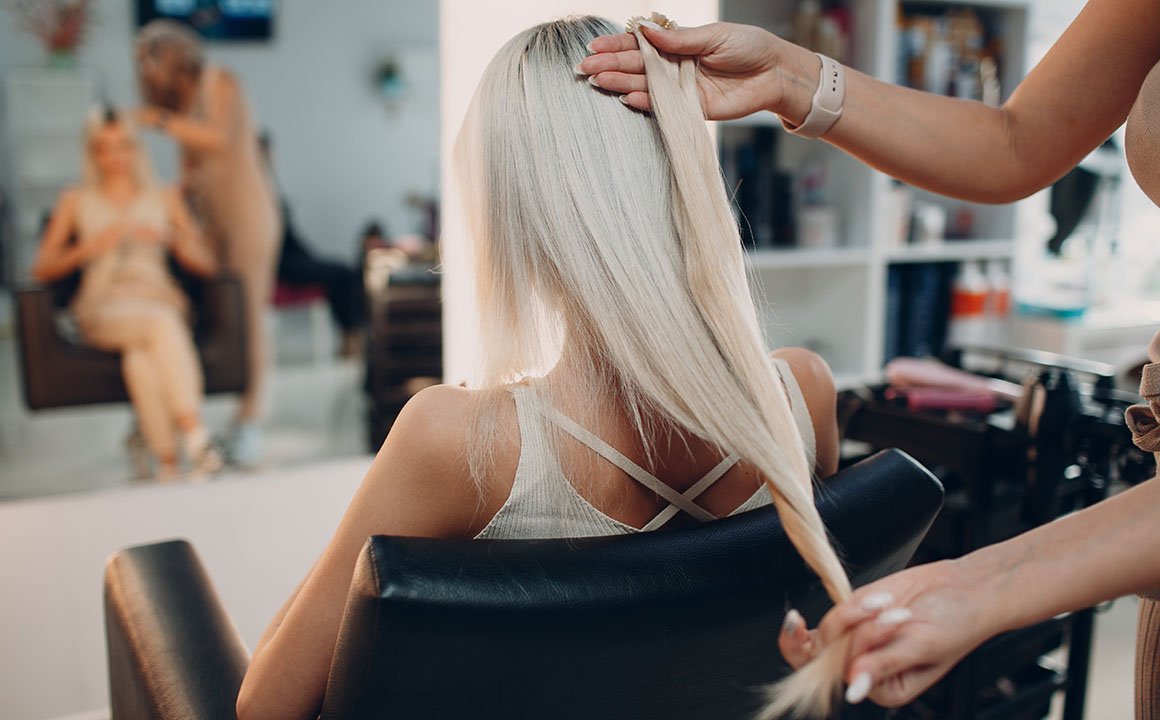
The install price is the small number. A tape-in install quoted at $600 sounds like the cost of having extensions, and for the first six to eight weeks it is. Then you are back in the chair for a move-up at $100 to $300, and again six to eight weeks after that, all year. The chair time on repeat is where extensions quietly bill you, and any honest verdict on each method has to count the full year, not the first appointment.
The Price Map Before the Verdicts
Every method is really three costs stacked together: the hair itself, the labor to put it in, and the upkeep to keep it looking right. DIY clip-ins start around $100 to $500 for the hair alone, with no salon visit at all. Halo extensions run $150 to $500, also with no salon needed. Salon methods start higher and keep going. Tape-ins typically run $300 to $900 all-in. Sew-ins run $300 to $1,000 all-in. Micro-link or I-tip work runs $400 to $1,500 all-in. Hand-tied wefts run $700 to $1,600 all-in. Fusion or keratin bonds climb to $600 to $2,000 or more all-in. Across all methods, most people pay somewhere between $300 and $1,500 for a first full salon service.
Annual math makes the spread plain. Tape-ins at roughly $600 for the install plus six move-up visits at about $175 each come to roughly $1,650 a year. A sew-in at about $650 plus six tightenings at about $100 each comes to roughly $1,250 a year. Fusion at about $1,200 per application, redone three times a year, comes to roughly $3,600 a year. Clip-ins at about $300 once come to roughly $300 a year, because there is nothing to maintain in a salon. Same head of hair, four very different yearly bills.
Clip-Ins and Halos: The Low-Commitment End
Pros. Clip-ins are the cheapest real transformation available, at $100 to $500 total, and you put them in yourself in minutes. Nothing is attached overnight, nothing needs a salon appointment, and a set lasts 6 to 18 months. A halo costs $150 to $500, uses a single piece that sits on the head with nothing attached to your own hair at all, takes seconds to put on, and lasts 6 to 12 months or more. Both methods carry zero risk of salon maintenance bills because there is no maintenance schedule.
Cons. Both come out before swimming and before sleep, so neither gives true round-the-clock wear. Clip-ins need daily effort to look seamless, and a poorly matched set shows at the clips. Halos offer less control over placement and volume than fitted methods. For a wedding, a holiday, or occasional length, those limits barely matter. For daily wear through workouts, swimming, and sleep, they matter a lot. Anyone planning a one-off event should still do a trial run four to six weeks before the day, not the week of it.
Care habits still decide how long either set lasts. Gentle washing, careful storage, and sensible heat use stretch the life of the hair, and the same caution about product buildup applies to your own hair underneath — worth keeping in mind alongside whether dry shampoo is bad for your hair in the long term if dry products are part of your daily routine between wears.
Tape-Ins: The Middle Method Most People Land On
Pros. Tape-ins sit flat against the head, feel comfortable, and look natural at a mid-range price of $300 to $900 all-in. The hair is reusable for up to a year with proper care, and tape-in hair can be re-taped two to three times, which spreads the hair cost across several installs. Move-ups run $100 to $300 every six to eight weeks, a rhythm most wearers find manageable. Tape-in hair bought on its own runs $200 to $600, so replacement, when it comes, is a known figure rather than a surprise.
Cons. The maintenance rhythm is not optional. Skip move-ups and the tapes slip, show, and stress your own hair where they hang. The yearly total near $1,650 is more than double the headline install for many wearers. Swimming and exercise are fine with tape-ins, since semi-permanent methods are built for full-time wear, but chlorine and salt water are rough on the hair and call for a prompt rinse. Tape-ins reward a wearer who keeps appointments and punish one who treats the install as the whole purchase.
Sew-Ins and Hand-Tied Wefts: Built for Density
Pros. A sew-in runs $300 to $1,000 all-in, with the lowest maintenance price in the salon group at $50 to $150 every six to eight weeks, and it handles thick hair and maximum volume better than lighter methods. Each install lasts six to ten weeks. Hand-tied wefts run $700 to $1,600 all-in and give full coverage with a natural fall, with maintenance of $200 to $500 every six to ten weeks. Weft hair on its own runs $150 to $500. For wearers whose main goal is density, these two methods deliver more hair per fitting than strand methods do.
Cons. A sew-in depends heavily on the braid foundation and the fitting, and a tight install is uncomfortable until it settles. Hand-tied wefts carry the second-highest maintenance range in the group, so the yearly bill grows fast even though each install lasts a little longer between visits. Both methods need a stylist who works with wefts regularly. A generalist learning on your head is a false economy at these prices.
Micro-Links and Fusion: Maximum Versatility, Maximum Bill
Pros. Micro-link or I-tip extensions run $400 to $1,500 all-in, with maintenance of $150 to $350 every two to four months, a wider spacing between visits than tape or weft methods. Fusion or keratin bonds run $600 to $2,000 or more and give strand-by-strand movement that disappears from every angle, which is why they are the strongest pick for ponytails, updos, and varied styling. Each fusion application lasts three to five months before it is redone. Fusion strands alone run $300 to $800, before any labor.
Cons. Fusion is the most expensive route by a wide margin, at roughly $3,600 a year on typical pricing, and removal and reapplication are skilled, slow work. Micro-links sit in an awkward middle: salon-level prices without the flat comfort of tape-ins. For both methods, installation quality decides whether your own hair survives the experience. Properly installed and maintained extensions cause minimal damage. Damage comes from methods that are too heavy for fine hair, skipped maintenance, and aggressive removal. At this price level, an experienced, certified stylist is not a luxury line item. It is the product.
General hair health guidance, including care around bonded and attached hair, is covered in the American Academy of Dermatology’s hair care guidance, which is a sensible check before committing to any method worn for months at a time.
The Five Factors That Push Any Method Up or Down
Hair type is the first factor. Hair made from 100 percent Remy human hair costs three to five times more than synthetic, and it earns the gap: it looks natural, handles heat styling, and lasts far longer. Synthetic hair cannot be heat-styled and tangles faster, which suits a single weekend and fails at daily wear.
Length and volume come second. Moving from 14 inches to 22 inches can double the hair cost, because you are buying more grams of hair and more chair time to place it. A dramatic change from short hair to very long hair is the most expensive version of every method on the list.
Your own hair is the third factor. Fine or thin hair needs careful color matching and sometimes a more delicate, pricier method to stay hidden and safe. Very short starting hair may need extra rows or bonds for coverage, and each extra row is extra hair and extra labor.
Stylist and salon tier form the fourth factor. Extension-certified specialists at high-end salons charge premium rates. For fusion especially, where poor installation damages real hair, that premium buys skill you can see in the result months later.
Color work is the fifth factor. Custom coloring of the extensions to match or blend with your own hair is often billed on top of the install, at $50 to $200 or more. A perfect length match with a slightly wrong color looks wrong in every photograph, so this line is rarely the right place to cut.
Verdict: Match the Method to the Wear, Not the Ad
For occasional wear and a first try, clip-ins win outright. A few hundred dollars, no commitment, no salon schedule, and a full year or more of use from one set. Start there before committing to any method over $1,000, because a month with clip-ins tells you whether you actually enjoy longer, thicker hair day to day.
For everyday wear at a sane yearly cost, tape-ins take the verdict. The $300 to $900 install, reusable hair, and predictable move-up rhythm give the best balance of natural look, comfort, and total spend for most wearers. Sew-ins beat them on maintenance price for thick hair and maximum volume. Hand-tied wefts suit wearers who want weft coverage and accept higher upkeep. Fusion earns its price only when styling freedom matters more than the roughly $3,600 yearly total, and micro-links suit wearers who prefer the longer gap between maintenance visits.
Whichever method you choose, two habits protect the money. Buy quality human hair once rather than cheap hair repeatedly, since premium hair lasts two to three times longer and tangles less. Learn to style the hair yourself instead of paying for a salon blowout at every visit, since a $150 styling add-on repeated across a year of appointments quietly becomes one of the largest lines in the whole budget. Budget the year, not the appointment, and the price of extensions stops being a surprise.