The whole rule of belt sizing fits in one line — your belt size is your waist size plus two inches — and yet belt drawers everywhere hold expensive proof that the rule was never applied: belts worn on their last hole, belts with a foot of tail flapping loose, belts returned because a 34 was bought for a 34 waist. A belt is sized differently from trousers, measured differently from your waist, and worn correctly only when the buckle lands where the maker intended. Here is the complete method, from measurement to the final hole.
What you need
A soft tape measure or a strip of string and a ruler, your best-fitting pair of trousers worn at your natural waist, and — if you own one — the belt that currently fits you best, which is a better measuring tool than your body. Two warnings before the steps. First, trouser size is not waist size: vanity sizing means a “34” trouser can measure 36 inches around, which is why belt sizing from the trouser tag fails so often. Second, belt sizes are measured to the middle hole, not to the end of the strap — a fact that explains half of all wrong purchases. The traditional makers publish their charts the same way; the worked example in the Daly’s 1895 belt size guide follows exactly the method below.
Step 1: Measure a belt that already fits
If you own a belt that fits well, it is the ground truth. Lay it flat and measure from the base of the buckle — where the strap folds around the bar — to the hole you actually use. That number, in inches, is your belt size; buy the same number in any new belt. This method beats every chart because it accounts for where you wear your trousers, how thick the belt itself is, and your own buckle habits, none of which a generic table knows. If the belt that fits is stretched or the holes are worn oval, measure anyway and note that the true size may be an inch less; leather grows with wear and never shrinks back.
Step 2: No reference belt? Measure your waist, then add two
Without a reference belt, put on the trousers you will wear the new belt with, thread the tape through the belt loops at the height the belt will sit, and measure snugly over your shirt. Then add two inches. That total is your belt size: a true 34-inch waist-in-trousers takes a 36 belt, a 36 takes a 38. The two inches are not generosity — they cover the thickness of the strap, the buckle’s fold, and the small stand-off between your waist and the belt’s inner surface. Order the size the sum names, not the size your trousers claim. This is the same discipline that fixes online shopping generally — measurements over labels — and it is spelled out for garments in what size to order when shopping for clothes online: the tape is the only honest label in the house.
Step 3: Check the third-hole rule on arrival
A standard belt has five holes. It is designed to be worn on the middle one — the third. Buckling at the middle hole leaves two holes of adjustment in each direction for the ordinary tides of appetite, season and trouser thickness, and it places the tail at the length the maker intended: past the first loop, not reaching the second. Test every new belt against this rule before removing tags. If you are on the last hole of a new belt, it is too small and will only get tighter as it stiffens; if you are on the first, it is too large and the tail will flap. Exchange it rather than punching new holes — a punched hole sits off-spacing from its brothers and announces the improvisation forever.
Step 4: Choose the width for the job
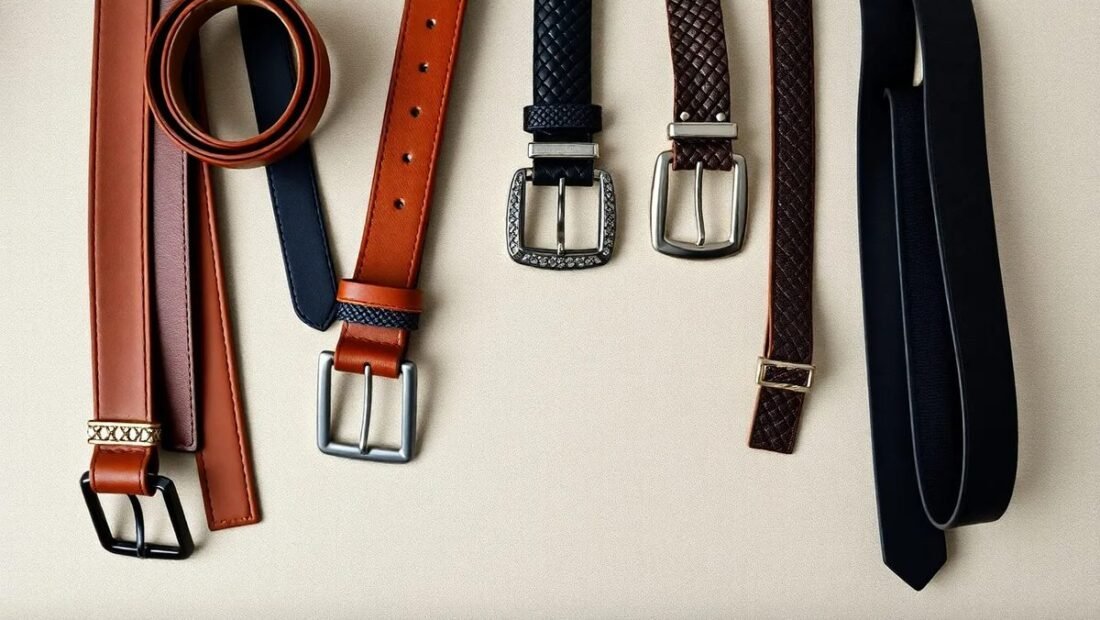
Size is length; width is register. Dress belts run 1 to 1.25 inches wide, smooth, in leather matched to your dress shoes — black with black, brown in the same family as the shoe leather, buckle metal matched to your watch and other hardware. Casual belts run 1.25 to 1.5 inches, with texture allowed: woven, suede, stitched, a heavier buckle. A wide casual belt in a suit looks like a rope on a fencepost; a narrow dress belt with jeans disappears. Trouser loops also vote: measure the loop height of the trousers the belt is for, since a 1.5-inch belt through a dress trouser’s loops is a wrestling match you will lose daily. Buy braided and elastic-woven belts when your waist fluctuates or between-meal comfort matters: they buckle anywhere, hole or no hole, and they forgive what rigid leather prosecutes.
Step 5: Fix small errors instead of replacing the belt
A belt slightly too long is a $10 problem, not a return: any cobbler can shorten a belt from the buckle end — leather belts with screwed (not riveted) buckles are designed for exactly this — preserving the hole spacing and the tail length. A belt slightly too short has no such mercy; wear it on the last hole while you shop for its successor. With jeans, the same sizes apply, but note that jeans sit lower than dress trousers: measure with the jeans on, at the jeans’ waist height, and expect the belt size to come out an inch or two larger than your dress-trouser belt. One method, three measurements — a fitting belt, a tape at the loops, a buckle on the third hole — and the drawer of expensive mistakes stays closed.
The traps that fill the returns box
Three sizing traps account for most of the belts that go back. The first is buying by letter: belt sizes are increasingly sold as S, M and L, and those letters span ranges of four to six inches that vary by maker — an M from one brand is a 34–38, from another a 36–40. Convert letters to inches from the maker’s chart or do not buy. The second trap is the end-to-end measurement: some cheap listings size a belt by its full strap length rather than to the middle hole, which overstates the fit by five inches or more; if a listing does not say where the measurement lands, that silence is the answer. The third is buying for the trousers you plan to fit into. A belt is not a motivational instrument; it is a circle of leather for the waist you have this season, and a belt worn on its last hole under strain ages in months. Size for today, let the third hole hold its two spare notches of optimism, and the belt will still be right next year.
The high-waist version: belts worn where dresses and skirts sit
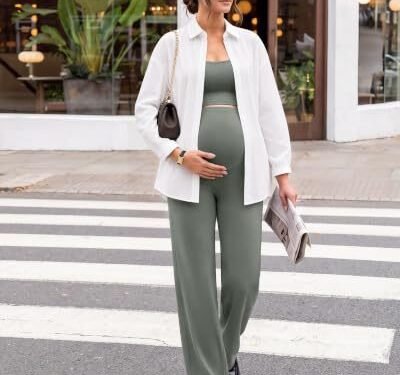
The plus-two rule was derived at trouser height, and it transfers upward with one adjustment: measure at the exact height the belt will be worn. A belt closing a cardigan or cinching a dress sits at the natural waist — several inches above the trouser line and several inches smaller in circumference — so it is commonly a size or two below the same person’s trouser belt, and buying it by trouser-belt size guarantees a belt that buckles only on its last holes with a tail that reaches halfway around again. The third-hole rule still governs, and it governs harder: a waist belt worn on its end holes looks provisional, while one at its middle hole, with the tail tucked neatly under or into its loop, looks tailored. Width narrows at the waist too — a slim-to-medium belt defines a dress’s waist without cutting the silhouette in half, while wide statement belts are their own sizing universe, usually sold by dress size and best fitted in person. Measure where it will live. The rule is the same; the address is different.
The two-belt minimum, and belts that are not leather
One dress belt and one casual belt, both correctly sized, cover nearly every wardrobe — black smooth leather at dress width, brown or textured at casual width — and every additional belt is a luxury rather than a solution. Rotation also rests the leather: a belt worn daily in the same hole stretches that hole oval within a season, while two belts alternating keep their shape for years. Outside leather, the sizing physics relax by design. Braided belts buckle anywhere along their length, woven and elastic belts size by range rather than by hole, and fabric belts adjust continuously — all three are the forgiving options for waists that fluctuate, at the price of formality. Military-style slide belts and ratchet belts remove holes entirely and micro-adjust; size them by the same plus-two rule and trim them to length at home, cutting from the buckle end in small increments. The method does not change across materials. Measure honestly, add two, aim for the middle — the belt will do the rest.