
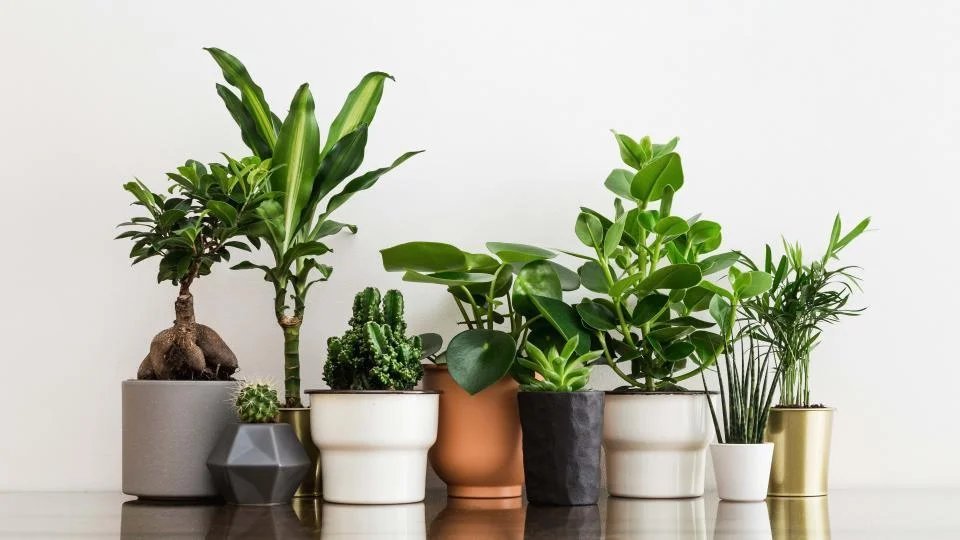
The plant looked fine on Sunday. By Friday it is a crispy memorial to your work schedule. This is the biography of most houseplants in busy homes — not killed by neglect exactly, but by a care routine designed for a person with free weekday afternoons and a perfect memory. The fix is not more effort. It is a system: forgiving plants, placed where they mostly look after themselves, watered by devices instead of intentions, and checked once a week in a single fifteen-minute pass. Set it up once and the plants stop depending on the version of you that remembers things on a Wednesday.
What you need before you start
Gather the kit first, because the kit is the system. You want: two or three self-watering pots or reservoir inserts; a set of watering globes or terracotta spikes; a watering can with a long, narrow spout; a simple moisture meter if you do not trust your finger; trays or saucers for every pot; and one bag of general houseplant soil with perlite for repotting day. Nothing here is exotic and the whole setup costs less than replacing dead plants twice. The principle behind every item is the same — slow, steady access to water and a buffer against your busiest weeks. Plants rarely die from one missed watering; they die from the swing between drought and flood, desert for ten days then drowned in apology. Every tool on this list exists to flatten that swing.
Step one: choose plants that forgive
The highest-leverage decision is made at the shop. Some plants are colleagues who cover for you; others file a complaint if lunch is late. For a busy schedule, build the collection on the forgiving end: pothos, which tolerates low light, missed waterings, and general indifference while still trailing beautifully; snake plants, which store water in their leaves and would like to be watered roughly monthly and left alone in between; ZZ plants, similarly unbothered; heartleaf philodendron, nearly as tolerant as pothos; and cast iron plant, named for exactly the quality you need. Learn each plant’s one weakness and respect only that — snake plants rot if kept wet, pothos go leggy in true darkness. Use the Royal Horticultural Society’s guide to houseplants to check a plant’s light and water needs before it comes home, because ten minutes of matching there saves the slow-motion failure of a sun-lover dying politely in a dark hallway. What to avoid until your system is proven: ferns that want daily humidity, calatheas that want distilled water and constant moisture, and anything marketed as a “statement plant” that is actually a full-time job wearing leaves.
Step two: put each plant where it can mostly fend for itself
Most houseplant death is a placement error discovered slowly. Light is the variable that matters most and is judged worst — a room that feels bright to human eyes can be a cave to a plant, because light drops off brutally with distance from the window. The practical version: sun-lovers within a step or two of a bright window, tolerant plants in the middle of the room, and only the true low-light survivors in hallways and bathrooms without windows. Keep plants out of the direct blast of heating and cooling vents, which dry soil and scorch leaves in rotation. Then group your plants together rather than scattering them decoratively around the house. Grouping is not an aesthetic tip; clustered plants raise the humidity around each other, and — more importantly for a busy person — a plant collection in two or three zones can be watered in one trip with one can, while plants in nine rooms become nine separate chores, eight of which will be forgotten. Two green corners beat greenery everywhere.
Step three: make watering a device, not a decision
Here is where the schedule stops mattering. Self-watering pots with a reservoir keep soil evenly moist for one to four weeks depending on size and season — a ten-dollar self-watering planter genuinely covers a holiday. Watering globes and terracotta spikes do the same job in ordinary pots, releasing water as the soil dries rather than on a calendar. For plants that stay hand-watered, use the finger test instead of a schedule: water when the top inch or two of soil is dry for most common houseplants, and water thoroughly until it drains, then empty the saucer so nothing sits in a puddle. Schedules like “every Sunday” kill plants because soil dries at different speeds in July and January; the finger never lies about which week it is. If you are the planning type, it is worth knowing the tech has reached the garden too — whether AI can plan a garden based on your location looks at tools that match plants to conditions automatically, and the same match-plant-to-place logic is what this whole step is doing by hand.
Step four: the fifteen-minute weekly routine
One appointment, same time weekly — Sunday works well — fifteen minutes, all zones. Walk the route with the watering can and do four things in order. First, the finger test on every pot; water only the dry ones. Second, a quarter-turn rotation of each plant, so growth stays even instead of leaning permanently toward the window. Third, a leaf check: wipe dusty leaves (dust is a light tax the plant pays daily), snip anything yellow or dead, and glance at the undersides where pests announce themselves early and cheaply — a pest found at this stage is a soapy-water problem; found a month later it is a collection-wide problem. Fourth, top up reservoirs and globes. That is the entire maintenance program. Feeding is a twice-a-year footnote during the growing season — a standard liquid feed at half strength in spring and again in midsummer covers most common houseplants, and feeding a dormant or struggling plant is a common way to make its real problem worse, so skip any plant that is not actively growing. Repotting is an annual decision, not an annual duty: roots circling the drainage hole or a plant that dries out suspiciously fast earn a pot one size up; everything else stays, because oversized pots hold more water than roots can use and quietly invite the rot that kills more houseplants than drought ever will. Everything else people imagine houseplant care involves is optional gardening-as-hobby, which you are welcome to enjoy but never required to perform.
Step four and a half: rescue the ones already dying
If your current collection is already in the crispy-memorial stage, triage before you rebuild. Most “dead” houseplants are not dead; they are thirsty, root-bound, or light-starved, and each diagnosis has a different cure — which is why watering a light-starved plant harder is the classic way to finish it off. Check the soil first: bone dry two inches down says water, thoroughly, then wait; soggy and sour-smelling says the opposite — stop watering, check the drainage hole, and let it dry. Look at where the new growth points: long pale stems reaching sideways mean the plant is walking toward light it cannot reach, and the cure is relocation, not fertilizer. Yellow leaves at the base of an otherwise growing plant are usually just age; yellow everywhere, fast, is a message. Cut away only what is fully dead, give the patient the right light and the finger-test regime for three weeks, and judge then. Plants recover on plant timescales, and the busy owner’s advantage is accidental: a system that touches them once a week cannot fuss them to death in between, which is how a surprising number of houseplants die — not from neglect, but from anxious, daily, contradictory care.
Step five: vacations and the genuinely chaotic months
For one to two weeks away, the system runs itself: fill every reservoir, set globes or spikes in the hand-watered pots, and move the thirstiest plants into the bathtub with an inch of water in the bottom and the shower curtain drawn to hold humidity — the classic bathtub method, which keeps plants in a cool, humid, bright-enough holding pattern for well over a week. Pull everything a step back from fierce window sun, since nobody will be home to rescue a scorched leaf. For longer trips, arrange the trade every plant person eventually makes: a neighbor or friend waters once a week in exchange for a small thank-you and a propagated pothos cutting, which costs you nothing and tends to start collections in other people’s houses. Write the instructions down to three lines maximum — who gets water, roughly how much, and nothing else — because complicated instructions are how a helper ends up drowning a snake plant with kindness. The honest summary of the whole method: the right plants, in the right light, with water delivered by reservoirs and one short weekly round, will thrive for years on about fifteen minutes a week. Start with three forgiving plants rather than a jungle, prove the system on them for a month, and expand only when the first three look inevitable — collections built slowly on a working system stay alive, while collections bought in a weekend of enthusiasm die at the speed of the enthusiasm. The plants were never asking for a gardener. They were asking for a system.




1 Comment