
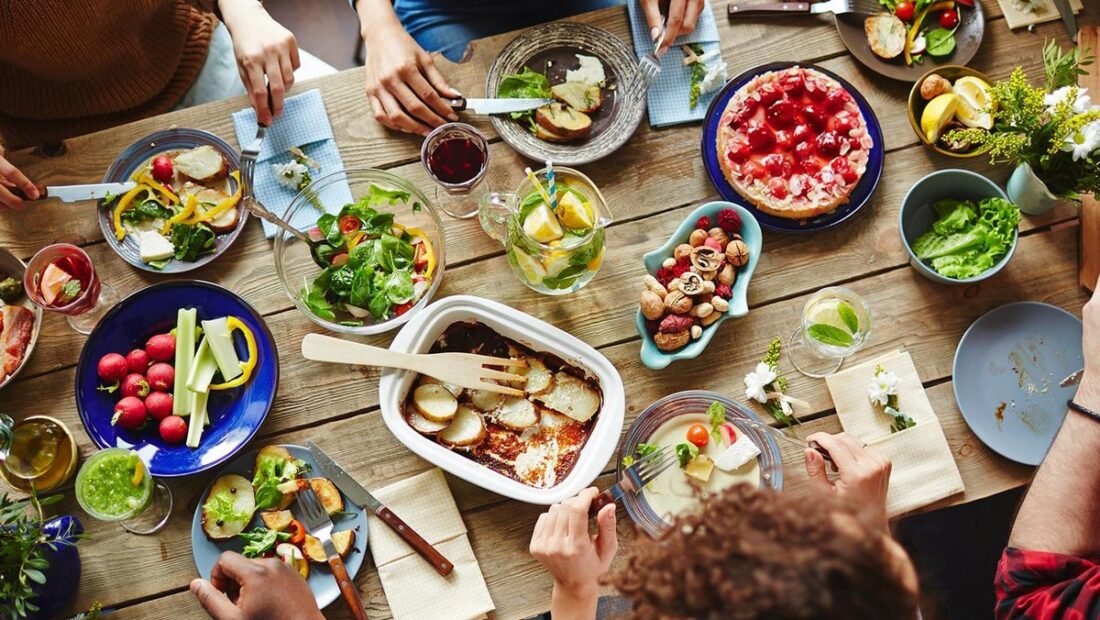
Twelve dollars a head at home versus sixty at a restaurant — that is the real maths of the dinner party for eight, and it is why hosting is the budget move rather than the extravagance. Restaurants charge for the room, the staff, and the washing-up; at home you supply all three and pocket the difference. The catch is that eight is a crowd: the menu has to scale without multiplying your work, the drinks must not quietly double the bill, and the evening needs a timeline or it collapses into the host cooking while the guests make their own fun in another room. Below, the four mains worth building the night around are compared honestly — cost, effort, and forgiveness — with the drinks, the table, and the running order that make any of them work.
The four mains, weighed
The big lasagna (about $25 to feed eight). The classic for a reason: it is assembled hours ahead, baked while the guests arrive, and it actually improves for the wait. Cost per head is the lowest of any meat option, the vegetarian version is painless, and it asks nothing of you during the party except cutting it. Its weakness is ambition — nobody gasps at a lasagna — and it is heavy; pair it with a sharp green salad and stop there. Braised chicken thighs with white beans and greens (about $20). The connoisseur’s budget choice: thighs are the cheapest good cut, braising is forgiving of timing (twenty minutes early or late changes nothing), and the pot looks generous carried to the table. It needs bread for the juices and confidence with seasoning, and it wins the cost-to-impress ratio outright. Pork shoulder tacos with all the fixings (about $30). The interactive option: a slow-roasted shoulder, shredded at the table, with tortillas, slaw, pickled onions, and sauces laid out for guests to build their own. The host’s work ends when the pork does; the guests entertain themselves; dietary differences dissolve because everyone assembles their own plate. The watch-outs are the fixings list (it grows) and the need for a big enough roasting window. Hearty vegetarian chili with cornbread (about $15). The cheapest seat at the table and, done with smoked paprika, dark beer or strong stock, and time, a genuinely deep-flavored one — it also feeds mixed tables without a separate dish for anyone. Its risk is perception: a few guests still read chili as a compromise, until they eat it. It also reheats best of the four, which matters for the cook’s own week.
The verdict on the main, and the shape of the whole menu
If the night matters and the budget is strict, braise: the chicken, or the pork if the crowd is the building-their-own kind. If the day leaves you no cooking time at all, lasagna, assembled at noon, is the insurance policy. Whatever the main, keep the menu formula rigid: one nibble while people arrive (olives, nuts, a little cheese — about fifteen dollars covers it), the main, one green or slaw side, bread, and one simple sweet thing. Courses are where budgets and hosts both break; a single abundant main with good bread beats three anxious courses at any price. For menus built specifically to impress at this headcount and budget, budget-friendly dinner party menus that impress is the natural companion to this plan.
Drinks without the bar tab
Drinks are where dinner parties hemorrhage money, because variety feels generous and costs like it. Watch the seating while you are at it: it costs nothing and changes the night — break up couples, place the quiet guest beside the warm one, and keep the two loudest raconteurs from forming a two-person broadcast at one end of the table. A host’s seating plan is invisible when it works and obvious for three hours when it doesn’t. The discipline: choose one red and one white in the five-to-eight-dollar range from the discount champions — Aldi, Trader Joe’s, and Costco all sell genuinely good bottles in that band — and buy eight to ten bottles for eight people (a case’s worth), which lands around fifty to sixty dollars and ends the fear of running dry. Add beer only if your crowd actually drinks it. Then the move that makes the table look abundant for almost nothing: a big pitcher of sparkling water with citrus slices and herbs — about three dollars — which the non-drinkers and the pacing-drinkers will drain gratefully, and which means the wine stretches. Coffee and tea at the end cost pennies and close the evening better than a third bottle opened out of momentum. Skip the cocktail program unless it is one batch drink made ahead; a host shaking individual drinks is a host missing their own party.
The timeline: what happens when
Two days before: shop, from the menu, in one trip. The day before: make anything that improves — the chili, the braise’s sauce base, the pickled onions, the dessert; set the table fully (this is the secret weapon: a set table on the morning of the party makes the whole day feel done). Three hours before: the main goes on or in; salads prepped but not dressed; drinks chilling. One hour before: appetizers out — olives, nuts, cheese — drinks station set with glasses, ice, and the water pitcher; music on; oven and hob effectively finished. Thirty minutes before: you change, because a host who greets at the door still wearing the cooking apron of panic sets the wrong weather for the evening. From the moment the doorbell rings, the plan allows one job only: topping up glasses and carrying the main. Food safety for a crowd is the one unglamorous note — hot food should not sit out grazing-style for more than about two hours, and the fridge needs a plan for leftovers; the Partnership for Food Safety Education’s core four food-safety practices (clean, separate, cook, chill) cover exactly this ground in plain language.
Where the rest of the saving hides
The menu and the drinks get the attention, but a party budget is usually leaked in the margins. Bread is the first: a bakery loaf bought the day before and refreshed in a hot oven for five minutes tastes like the expensive morning version at half the price. Dessert is the second: one bought cake or tart, served with your own whipped cream and fruit, outperforms a homemade production in everything except pride, and it frees the cook’s last hour entirely. Ice, the third, is chronically under-bought and then expensively improvised — freeze two trays extra and buy one bag; a warm drinks station is the one economy guests can taste. And shop the party from your own cupboards first: the olives from the back of the fridge, the good oil, the nuts in the freezer, the candles in the drawer. A dinner party shopped from a list written after a cupboard audit is routinely twenty dollars cheaper than the same party shopped from appetite.
When a guest offers to bring something
They will offer, and the budget answer is to accept — strategically. Vague offers (“can I bring anything?”) get specific, cheap, useful assignments: a baguette, a green salad, a bottle they already like, ice. This is not tightness; guests genuinely prefer arriving with a task completed to arriving empty-handed, and every assigned item is one line off your own list and your own bill. The two exceptions: never outsource the main (its timing is the evening’s spine) and never outsource something a late arrival would stall (the starter’s key ingredient). Keep a note of who brought what — thanking people accurately afterward is free, and it is how a one-off dinner becomes a circle that hosts in rotation, which is the deepest budget trick of all: eight people who take turns feeding each other eat magnificently all year at a quarter of the restaurant cost.
The table: twenty dollars of atmosphere
Atmosphere is where budget hosting wins, because guests remember light and ease, not thread counts. A plain cloth or even a clean sheet as a cloth, cloth napkins if you own them (or the good paper ones), candles in jars down the middle of the table, and greenery cut from the garden or a cheap bunch of supermarket flowers split into three small glasses instead of one big arrangement. Lower the main light or turn it off entirely; a table lit by candles and one lamp looks expensive at any budget. Place cards are free and make eight people feel expected. And the total spend discipline to hold in your head all evening: food at sixty to ninety dollars, drinks at fifty to sixty, table at twenty — the whole night lands where a restaurant would charge for two of the eight seats, and your guests get the version money usually cannot buy them, which is an evening in a home where the host was actually present. Send them home happy: with the recipe if they ask, with leftovers if there are any, and with a date floated for the next one before the coats are on.



1 Comment