Every summer, American cities put on hundreds of free outdoor concerts — and most residents miss most of them. Not because they’re hidden, but because nobody ever assembled the complete list in one place. The parks department knows, the local paper knows, the neighborhood association knows — but you have to know to ask.
Free outdoor concerts are one of the great civic bargains: professional musicians, beautiful settings, zero dollars, and an atmosphere money can’t buy. Here’s how to find free outdoor concerts in your city — the sources, the timing, and how to make the most of concert season once you’re in the know.
The Sources: How to Find Free Outdoor Concerts in Your City
Start with your parks and recreation department — the single biggest presenter of free outdoor concerts in most cities. Their summer calendar (usually published in May) lists every concert series in every park, and it’s the closest thing to a master list that exists. Bookmark it. Next: your city’s tourism and events office, which aggregates festivals and large-scale free events, and your local paper’s events section — the ‘things to do this weekend’ roundup is where smaller series get covered.
Then go hyperlocal: neighborhood associations, business improvement districts, and community boards all sponsor concert series (the ‘jazz on the plaza’ and ‘concerts on the green’ events that never make the big listings). Follow them on social media. Libraries host free concerts too — increasingly ambitious ones — and their calendars are goldmines. Local breweries, wineries, and restaurants with patios run free music series all summer; follow your favorites. The pattern: free concerts are promoted locally, not nationally — you have to tap the neighborhood-level sources.
Timing and Types
Concert season runs roughly Memorial Day to Labor Day, with schedules typically announced in April and May — that’s your research window. Set a calendar reminder for early May: ‘find summer concerts.’ The big series (symphony in the park, major festival free days) announce first and sometimes require free ticket reservations that go fast. Smaller weekly series just happen — show up.
Know the formats: the weekly series (same park, same weeknight, all summer — the backbone of free concert season), the festival free days (multi-day festivals often have free opening nights or free community stages), the one-off celebrations (Fourth of July, Juneteenth, Labor Day — every city does something), and the genre series (jazz festivals, classical in the park, folk gatherings). Each has its own announcement channel, which is why the multi-source approach matters. Miss the parks calendar and you miss half the season.
Reference: National Recreation and Park Association.
Reference: Americans for the Arts event resources.
Free Concert Season Playbook
Your May-to-September system:
- Early May: check the parks department summer calendar — the master list. Bookmark every series.
- Subscribe to your local paper’s weekend events newsletter for the smaller shows.
- Follow neighborhood associations and business districts on social media for plaza/green concerts.
- Check library calendars — free concerts hiding in plain sight.
- Follow local breweries, wineries, and restaurants with patios for their music series.
- Watch for festival free days and free community stages at ticketed festivals.
- Set alerts for the big one-offs: July 4th, Juneteenth, Labor Day celebrations.
- Join local music social media groups — fans share the shows the listings miss.
Making the Most of It (the Veteran’s Guide)
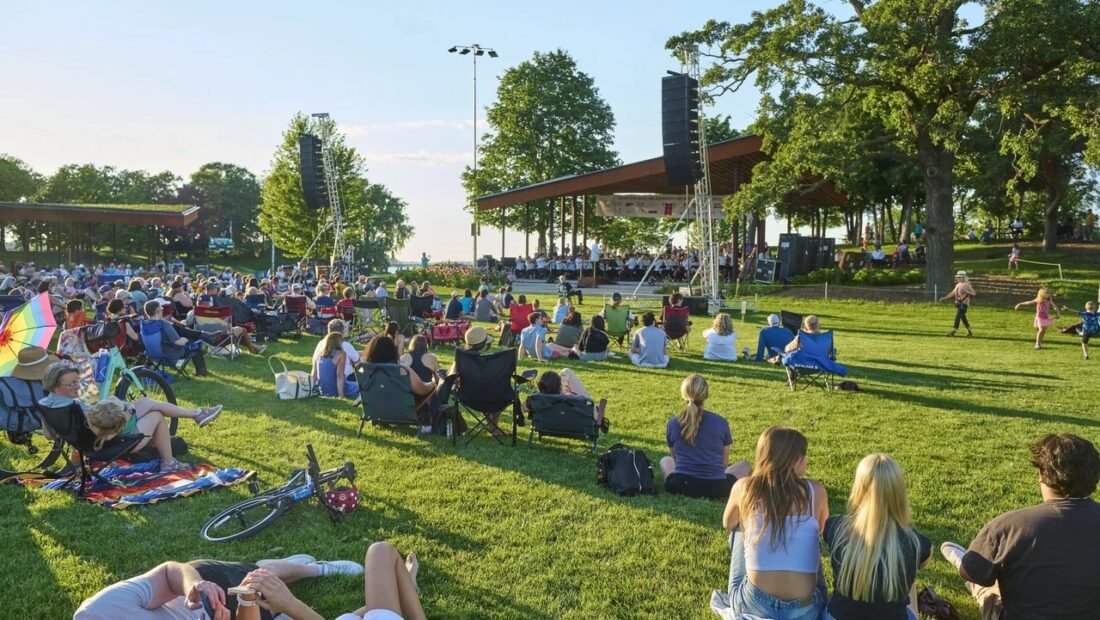
Arrive early for good spots — the blanket-line forms earlier than you think for popular series, and the front-of-stage lawn fills by 30 minutes before showtime. Pack like a pro: blanket or low chairs (check the rules — some venues ban tall chairs), a picnic (outside food is the norm, not the exception), layers for when the temperature drops after sunset, and bug spray. The prepared picnicker has a better evening than the unprepared one, every time.
Be a good audience member: free doesn’t mean the musicians aren’t professionals — tip the tip jar, buy the merch, follow the band. These series survive on goodwill and attendance numbers; your presence and your $20 merch purchase keep them alive. Bring friends — outdoor concerts are social by nature, and introducing someone to their new favorite band is a genuine gift. And go to the weird ones: the Balkan brass band, the bluegrass night, the genre you’ve never tried. Free means zero risk, and the best concert stories come from the shows you almost skipped.
Quick Answers to Common Questions
Do I need to arrive early for free concerts?
For popular series, yes — the good blanket spots fill 30–60 minutes before showtime, and front-of-stage lawn space goes fast. For smaller neighborhood series, 15–20 minutes suffices. Check the series’ social media for crowd reports; regulars will tell you the real timing. Early arrival also means first pick of the food vendors and a relaxed setup instead of a scramble.
What should I bring to an outdoor concert?
The veteran’s kit: blanket or low chairs (check venue rules — tall chairs are often banned), a picnic (outside food is the norm), layers for after sunset, bug spray, sunscreen for daytime shows, and cash for the tip jar and merch. A small trash bag for your spot marks you as a civilized human. Pack it once as a go-bag and concert season gets effortless.
Are free concerts actually good?
Often excellent — cities book real professional musicians for these series, and the setting (a park at sunset, a plaza downtown) adds magic no ticketed venue can replicate. The curation varies by city, but the best series are genuine cultural assets. And the price means zero-risk experimentation: the Balkan brass band you almost skipped becomes your favorite night of the summer.
More from Daily USA Post
- Our complete guide: how do I find concerts happening near me
- what are the best romantic comedies for a date night — what you need to know
- Keep reading: what is the healthiest cooking oil for everyday use
To find free outdoor concerts in your city, work the local sources: parks department calendars (the master list), local papers, neighborhood associations, libraries, and venue patios — researched each May before season starts. Then pack the blanket, arrive early, tip the bands, and try the weird ones. Hundreds of free shows, zero dollars, all summer. The only thing standing between you and concert season is knowing where to look — and now you do.