It is 5:45 at your desk. Dinner is at seven, across town, and going home to change costs an hour you do not have. The dress you are wearing has to do both jobs — it has to have been right in the 2 p.m. meeting and be right at the restaurant table. That double duty is not luck. It is the product of choices made when the dress was bought and when the morning outfit was assembled, and the two versions differ in specific, repeatable ways. Here they are side by side.
The base: what both versions share
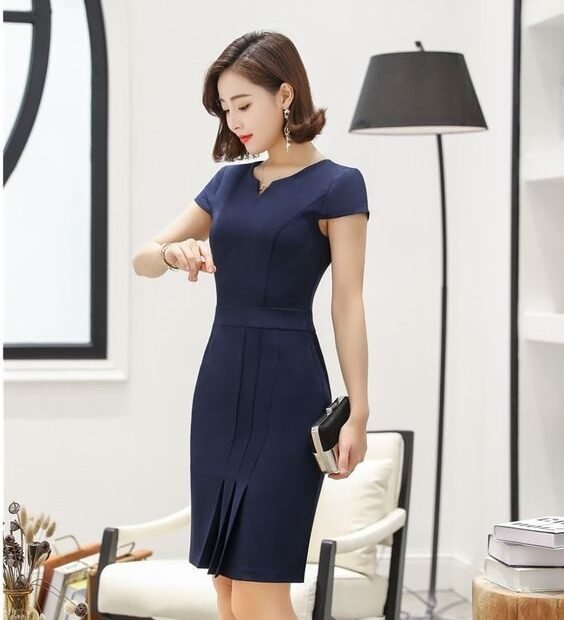
A dress that works day-to-night starts as a compromise candidate: a knee-length or midi in a solid, darker or jewel tone, in a fabric that neither wrinkles in a chair nor reads as evening-only — matte jersey, crepe, ponte, a non-shiny satin-back. Prints can work if they are small and low-contrast; sparkle, plunging necklines and bodycon fits cannot do the morning half, and shapeless casual knits cannot do the evening half. The silhouette should skim rather than squeeze, because the day version will add structure over it and the evening version will remove that structure away. If you are building the shoe plan for a midi base, the pairings in what shoes to wear with a midi dress cover the day-to-evening options in detail — shoes are the biggest single lever in the switch, as the comparison below shows.
Coverage and structure: the day version adds, the evening version subtracts
Work: the dress gets a frame. A blazer or cardigan covers the shoulders and arms, the neckline sits where office norms expect it, and the overall read is deliberate and contained. A belt at the waist sharpens the shape under the layer. Evening: the frame comes off. The blazer stays on the back of the office chair, shoulders and arms appear, the neckline becomes the neckline, and the dress’s own silhouette becomes the outfit. This add/subtract pattern is the whole mechanism — which is why the base dress must look finished undressed. A dress that only works with its cover layer is a top, not a day-to-night dress, and it will strand you at 5:45. The general styling principles behind building an outfit around one strong piece are covered in MasterClass’s guide to styling a dress; the day-to-night version simply applies them twice in one day.
Shoes: the biggest lever in the five-minute switch
Work: closed-toe flats, loafers or a low block heel — walkable, quiet, office-paced. Evening: a heeled sandal, a pointed pump or a dressier ankle boot, swapped in from the bag or the desk drawer where the evening kit lives. No other single change moves the register as far or as fast, because shoes sit at the eye’s second stop after the face and they recategorize everything above them. A midi dress with loafers is a work outfit; the same dress with heeled sandals is a dinner outfit, and nobody at the table will believe it attended a meeting at two. Keep the evening pair at the office permanently rather than carrying them daily — the kit only works if it is there on the unplanned days, which are most of the days it is needed.
Accessories and the evening kit
Work: a watch, small studs, the everyday tote that holds the laptop. Evening: the tote stays at the desk; a small clutch or crossbody that was hiding inside it takes over, earrings become the statement version, and one deliberate addition — a cuff, a ring stack, a silk scarf — signals that the day outfit has ended and an evening one has begun. Lipstick is the smallest item in the kit and does an outsized share of the work; a stronger lip color at 5:45 does more than a wardrobe change at 6:30. The full kit — shoes, clutch, earrings, lipstick, a travel fragrance if you use one — fits in a single desk drawer or tote pocket. Freshening up itself takes five unhurried minutes in the restroom: face, hair brushed and possibly taken down, lipstick, jewelry swap, shoes. Practiced once, it becomes a routine rather than a scramble.
Hair and face: the third lever
Work: hair up or neatly contained, makeup at daytime register, glasses if you wear them. Evening: hair down or restyled — the single fastest identity change available, because a ponytail is office grammar and loose hair is evening grammar, and every observer reads the difference instantly. Makeup deepens rather than changes: the daytime base stays, and the evening adds definition — a stronger lip, liner, a touch of highlight where the restaurant light will find it. The reason this lever matters to a comparison of dresses is that it is free, takes three of the five minutes, and corrects the most common failure of the switch: an evening dress and shoes worn by someone whose head is still in the meeting. If the kit in the drawer holds nothing else, it should hold a brush and the lipstick.
Which dresses fail the test at the shop
The comparison also runs backward, as a buying filter, and some dresses fail it before purchase. Anything that needs the blazer — a neckline too low to sit in a meeting uncovered, straps that cannot carry a workday — is an evening dress only. Anything that cannot shed the office — a suiting dress with sewn-in structure, a shirt dress whose whole identity is its collar and cuffs — is a work dress only, and forcing it into evening produces the sad spectacle of a boardroom outfit at a bar. Fabrics fail too: unlined clingy knits that show the day’s sitting creases, sequins (evening cannot go back), and stiff corporate shirting (evening cannot enter). The pass mark is a dress that, tried on alone with heels, could walk into dinner — and, tried on with the blazer and flats, could walk into the meeting. Two fittings, one dress. Most dresses you try will fail one of them, and knowing that in the shop is the entire saving.
The seasonal versions: the same switch in July and in January
The mechanics hold all year; the materials rotate. In summer, the day layer is a linen blazer or an open shirt over a sleeveless or short-sleeved dress, and the evening version’s freedom is the point — bare arms, sandals, nothing between the dress and the warm night. Watch the desk-drawer kit for season drift: the evening shoe in July is a sandal, and the lipstick that worked in January’s light may want a warmer twin. In winter, the day version gains tights, boots and a coat that must survive both registers, since the coat is the first thing seen at the restaurant too; the evening switch then happens at the ankle (boots to heels, if the kit holds a pair) and at the neck (scarf off, necklace on). The coat problem is the winter version’s only genuinely hard part, and the answer is to buy the winter coat as an evening coat that can attend meetings, rather than a meeting coat asked to attend evenings. Seasons change the cast. The comparison — structure on, structure off — never changes.
The travel version: one dress, a whole trip
The comparison becomes a packing strategy on trips, where the dress that works twice a day is the dress that earns its suitcase space. Choose the candidate by the switch test before departure: can this dress take a blazer at 9 a.m. and lose it, gain a heel and a necklace, at 7 p.m.? Wrinkle behavior is the travel filter — knits, ponte and jersey pass; linen and crisp cotton arrive pre-ruined and spend the trip that way. A single versatile dress plus its two supporting casts (the day layer and shoes, the evening shoe and jewelry) can cover a business day, a dinner and a free evening across one trip, replacing three packed outfits. Pack the evening pieces in the dress’s own garment fold so the kit travels as a unit. It is the comparison, compressed: the dress was never two outfits. It was one excellent decision, made twice a day.
The temperature problem: offices freeze, restaurants don’t
One environmental detail decides whether the switch works in practice: the two halves of the day happen at different temperatures. Offices run cold under air conditioning precisely when restaurants run warm, which means the layer removed at six was sometimes load-bearing at two. The kit answers it — the blazer that structured the day can ride over the shoulders as a wrap in a warm room, and the desk-drawer cardigan stands ready if the evening turns cool. Plan the switch for the thermometer as well as the mirror, and the outfit survives both rooms instead of being right in one and memorable in the other.
The verdict of the comparison
The two versions are not two outfits. They are one well-chosen dress and two frames placed around it — structure, coverage and practicality by day; skin, shine and sharper shoes by night. Buy for the evening version (it must stand alone), assemble for the day version (it borrows its polish from layers), and keep the five-minute kit where the switch will happen. Do that, and the 5:45 problem stops being a problem at all: the dress was never only a work dress. It was an evening dress, at work, waiting.