Your 11-year-old car, worth maybe $7,000, just handed you a $2,800 repair estimate. The first question most drivers ask is the wrong one. They ask whether the repair costs more than the car is worth, as if a car were a stock to sell the moment a bill grows large. A car is not an investment. It is transportation you buy by the year. The question that decides this well is what each path costs per year of reliable use. Price both paths honestly, lay a reliability test over the math, and the answer is usually clearer than the estimate made it feel.
Path A: Repair the Car You Own
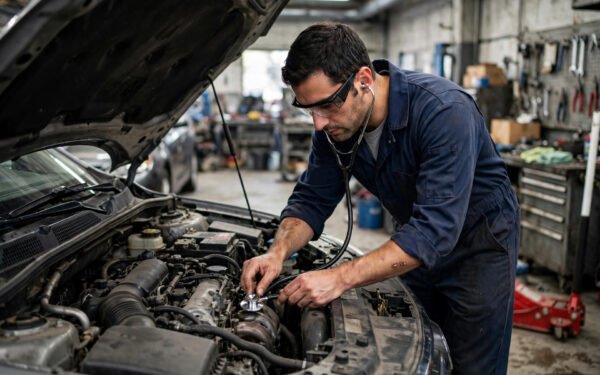
Start with the repair in front of you. Add the $2,800 bill to the upkeep an older car will likely need if it serves three more years. At roughly $1,200 a year for aging-car maintenance and smaller repairs, the three-year total comes to about $6,400. Spread over those three years, that is about $2,100 a year for a car you already know, with no loan payment and no sales tax on a purchase. Insurance on an older car also tends to stay lower than insurance on a new one, and there is no interest to pay because there is no new loan.
The strength of this path is how forgiving the math is. Even a bad year helps the case more than most drivers expect. A year with $4,000 in repairs still costs less than the yearly loss in value on a new car, as the next section shows. The weakness is just as clear. The $2,100 figure assumes the car actually gives you those three years without stranding you. Old cars do not fail on a neat schedule. One large repair can be followed by another, and each shop visit costs time as well as money. Path A wins on cost in most honest counts. It wins only if the car stays dependable enough to use without worry.
Path B: Replace the Car
Now price the replacement with the same care. A $32,000 new car kept for ten years will lose roughly $2,800 to $3,500 a year in depreciation alone, before interest, before fuel, and before the higher insurance a newer, pricier car brings. Depreciation is easy to ignore because no one hands you a bill for it. It is still a real cost. You pay it at purchase and collect what is left at sale, and the gap between those two numbers is often the largest cost of owning a new car.
Texas adds a charge that drivers in some states forget. Sales tax on a vehicle purchase runs at 6.25 percent at the state level, and the total paid on a typical deal can add $2,200 to $2,900 to the transaction on cars in this price range, once the full price is counted. That tax is owed on the replacement. It is not owed on a repair. Financing adds more if you borrow, and a long loan can leave you owing more than the car is worth for years. Path B buys you a newer car, a warranty for a time, modern safety gear, and a break from shop visits. Those are real gains. They are just not cheap gains, and they should be counted as comfort and reliability gains, not as savings.
To check what a fair repair price looks like before you decide the old car is too costly to keep, RepairPal’s fair-price estimates for common car repairs give a useful range for many jobs by model and area. A quote far above that range is a reason to get a second quote, not a reason to buy a new car.
Side by Side: What the Numbers Say
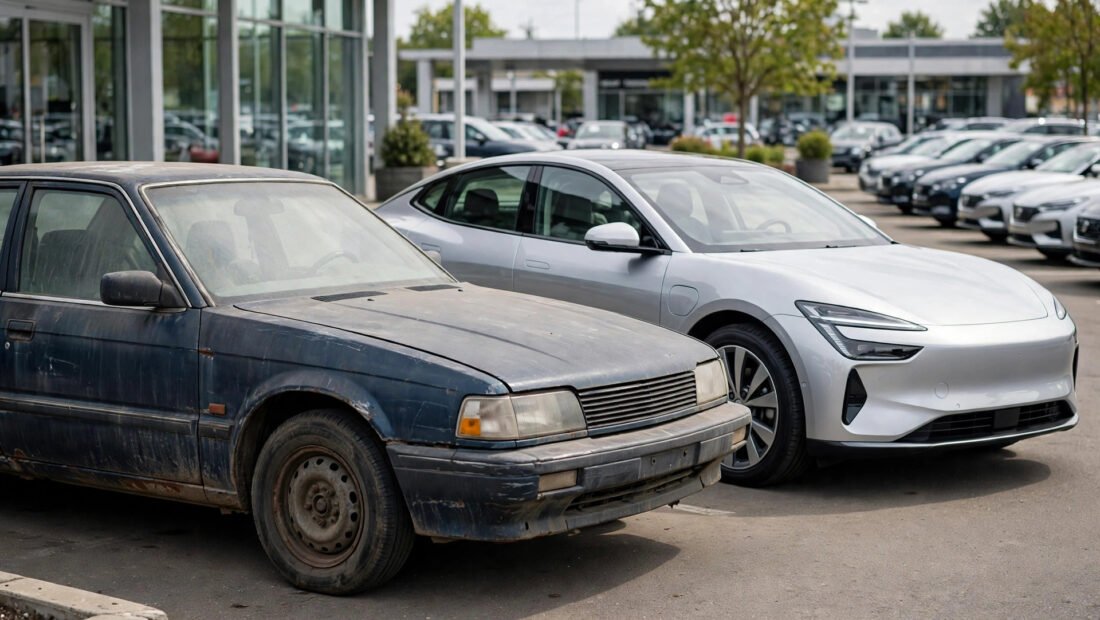
Put the two paths next to each other. Repairing costs about $2,100 a year in the case above, with lower insurance and no purchase tax. Replacing costs $2,800 to $3,500 a year in depreciation alone, plus tax up front, plus interest if you finance, plus higher insurance. On cost alone, repair wins by a wide margin, and it keeps winning for longer than gut feeling suggests. A paid-off car can absorb a surprisingly large repair and still be the cheaper way to travel.
There is a limit, and fleet managers who run many vehicles use a simple line to find it. When yearly repair costs pass 50 percent of the car’s value two years in a row, the economic case turns. On a $7,000 car, that line is $3,500 a year, twice running. One bad year can be bad luck. Two bad years in a row suggest the car has entered a stage where major systems are wearing out together. Below that line, fixing is usually sound. Above it, you are paying new-car money for old-car certainty, which is the worst of both paths.
The Reliability Test the Spreadsheet Cannot Run
Cost per year is not the only test, because a cheap car that leaves you on the shoulder of a highway in August heat has failed at its main job. Ask how the car has behaved, not just what it has cost. Has it stranded you? Once in two years is an incident. Twice in a year is a pattern. Do repairs reveal the next repair, so the shop fixes one worn part only to find the part beside it is also worn? That cascade is a sign the car is aging as a whole, not suffering single faults.
Safety belongs in this test too. Worn brakes that keep returning, failing safety systems, or deep structural rust are not normal upkeep items. A car can be cheap to run and still be the wrong car to trust with a family on a long Texas drive. Needs change the test as well. A car that no longer fits a child seat, a work duty, or a long commute may need replacing even if its repair math still looks good. Math should inform the call. It should not trap you in a car that no longer fits your life or that you no longer trust.
Texas Factors That Move the Line
Heat shifts the balance in Texas. Air conditioning is not a luxury here. A car you cannot cool is a car you cannot use for much of the year, so an air conditioning repair at $1,200 to $2,500 should be priced as essential work, not as an optional comfort. That makes some Texas repairs look worse than the same repair would look in a cooler state, where a driver could wait. Heat also ages rubber, batteries, and interiors faster, so a Texas car may need this work sooner.
Inspection adds another Texas fact. A car that cannot pass inspection without $1,500 of work is telling you something about its stage of life. Small faults on a newer car are cheap. The same faults stacked on an older car can cluster into a bill that rivals the car’s value. Hail runs the other way. A hail-damaged car that still runs well may be worth little to a buyer but a great deal to its owner, since the damage is skin deep and the car can serve for years at low cost. Looks alone should never decide this question in a hail state.
The Middle Paths Most Drivers Miss
Repair and buy new are not the only two doors. The middle path that suits many Texas drivers is to replace the old car with a two-to-four-year-old used car. Such a car often sells at about 60 percent of its new price, because the first owner paid the steepest years of depreciation. You gain newer safety gear and a car with far fewer worn parts, without paying the full new-car tax and loss in value. Shoppers working with a tight budget can start by reviewing the best used cars under $15,000 in Texas to see what that price range can buy in the current market.
Other middle paths deserve a look. You can repair the current fault well, skip cosmetic work, and run the car two more years while you save a replacement fund with no loan pressure. You can keep the old car as a second vehicle for short trips once a newer car takes over the commute. Or you can sell the old car privately while it still runs, since a running car with disclosed needs sells for far more than the same car after a major failure. Each path trades money, risk, and effort in a different mix.
How to Buy the Decision Honestly
Good inputs make this choice far easier, so buy information before you buy a car or a repair. Pay $150 to $250 for a full inspection at an independent shop. Ask one question and ask for the answer in writing: what will this car need in the next two years, and what will it cost? That forecast turns a vague fear of future bills into a number you can place beside the replacement cost. Get a second opinion on any single repair quoted over $1,500. Prices and judgments vary, and a second set of eyes is cheap next to either path.
Stay alert in both directions. Some shops find $5,000 of urgent work on every old car that rolls in. Some dealers raise a trade-in offer the moment you mention buying new, because the deal can be shaped in ways that hide the true price. Neither voice is neutral. Your written two-year forecast, the 50 percent rule, and the reliability test together give you a neutral frame of your own.
Recommendation
For the driver in the opening case, repair is the stronger call in most versions of the facts. At about $2,100 a year against $2,800 to $3,500 a year in depreciation alone for a new car, plus Texas sales tax and higher insurance, the old car wins on cost by a margin large enough to absorb some bad luck. Repair it if it has not been stranding you, if safety systems are sound, and if the two-year forecast shows normal wear rather than a cascade.
Replace it when the reliability test fails, even if the math still leans toward repair. Replace it when yearly repairs pass half the car’s value two years running, when it cannot pass inspection without major work, or when it no longer fits your daily needs. If you replace, favor a two-to-four-year-old used car unless you have a clear reason to buy new. That choice keeps most of the reliability gain and leaves the steepest loss in value with the first owner, where it belongs.