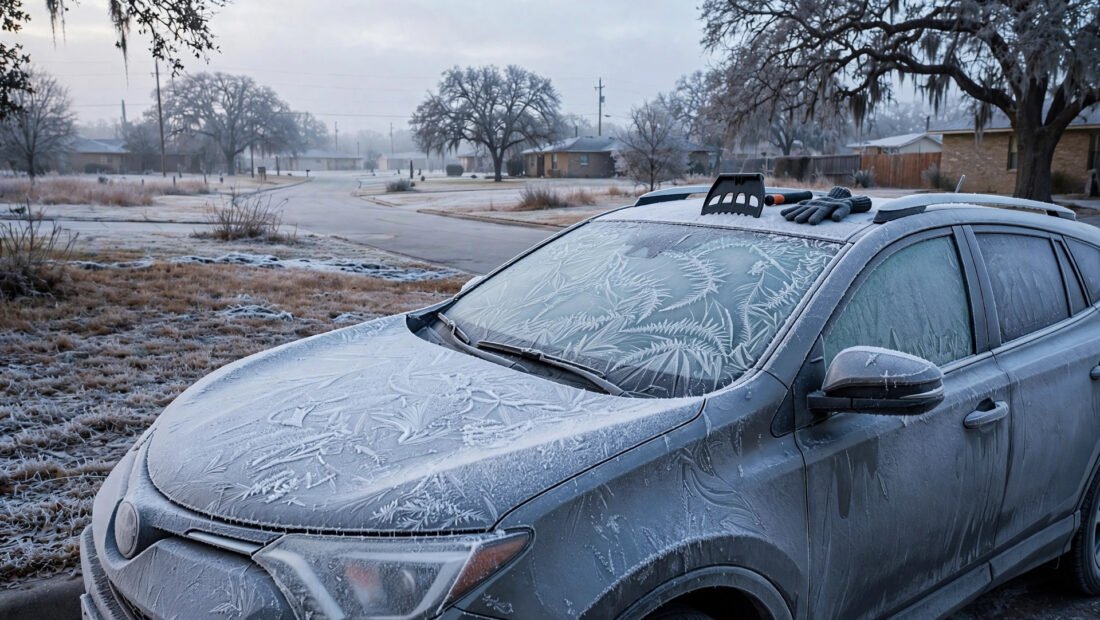
Texas batteries rarely die of cold. They die of the summer before it, and the first hard freeze just delivers the news. A battery that started the car without a thought in October turns the key in January and gets a slow groan, a click, or silence. The damage was done months earlier, at 100 degrees and above, while the car sat baking in driveways and parking lots. Fall is when that story can still be changed, which is why the checklist comes first and the physics comes after it.
The fall checklist, up front
Five jobs, done before the first freeze warning, prevent most winter battery failures. First, test the battery once it passes its second year, at a parts store or shop that can measure real health rather than voltage alone. Second, replace it on a calm schedule at three years old in Texas, or sooner if a test shows health below 80 percent, instead of waiting for a freezing morning to make the decision. Third, clean the terminals and tighten the clamps so corrosion does not strangle the power the battery still has. Fourth, have the alternator checked, so a fresh battery is not slowly drained by a weak charging system. Fifth, buy a portable jump starter in the $60 to $120 range, charge it fully, and store it indoors, where its own lithium pack stays warm and ready.
Each item is cheap on its own. Together they move the whole problem from an emergency at 18 degrees, with a line at every parts store in town, to a routine hour on a mild fall afternoon. The rest of the preparation story explains why each item earns its place, starting with what cold actually does to a battery that heat has already weakened.
What cold does to a battery
Cold cuts the power a battery can deliver at the exact moment the engine demands more of it. At 32 degrees, a battery delivers roughly 65 percent of its rated cranking power. At zero degrees, that figure falls to about 40 percent. At the same time, engine oil thickens in the cold, so the starter motor must work harder and draw more current to turn the engine over. Less supply and more demand meet on the coldest mornings of the year.
A healthy battery absorbs that squeeze. A weakened one cannot. A battery at 70 percent health starts a car easily in mild weather, because the job only asks for part of what it can give. In a freeze, the same battery faces a job that asks for nearly everything, and it comes up short. That is why failures feel sudden. The weakness was gradual. The test that exposed it arrived all at once.
What the summer did first
Heat is the real battery killer in Texas, and it works quietly. Months above 100 degrees speed up corrosion inside the battery, wear down the plates that store the charge, and evaporate the electrolyte that the chemistry depends on. None of that strands a driver in August, because warm weather actually makes cranking easier in the short term. The battery feels fine all summer while its capacity shrinks underneath.
The result shows up in lifespans. Batteries in Texas commonly last about two to three years, against roughly four to five years in cooler parts of the country. A battery heading into its third Texas winter has already lived a full life by local standards, no matter how strong it seemed in September. Treating three years as the planned replacement point is not wasteful in this climate. It is simply matching the schedule to the conditions, much like the rest of how to winterize your home before the cold season rewards work done before the freeze arrives.
The checklist in detail: testing and replacing
A proper test measures how the battery performs under load, not just whether it shows twelve volts on a meter. Most large parts stores will run that test free, along with a check of the alternator and starter, in about fifteen minutes. Testing once a year after the second birthday catches the slide early, while the car still starts and the replacement can be chosen by price and warranty instead of by whichever store has a battery left during a freeze.
Replacement on schedule also protects the rest of the car. A dying battery makes the alternator work harder to keep it charged, and repeated deep discharges shorten the life of both. Buying at three years, or at the first test below 80 percent health, costs one battery at a fair price. Waiting often costs a battery at an emergency price, plus a tow, plus a morning of missed work.
The checklist in detail: terminals, alternator, and the jump pack
Terminals deserve their own attention because corrosion imitates a dead battery. A crusty, loose connection adds resistance that steals cranking power, and it gets worse in the cold. Cleaning means disconnecting the cables, negative first, scrubbing the posts and clamps clean, reconnecting positive first, and tightening firmly. A battery that is loose in its tray should be secured as well, since vibration damages the plates inside.
The alternator check matters because it is the battery’s only source of recharge. A weak alternator leaves every battery undercharged, so even a brand-new unit fades within months and the fault gets blamed on the battery again. Testing the charging system at the same visit closes that loop. Care guidance from AAA’s guidance on car battery care and cold-weather starting lines up with the same routine: test early, keep connections clean, and treat age in a hot climate as a warning by itself.
The portable jump starter is the insurance layer. A $60 to $120 lithium pack, kept charged and stored indoors, starts most cars without another vehicle, cables, or a stranger’s help in a dark parking lot. Two details make it work when needed: charge it every few months, since the packs slowly lose charge sitting still, and keep it inside rather than in a freezing trunk, where the cold drains the pack meant to rescue the car.
One more detail belongs with the fall work: write the battery’s install date on a calendar or phone reminder the day it goes in. The date code printed on the case is hard to read in poor light and easy to misread under a layer of road grime. A simple note made at purchase turns the three-year rule into a date that can be checked in seconds, and it gives the next fall test a clear standard to judge against instead of a guess based on memory.
Cold-snap habits that help
Parking in a garage, even an unheated one, buys roughly 10 to 20 degrees over outdoor air, and at the margins that difference decides whether a borderline battery turns the engine or not. Cars that sit for days at a time benefit from a battery maintainer in the $30 to $50 range, a small charger that holds the battery at full charge without overcharging it, for as long as it stays plugged in. That suits second vehicles, trucks used only on weekends, and any car parked through a long cold spell.
Driving habits count too. A five-minute trip barely replaces the charge the starter just used, especially with lights, heat, and defrosters running. Combining errands into one longer drive lets the alternator repay the battery in full. Turning off lights, fans, and seat heaters before cranking also leaves every available amp for the starter. And in Texas, the forecast deserves a week’s attention rather than a morning’s, because 70 degrees on Tuesday can genuinely become 18 degrees by Friday, and the preparation window closes fast once the front arrives.
Jump-starting in the cold, done safely
When a battery does fail, jump-starting follows a careful order. Connect the positive cable to the dead battery first, then to the good source, then the negative cable to the source, and the final negative clamp to a bare metal point on the engine away from the battery itself. Let the weak battery take charge for a few minutes before cranking, then drive long enough to recharge fully. A portable pack follows its own printed steps, which deserve a read in daylight before the night they are needed.
One line should never be crossed. A battery with a swollen, bulging, or leaking case may be frozen or internally damaged, and it should be replaced, never jumped. Charging or jumping a battery in that state risks cracking the case and spilling acid. Cold weather also makes plastic brittle, so clamps and cables should be handled without forcing them.
Reading the replacement signs in one place
The signs collect into a short list. Replace the battery when it has needed two jumps in a single season, when headlights dim noticeably at idle and brighten with engine speed, when the case bulges or leaks, when a load test falls below 80 percent health, or when it simply reaches its third birthday under Texas heat. Any one of those is enough. Two or more mean the next freeze has already made its decision, and the only remaining choice is whether the replacement happens in a warm store on a planned afternoon or on the shoulder of a road at dawn.