
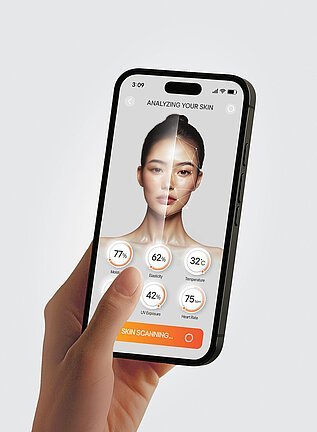
The idea sounds like science fiction: snap a photo of a mole, and AI tells you whether to worry. These apps exist, they’re getting better, and some are genuinely impressive. But there’s a canyon-sized gap between ‘interesting screening tool’ and ‘replacement for your doctor’ — and crossing it casually can be dangerous.
Fair warning: some of this will sound obvious. The obvious stuff is usually the stuff people skip — and skipping it is why they’re stuck.
Ai detect health problems from a photo in the Real World
A friend used a skin-screening app on a mole that had changed shape. The app flagged it as higher risk, which scared her — but also got her into a dermatologist within the week instead of ‘someday.’ It turned out to be benign, and she felt silly for panicking. Her dermatologist said the opposite: the app did exactly what screening should do, which is get borderline cases in front of a human expert sooner.
It’s easy to talk about AI in abstractions — the future, the revolution, the risks. What’s more useful is noticing where it already touches your specific situation. The people getting real value from AI right now aren’t the ones with the grandest theories; they’re the ones who picked one annoying, repetitive task and automated the boring part of it. Start concrete, stay skeptical, and expand from what works.
A practical habit worth building: keep a running note of what works for you. AI tools change fast, and your personal playbook of prompts, workflows, and gotchas becomes genuinely valuable. Six months from now, you’ll be glad you wrote things down.
For authoritative background on this topic, see the FDA on AI in medical devices.
Common Mistakes to Avoid
Most people don’t fail at this because it’s hard. They fail because of a handful of predictable, avoidable mistakes. Here are the big ones.
- Treating an app’s ‘low risk’ result as a clean bill of health and skipping the doctor
- Panicking over a ‘high risk’ flag that turns out to be nothing — screening errs on the side of caution
- Using photo apps for conditions they were never designed or tested to evaluate
Your Action Plan
Let’s turn all of that into action. Work through these in order and you’ll be ahead of 90% of people.
- Use these apps as triage, not diagnosis: they decide urgency, not outcomes.
- Check whether the app is FDA-cleared and what it was actually validated on.
- Take clear, well-lit photos — garbage input means garbage assessment.
- Any concerning result deserves a real clinician. Any reassuring result still deserves attention if symptoms persist.
Why This Matters More Than You Think
Don’t let the noise around AI distract from the practical reality of AI detect health problems from a photo. Strip away the breathless predictions and what remains is a set of genuinely useful capabilities with real limitations. Understanding both — the capabilities and the limitations — is what separates people who benefit from AI from people who get burned by it or miss out entirely.
What the Research and Real Experience Say
Behavioral research adds a warning relevant to AI detect health problems from a photo: automation bias — the tendency to trust machine output too much — is real and measurable. The more reliable a system seems, the less carefully people check it, which is precisely when errors slip through. Awareness of this bias is itself the defense. Stay a little skeptical, especially when everything looks right.
Your First 30 Days
The 30-day approach to AI detect health problems from a photo works because it respects how learning actually happens: through doing, not reading. Commit to fifteen minutes of hands-on practice a few times a week. You’ll develop instincts no article can give you — when to trust the output, when to push back, which tasks are worth automating. That judgment is the real asset.
What Success Looks Like
Picture yourself a year into AI detect health problems from a photo: you’ve internalized which tasks to delegate to AI and which to keep, your judgment about outputs is sharp, and you’ve helped a few other people get started too. That compound of skill and helpfulness is worth more than any single tool. The technology will keep changing; your judgment is the durable asset.
Quick Answers to Common Questions
How do I avoid common pitfalls?
Read the mistakes section above twice — seriously. Most pitfalls are well-documented and entirely avoidable. Forewarned is forearmed, and the people who struggle are usually the ones who skipped the warnings.
Does this work for everyone?
The principles work broadly, but the specifics need tuning to your situation. Take the framework here and adapt it — your circumstances, resources, and constraints are real inputs, not excuses.
What’s a realistic expectation?
Steady, unspectacular progress. If you’re imagining a dramatic transformation, recalibrate: the real win is being meaningfully better in six months than you are today, achieved through unglamorous consistency.
Ask yourself what ‘good enough’ looks like before you start. Without a finish line, everything expands to fill all available time and budget.
Before you move on, decide what success looks like for you here — specifically. A number, a date, a done state. Write it down somewhere you’ll see it. Vague intentions evaporate; specific commitments have a way of getting done.
Keep learning: How Teachers Really Feel About Students Using AI for Homework, How Parents Can Tell If a Child Used AI for an Essay, and Can AI Help You Actually Stick to a Monthly Budget?.
The Bottom Line
AI photo screening is a powerful early-warning system and a terrible doctor. Let it nudge you toward care faster, then let a human make the call. For further reading, the NIH on AI in healthcare is a solid next stop.
One more thing worth saying: progress here is rarely dramatic. It’s a slow accumulation of small, correct decisions. The people who win aren’t the brilliant ones — they’re the consistent ones who kept showing up after the novelty wore off.



