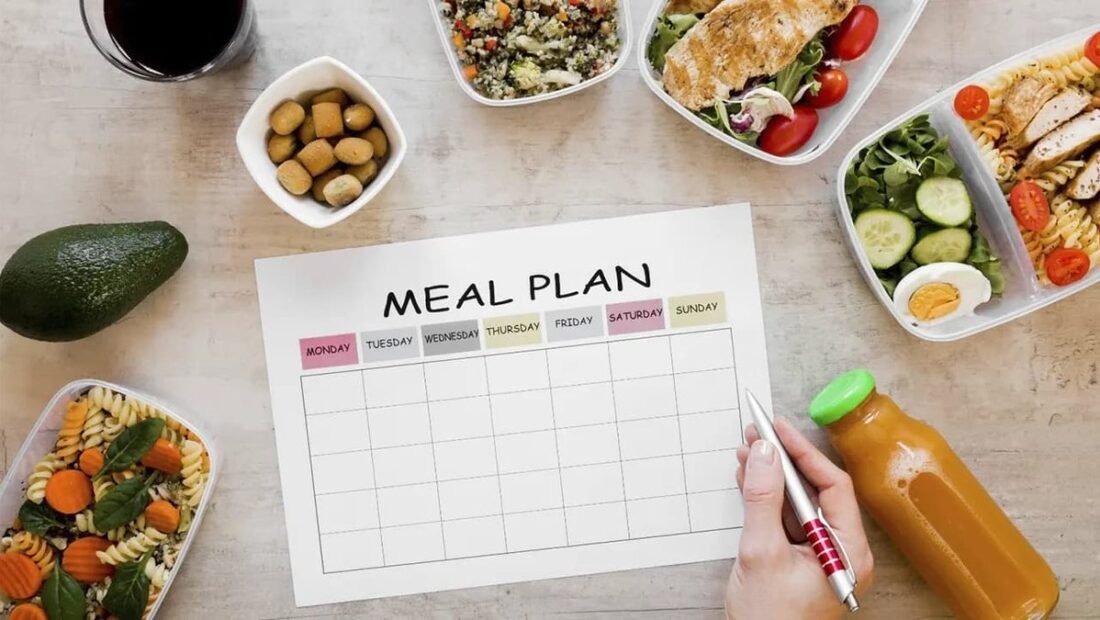
It is 5 p.m. on a Wednesday. You are standing in front of an open fridge containing half a cabbage, four eggs, a jar of something unidentifiable, and chicken that needs cooking today — a sad collection of ingredients that adds up to no known meal — while someone in the next room asks the eternal daily question: what’s for dinner? Weekly meal planning exists to kill this exact moment, forever, and AI has quietly become very good at it. But “use AI for meal planning” hides a real comparison, because the tools come in genuinely different species that suit different households. This guide compares the four main approaches — a general AI assistant, dedicated meal-planning apps, store-connected planners, and use-what-you-have apps — with what each is genuinely best and worst at, and ends with the choice that fits your own kitchen.
The thing every approach lives or dies on: your brief
Whichever tool you choose, the output is only as good as the constraints you hand it, so start here. A useful brief sounds like the one this guide uses as its worked example throughout: high-protein, under $120 a week for groceries, no meal taking more than 30 minutes on a weeknight, and one vegetarian in the house. Add the practical truths most people forget: how many nights you actually cook (be honest — four is a plan, seven is a fantasy), what is already in the freezer, the equipment you own, the cuisines your household will genuinely eat, and the hard exclusions that are allergies rather than preferences. Feed a tool that brief and the plan comes back looking like your life. Feed it “plan my meals” and you get a stranger’s aspirational week, ignored by Wednesday. The Academy of Nutrition and Dietetics publishes the sensible nutritional framing for what a balanced week should contain; the AI’s job is logistics, and yours is the brief.
One element of the brief deserves its own paragraph because it is the only one where an AI error can hurt someone: allergies and medical diets. Tell the tool about them clearly, put them in writing in every brief — and still read every recipe and label yourself before it reaches a plate. Planning systems optimize for your stated preferences; they are not medical devices, they do not know that the sauce it suggested contains the nut your household avoids, and “the app said it was fine” is not a defense anyone gets to use. The same applies, more softly, to nutrition claims generally: treat the tool’s protein counts and health scores as rough guides written by an enthusiastic amateur, and lean on the professional guidance linked above for anything a doctor has actually told you to manage.
Approach 1: A general AI assistant as your planner
The flexible option: open the chatbot you already have and brief it as above. Its strengths are real conversation and adaptation — “swap Tuesday, the kids revolted against lentils,” “make Thursday use the leftover rice,” “same plan, $90 this week” — handled in seconds, with reasons. It will generate the plan, adjust it endlessly, and produce the shopping list, broken down by store section if you ask. Its weaknesses are equally real: it has no tested recipe database behind it, so the recipes it invents are plausible rather than proven (usually fine, occasionally a seasoning crime); it cannot check your store’s actual prices or stock; and it forgets your household’s quirks between conversations unless you repeat the brief. For a confident cook who wants a thinking partner rather than a recipe pipeline, this is the best free option by a distance. For a nervous beginner who needs recipes that work exactly as written, it is the riskiest.
Approach 2: Dedicated meal-planning apps
Apps built for the job — Mealime’s meal planning app is the well-known shape of this category — flip the trade. You choose from a library of tested recipes matched to your dietary settings, drag them into a week, and the app builds the combined grocery list automatically: quantities merged, duplicates removed, sorted by aisle. The plan-to-shop pipeline is seamless in a way a chatbot cannot match, and the recipes are real recipes, cooked by real people before you. What you give up is the conversation: the app works inside its library, adjustments mean swapping dishes rather than reasoning about leftovers, and the more interesting features in this category usually sit behind the paid tier. For households whose problem is not imagination but organization — the plan exists, the list never quite happens — this is the strongest approach, and the one most likely to still be in use in six months.
Approach 3: Store-connected planning
The third species lives inside grocery and delivery apps: planning tools that start from the store’s actual shelves. Pick meals and the ingredients land in your cart at today’s prices, or work backward from this week’s offers and build the plan around what is cheap and in season. The strength is brutal practicality — the budget in your brief is enforced by real prices, nothing on the list is out of stock in theory, and the shop itself takes ten minutes. The weakness is the flip side of the integration: you are planning inside one retailer’s world, the recipe quality varies, and the system has a commercial interest in what it suggests that a neutral planner does not. Households whose meal-planning failure mode is money — the plan is lovely, the receipt is not — get the most from this approach. Our worked example’s $120 weekly cap is a perfect illustration: in a chatbot plan that budget is a wish the tool cannot check, while in the store’s planner it is a running total on screen, enforced ingredient by ingredient before you have spent anything. It pairs naturally with the technology in our look at whether AI can predict your grocery list, which covers how the stores’ systems learn your household’s habits.
Approach 4: Use-what-you-have apps
The fourth approach starts from the 5 p.m. fridge instead of the empty page: you tell the app (or the assistant) what ingredients are on hand, and it builds meals around them before they expire. As a sole planning system it is chaotic — a week cannot run on rescue operations — but as a layer on top of any approach above, it is the one that saves actual money, because the most expensive ingredient is the one you bought and binned. The practical rhythm many households land on: plan four dinners with approach 1, 2 or 3, leave one night deliberately unplanned, and let the fridge-raiding tool design that night from whatever the week has left behind. Waste falls, the budget breathes, and Friday’s dinner occasionally becomes the week’s favorite, which no planner would ever have scheduled.
Running the system: the twenty-minute Sunday session
Whichever approach wins, the households that keep it alive run the same small ritual. Once a week — Sunday afternoon is the classic, but any fixed slot works — sit down for twenty minutes with the tool and the week’s reality side by side: the calendar (which nights are late, which are out), the freezer and fridge inventory, and the standing brief. Generate the plan, do the swaps while the tool still remembers the conversation, check the list it produces against what you already own (every system double-buys onions in week one), and place the shop or write the list then and there. The second half of the ritual happens midweek and takes two minutes: tell the tool what changed — the chicken became tomorrow’s problem, a friend is coming Thursday — and let it re-plan the remainder around reality rather than abandoning the plan at the first disruption. Plans die from disruptions absorbed badly, not from bad planning. A tool that can re-plan Wednesday in ninety seconds is the actual product being bought, whichever name is on the app.
The verdict, by household
Choose the general assistant if you cook confidently, your constraints are complicated (mixed diets, tight budgets, several moving parts), and you enjoy steering. Choose a dedicated planning app if your failure is follow-through — the plan-to-list-to-shop pipeline is the product, and its tested recipes protect beginners. Choose the store-connected route if the budget is the battleground and one store does most of your shopping; let its prices plan your week. And whatever you pick as the main system, bolt on the use-what-you-have habit for one night a week. Then run the experiment honestly for three weeks rather than judging on the first Sunday: the measure of a meal-planning tool is not the beauty of week one’s plan, it is whether the 5 p.m. fridge moment — the cabbage, the eggs, the unanswerable question — has stopped happening. On that measure, every approach in this comparison beats the nightly blank stare it replaces — and the household that plans, even imperfectly, eats better for less money with a fraction of the weekday stress.