A private sale can save you a real 10 to 20 percent over dealer prices. It also removes the dealer, and the dealer, for all its faults, was a safety net. There is no warranty desk, no return window, and no manager to call if the car turns out to be a flood rebuild with a washed title. In a Texas private sale, you are the inspection department, the fraud department, and the paperwork department. So the whole checklist comes first, before any detail, because it is the tool you will actually carry to the meeting.
The full checklist, up front
- Before you meet: get the VIN and run a history report; cross-check theft and salvage records; confirm the title is in the seller’s own name; check for an outstanding lien; look up open recalls; research fair private-party market price.
- Exterior and structure: even panel gaps; matching paint with no texture change between panels; rust at wheel wells, rocker panels, and undercarriage; tires with even wear and adequate tread; glass in good shape.
- Interior and electronics: every switch and feature tested, including air conditioning, heat, windows, locks, lights, and backup camera; no musty or mildew smell; trunk carpet lifted to check for silt or moisture; wear that matches the stated mileage.
- Under the hood and underneath: oil that is not milky; transmission fluid that is not burnt; coolant at a proper level; belts and hoses free of cracks; battery terminals clean; no fresh undercoating hiding repairs; no bent frame parts or active leaks.
- The test drive: at least 30 minutes; a cold start you witness yourself; city streets, highway speed, and hills; hard braking in a straight line; full-lock turns; every gear; radio off and ears open.
- The non-negotiable: an independent pre-purchase inspection, $150 to $250, by your mechanic, never the seller’s.
- Paperwork and payment: title signed correctly; odometer disclosure for vehicles under 20 years old; a written bill of sale; payment handled at a bank; title transferred at the county tax office within 30 days; insurance bound before you drive away.
Now the detail behind each block, in the same order, so you know what you are looking at and why it matters.
Before you meet: the remote checks
Start from your kitchen table. A history report built from the VIN shows accident records, title brands such as salvage, rebuilt, or flood, odometer gaps, and how many owners the car has had. Cross-check the free federal theft and total-loss records as well, because no single report catches everything. In Texas, flood brands deserve special attention. Gulf storms have pushed thousands of water-damaged cars into the market over the years, and a branded title from another state can be washed cleaner on paper than the car ever was in fact.
Ask the seller three questions on the phone. Why are you selling? How long have you owned it? Is the title in your name and in your hand? Straight answers come fast. Evasive ones are data. A title in someone else’s name points to title jumping, which is illegal in Texas and leaves you holding the paperwork problem. Ask about liens, too. A car with an unpaid loan can be bought, but only with the payoff handled openly through the lienholder, never on a promise. Finish with pricing homework. Look at fair private-party values and comparable listings so your offer rests on the market, including a glance at the best used cars under $15,000 in Texas if your budget sits in that range, not on what the seller paid years ago.
At the car: structure, cabin, and engine bay
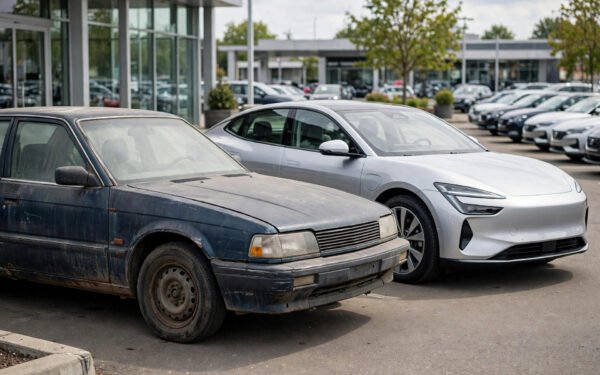
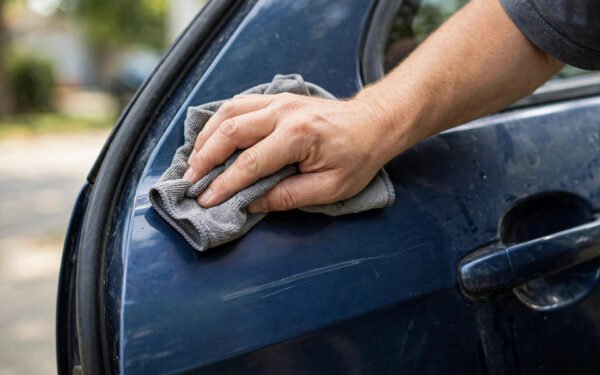
Meet in daylight, bring a friend and a flashlight, and walk slowly. Uneven panel gaps and paint that changes texture between panels point to accident repair. Run a fingertip along body lines; factory paint feels smooth, while resprayed panels often feel slightly rough. Surface rust is cosmetic. Rust that has eaten through metal at the wheel wells or under the car is structural, and structural rust on a unibody car is a walk-away.
Inside, test everything, and in Texas that starts with the air conditioning. Weak cooling can mean a repair bill with four figures. Try every window, lock, light, and the backup camera. Then use your nose. A musty, mildew smell is the classic flood-car tell, and lifting the trunk carpet to look for silt or damp under the seats takes thirty seconds. Check that wear matches mileage. A car said to have 60,000 miles should not have a shredded driver’s seat bolster and pedals worn smooth. At startup, every warning light should glow, then go out. A light that never glows at all may have been removed to hide a fault.
Under the hood, fluids tell the truth quietly. Milky oil suggests coolant getting where it should not. Dark, burnt-smelling transmission fluid suggests hard use or neglect. Cracked belts, swollen hoses, and corroded battery terminals are cheap parts that reveal expensive habits. Crouch and look underneath for fresh undercoating, which can hide rust and repairs, and for the shine of an active leak.
The test drive and the flood checks Texas demands
Insist on starting the car cold yourself and listen to the first thirty seconds. Drive at least half an hour: neighborhood streets, a highway stretch at full speed for vibration and tracking, and a hill if one is nearby. Brake hard once, safely, and note whether the car stops straight. Turn the wheel to full lock both ways and listen for clicks. Run through every gear. Keep the radio off. Your ears are diagnostic tools on this drive.
Texas adds one layer other states can sometimes skip. Flood damage hides in places a quick look misses: silt in the spare-tire well, corrosion on seat-rail bolts and under-dash connectors, a waterline on door panels, mud behind speakers. Hurricane season is a fact of life on the Gulf Coast, and cars travel. A car that spent one bad weekend under water can run fine for a month and then fail one electrical system at a time. If your nose, eyes, or fingertips find water evidence, stop negotiating and leave.
The inspection you do not skip
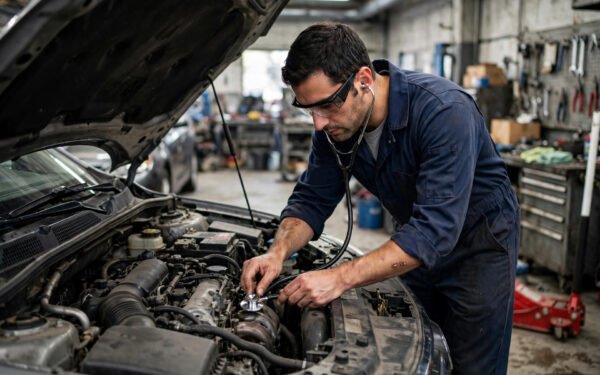
Your walk-around is a filter, not a verdict. For $150 to $250, a mechanic you choose puts the car on a lift and checks what you cannot: frame damage, hidden rust, suspension wear, the source of any leak, stored computer codes, and how much life is left in the brakes and tires. Ask specifically for flood indicators, an air conditioning performance test, and a cooling system pressure test, all three squarely Texas concerns.
A seller who refuses an independent inspection has answered your most important question. Walk away politely and keep your money. A seller who agrees has given you something valuable either way: a clean report you can buy on with confidence, or a written list of faults that turns directly into negotiation leverage, priced by a professional instead of argued about in a driveway.
Paperwork, payment, and the 30-day clock
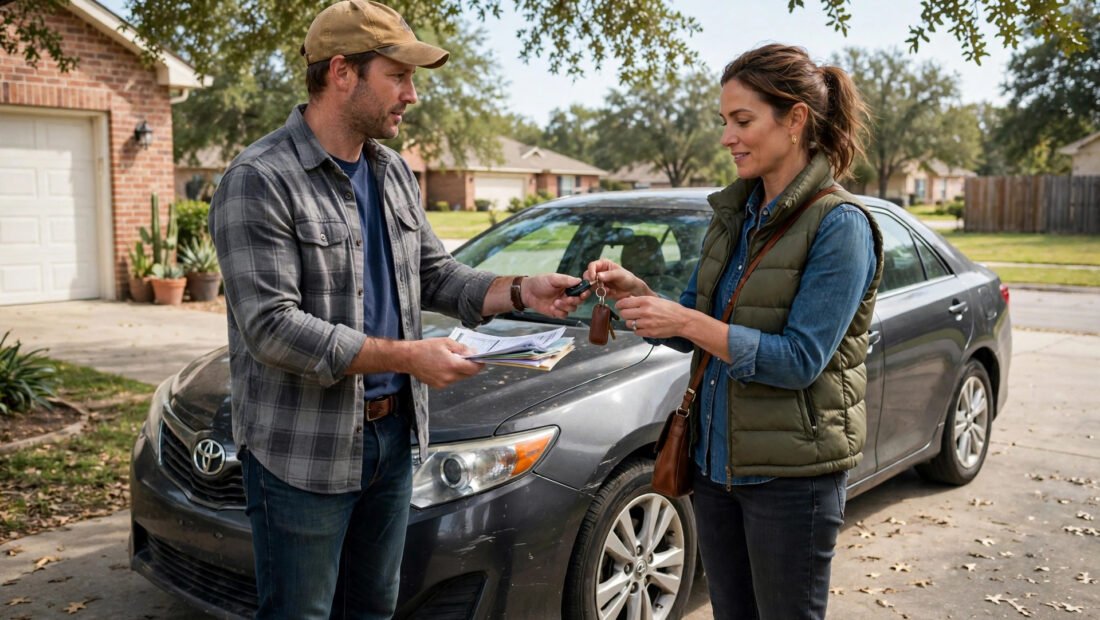
Get the closing steps right, because sloppy paperwork can cost more time than a bad alternator. The seller signs the back of the title, you complete the buyer section, and both of you complete the state title application form. Odometer disclosure is required for vehicles under 20 years old, and the number should match what you saw on the dash. Write a bill of sale even though Texas does not strictly require one: names, VIN, price, date, an as-is statement, and both signatures. For the rules straight from the source, read the Texas Department of Motor Vehicles’ guidance on titles and vehicle transfers before closing day.
Two closing details save real grief. First, the stated sales price on the title application should be the true price. Texas charges motor vehicle sales tax based on the price or the standard presumptive value, whichever is higher, and understating the price to trim the tax is fraud that can follow both parties. Second, if the car still carries license plates, agree in the bill of sale who keeps them and handle the transfer paperwork so tolls and tickets generated after the sale cannot wander back to the seller, or forward to you from the seller’s last month of driving. A transfer notification filed promptly after the sale is cheap protection for the seller, and a clean, dated paper trail is protection for you.
Handle money at a bank.
A cashier’s check drawn in front of you, or a payoff made directly to a lienholder with both parties present, protects everyone. A thick envelope of cash in a parking lot protects no one. Once the deal closes, your clock starts: Texas gives you 30 days to transfer the title at the county tax office, with late penalties building after that. Bind insurance effective on the purchase date before you drive off, since Texas requires continuous coverage and the drive home counts.
Red flags that end the deal on the spot
Some findings are not negotiating points. A title in someone else’s name. A seller who refuses your mechanic. A price that is wonderful only if you commit tonight. A meeting spot that keeps changing. A car that smells like a swamp under strong air freshener. Any one of these means the correct move is a polite goodbye. Texas has plenty of used cars, and the one skill that saves private buyers the most money is the willingness to leave a bad one behind and go look at the next.