
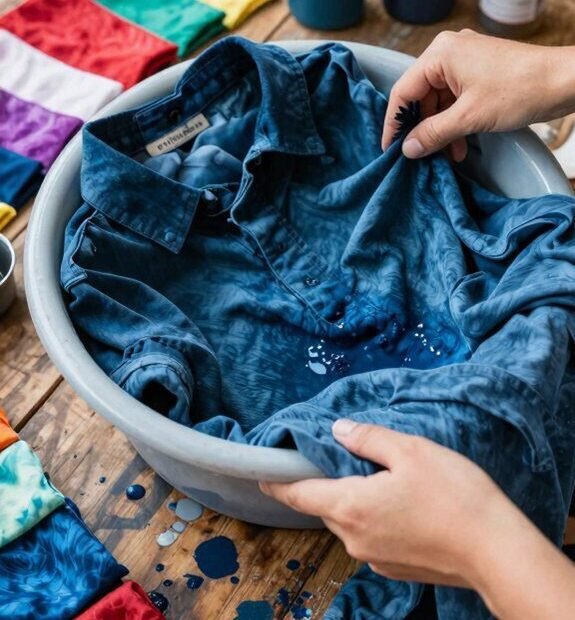
My no-buy year forced creativity. These refresh tricks made old clothes feel new — most cost nothing.
I used to think looking good required either money or some mysterious innate talent. Turns out it’s mostly systems — a few rules, a little planning, and knowing which details matter. Here’s the system for this one.
Refresh old clothes without buying: What the Evidence Shows
Let’s get specific about refresh old clothes without buying — what it means, why it matters, and the practical steps that make a difference. Everything below is actionable starting today.
Dye is a reset button. A $4 box of Rit dye transforms faded black jeans, dull tees, and tired dresses. Black dye revives everything; bold colors create entirely new garments. It’s the closest thing to new clothes for pocket change — just follow the temperature instructions. Worth trying for two weeks. You’ll know by then if it’s your fix.
Tailoring tweaks modernize
Hemming jeans to cropped, tapering wide legs, shortening sleeves, taking in waists — small alterations update silhouettes to current styles. A $15 alteration makes a 2018 piece look 2026. Silhouette is what dates clothes, not age. It sounds simple because it is. The hard part is just doing it consistently.
Swap the buttons and hardware
Replacing dated buttons with modern ones ($3 for a card) transforms coats, blazers, and cardigans instantly. New laces in sneakers, a new belt with old jeans — hardware swaps are the cheapest facelifts in fashion. Not glamorous, not expensive — just something that works.
Related reading: our guide to what is the best way to fold t-shirts to save drawer space covers a closely connected topic worth understanding alongside this one.
Restyle, don’t replace
Wear the dress as a skirt (sweater over it), the button-down open as a jacket, the scarf as a belt. Most ‘bored with my closet’ is styling boredom, not clothing boredom. Spend an hour playing dress-up with your own wardrobe — it’s genuinely fun. Simple, free, and backed by both science and common sense.
Deep-clean everything
Wash with the right products (whitening for whites, dark-wash detergent for darks), de-pill knits, polish shoes, steam everything. Half of ‘old’ is just ‘dirty and wrinkled.’ A maintenance day restores shocking amounts of newness. This is one of those fixes that feels too easy to matter — until it does.
The freezer and the sun
Denim freshening (freezer kills odor bacteria — debated but harmless), sun-bleaching whites, airing wool outside. Old-school refresh methods cost nothing and work well enough for between-wash maintenance. The people who do this consistently swear by it, and the logic holds up.
Quick Takeaways
- Dye is a reset button: A $4 box of Rit dye transforms faded black jeans, dull tees, and tired dresses.
- Tailoring tweaks modernize: Hemming jeans to cropped, tapering wide legs, shortening sleeves, taking in waists — small alterations update silhouettes to current styles.
- Swap the buttons and hardware: Replacing dated buttons with modern ones ($3 for a card) transforms coats, blazers, and cardigans instantly.
- Restyle, don’t replace: Wear the dress as a skirt (sweater over it), the button-down open as a jacket, the scarf as a belt.
- Deep-clean everything: Wash with the right products (whitening for whites, dark-wash detergent for darks), de-pill knits, polish shoes, steam everything.
- The freezer and the sun: Denim freshening (freezer kills odor bacteria — debated but harmless), sun-bleaching whites, airing wool outside.
Building This Into Your Wardrobe
Don’t buy everything at once — that’s how closets fill with mistakes. Start with the single piece that solves your most frequent problem, wear it for two weeks, then add the next. A wardrobe built piece by piece around real needs beats a shopping-spree wardrobe every time.
Before buying, do the three-outfit test: can you name three outfits this piece joins with clothes you already own? If not, it’s not filling a gap — it’s creating clutter. The best wardrobes are curated, not accumulated.
A Common Mistake to Avoid
Declaring clothes ‘dead’ when they’re just tired. Fading, pilling, wrinkles, and dated styling are all fixable — actual death is holes, stains, and structural failure. Most purged clothes had years left; they needed maintenance, not replacement.
If you want to go deeper on a related topic, see our guide to how do I build a capsule wardrobe on a $500 budget — and for a different angle on everyday wellness, our guide to how many pairs of shoes does a minimalist really need is worth your time.
Color Confidence
If your closet is all black and gray, adding color feels risky — start with your ‘safe brights’: the colors that suit your undertones and feel like you. One colorful piece per outfit, grounded in neutrals, is the no-fail formula. Jewel tones flatter almost everyone and photograph beautifully.
Test-drive color in cheap formats first: a $12 scarf before a $120 coat. Notice what earns compliments — other people see your colors more objectively than you do. Build outward from the winners.
For authoritative background, see Vogue’s fashion editorial coverage, and also Good Housekeeping’s beauty and fashion section for a second perspective.
Frequently Asked Questions
Does dyeing really work on old clothes?
On natural fibers (cotton, linen, wool), beautifully. On synthetics, poorly — polyester needs special disperse dyes. Check the fabric content first; it’s the whole ballgame.
How do I know what’s worth refreshing?
Quality fabric + good fit + boredom = refresh. Poor fabric + bad fit + damage = donate. Refresh the keepers; release the rest.
Start With What You Own
Before spending a dollar, shop your own closet with fresh eyes. Pull out forgotten pieces, try new combinations, and apply the styling rules from this article to what you already have. Most people are sitting on solutions they stopped seeing — familiarity breeds blindness.
Only after the closet audit should you make a shopping list — and make it specific: the exact gap, the budget, the criteria. Then buy the best version you can afford of exactly that item. Targeted buying is how good wardrobes are built; browsing is how cluttered ones are.
The Bottom Line
Refresh old clothes: dye the faded, tailor the dated, swap the hardware, restyle the bored, deep-clean everything. Most ‘old’ clothes are just under-maintained — not dead.



