Your foundation looks airbrushed at 8 a.m. By 3 p.m., it’s a different product: settled into pores, clinging to dry patches, separating around the nose, sitting on your skin instead of in it. Cakey afternoon foundation is the most common makeup complaint after under-eye creasing — and in Texas, heat and humidity compress the timeline from “by evening” to “by lunch.” The fix isn’t a new foundation (usually). It’s diagnosing which of the five causes is yours and correcting the routine.
The Five Causes of Cakey Foundation
1. Too much product
The #1 cause, by far. Foundation applied heavily in the morning has nowhere to go as the day’s oil, sweat, and movement accumulate — it sits on top, emphasizing every pore and line. The fix is immediate: use half what you think you need. One thin layer, blended fully, with concealer only where needed. You can always add; you can’t subtract at 3 p.m.
2. Wrong formula for your skin type
Matte, full-coverage foundations on dry skin cling to every flake and look cakey within hours. Dewy, hydrating foundations on very oily skin break down into slip. Match formula to skin: dry skin needs hydrating/satin finishes; oily skin needs oil-free, long-wear (not necessarily matte — “natural matte” flexes better); combination needs strategic placement (matte in T-zone, hydrating on cheeks).
3. Skipping (or rushing) prep
Foundation over unprepped skin grabs unevenly. The prep sequence: moisturizer suited to your skin type, fully absorbed (3–5 minutes — the wait matters), then primer matched to your concern (hydrating for dry, mattifying for oily, gripping for longevity). Makeup over half-absorbed moisturizer slides and separates by afternoon. This single step fixes a remarkable percentage of cakey cases.
4. Powder overload
Setting powder is necessary; excess setting powder is the fastest route to cake. Heavy powder + afternoon oil = paste. Use a light hand, press (don’t sweep), focus on the T-zone, and skip powder on dry areas (cheeks, under-eyes need minimal). In Texas humidity, powder seems essential at 8 a.m. — but the afternoon oil-powder combination is worse than light powdering.
5. Dehydrated skin underneath
Dehydrated skin drinks foundation unevenly and pushes it to the surface as the day progresses. If your foundation looks fine for two hours then deteriorates, suspect dehydration rather than the product. The fix is skincare (hydrating serums, adequate moisturizer), not more makeup — and the systemic half: proper daily hydration supports skin from within, especially in Texas heat where transepidermal water loss runs high.
The Morning Routine That Prevents Afternoon Cake
In application order:
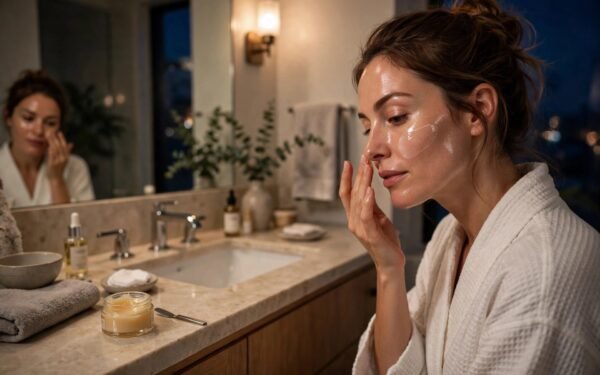
- Skincare, fully absorbed: moisturizer + sunscreen, wait 5 minutes. The wait is the step everyone skips and the step that matters most.
- Primer, targeted: mattifying where you’re oily, hydrating where you’re dry. One primer for the whole face is a compromise — zone it.
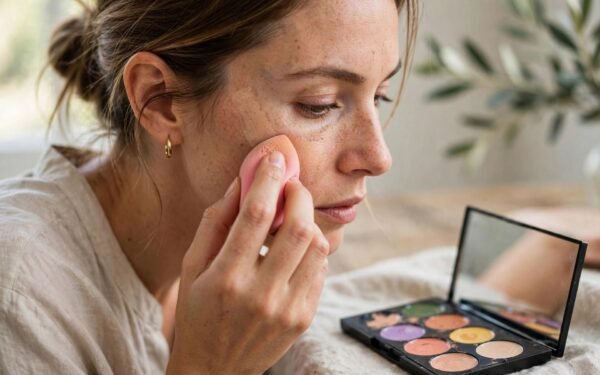
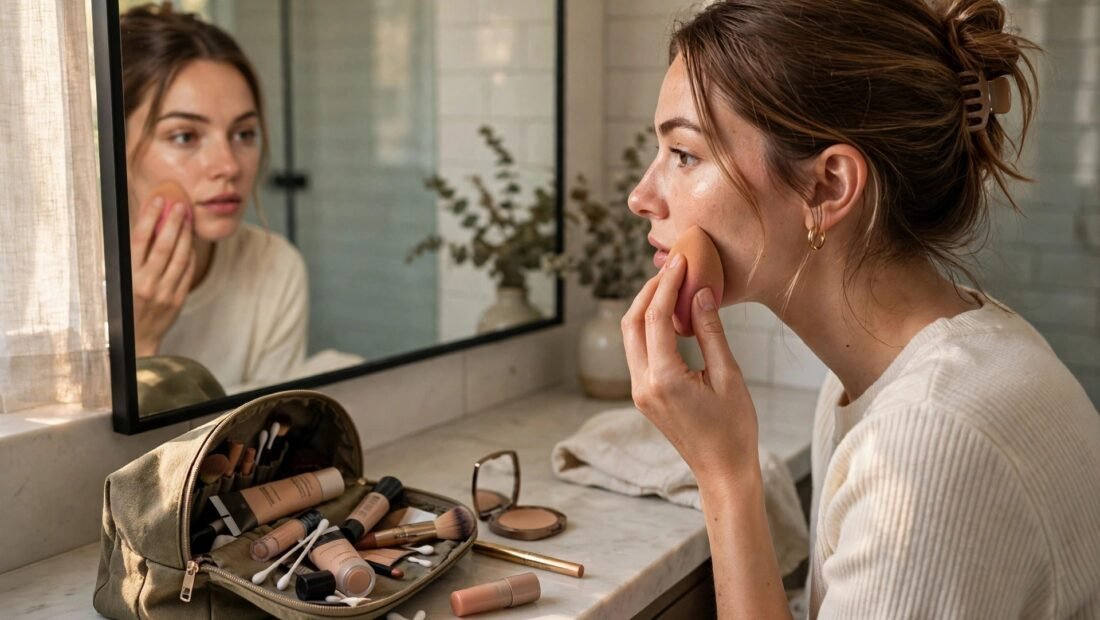
- Thin foundation layer: dots across the face, blended outward with a damp sponge. Damp application sheers out product naturally and prevents over-application.
- Concealer only where needed: spots, under-eyes — not all over.
- Light, pressed powder: T-zone focus, minimal elsewhere. Tap off excess before the brush touches skin.
- Setting spray: melds the layers into skin, removing the powdery finish that reads as cake. In Texas, this step is load-bearing.
The 3 P.M. Rescue (Without Starting Over)
When it’s already cakey:
- Blot first: press blotting papers over the shiny/cakey areas to lift oil without disturbing coverage. Never add product over unblotted oil.
- The damp sponge press: bounce a clean, damp sponge over cakey areas — it re-melts product back into skin and lifts excess. The single most effective rescue move.
- Hydrating mist: a fine mist of thermal water or hydrating spray, then press with the sponge. Rehydrates the makeup film without adding product.
- What NOT to do: don’t layer more foundation over cake (compounds it), don’t add heavy powder (dries further), don’t rub (pills the product).
If rescue missions are a daily occurrence, the morning routine needs the overhaul above — or your skin needs the reset of a proper skincare-focused self-care day to address the dehydration or barrier issues driving the cycle.
Choosing the Right Formula From the Start
Prevention beats rescue. When shopping for foundation in Texas, filter by these criteria:
- Finish: “long-wear satin” or “natural matte” — avoid extremes (very matte cracks, very dewy slides).
- Coverage: medium, buildable — full-coverage formulas contain more pigment and film-formers, which means more material to go cakey by afternoon.
- Oil control: oil-free for oily skin; but “oil-free” isn’t mandatory for normal/dry types — don’t default to it.
- Test the wear: the only real test is a full Texas day. Buy from retailers with return policies, wear it through a normal hot day, and judge at 5 p.m. — not at the counter at 10 a.m.
Dermatologists remind that foundation choice also affects skin health — comedogenic formulas contribute to congestion, so AAD guidance on non-comedogenic makeup is worth following if you’re breakout-prone. Cleveland Clinic’s skincare experts add that removing makeup thoroughly every night matters as much as the formula — sleeping in foundation accelerates every problem discussed here.
Texas-Specific Factors
- Humidity + oil: Texas humidity keeps skin surface moist, which breaks down foundation faster. Long-wear and transfer-resistant formulas aren’t marketing here — they’re functional requirements.
- Temperature swings: going from 100°F outside to 68°F AC repeatedly stresses the makeup film. Setting spray’s flexible hold handles thermal cycling better than powder alone.
- Sunscreen interaction: chemical sunscreens under foundation can pill or separate some formulas. Let sunscreen set fully (15 minutes ideally), or switch to a sunscreen-foundation pairing known to layer well. Mineral sunscreens pill less but can cast.
- Blotting papers are essential kit: in Texas, they’re not optional — midday oil is a climate feature, not a skin flaw. Blot at noon and the afternoon looks dramatically better.
Conclusion
Afternoon cakey foundation is almost always a routine problem, not a product problem: too much product, wrong formula for your skin type, rushed prep, excess powder, or dehydrated skin underneath. The prevention system — absorbed skincare, targeted primer, thin damp-sponge application, light pressed powder, setting spray — takes the same time as the routine causing the problem. And the 3 p.m. rescue (blot, damp-sponge press, hydrating mist) salvages the days it still happens. In Texas heat, lighter is always better: less product, less powder, more setting spray, and blotting papers in every bag.
Frequently Asked Questions
Why does my foundation look cakey by afternoon?
The five usual causes: too much product, wrong formula for your skin type, rushed skincare prep, excess setting powder, or dehydrated skin underneath. Texas heat and humidity accelerate all five — lighter application and proper prep fix most cases.
How do I fix cakey foundation without redoing my makeup?
Blot oil with blotting papers, then press a clean damp sponge over cakey areas to re-melt product into skin. A hydrating mist helps. Never layer more foundation or heavy powder over cake.
Does primer prevent cakey foundation?
It helps significantly — primer creates an even base that grips foundation and controls oil or dryness. But primer can’t compensate for too much product or the wrong formula; it’s one layer of the system, not a standalone fix.
What foundation is best for Texas humidity?
Long-wear, transfer-resistant formulas matched to your skin type (oil-free for oily skin, hydrating satin for dry). Applied thinly with a damp sponge, set lightly, and locked with setting spray — the routine matters more than the brand.
Is cakey foundation a sign of dry skin?
Often — dehydrated skin grabs foundation unevenly and pushes it up as the day progresses. If cake appears after a few good hours, suspect dehydration: add hydrating skincare and water intake before blaming the foundation.