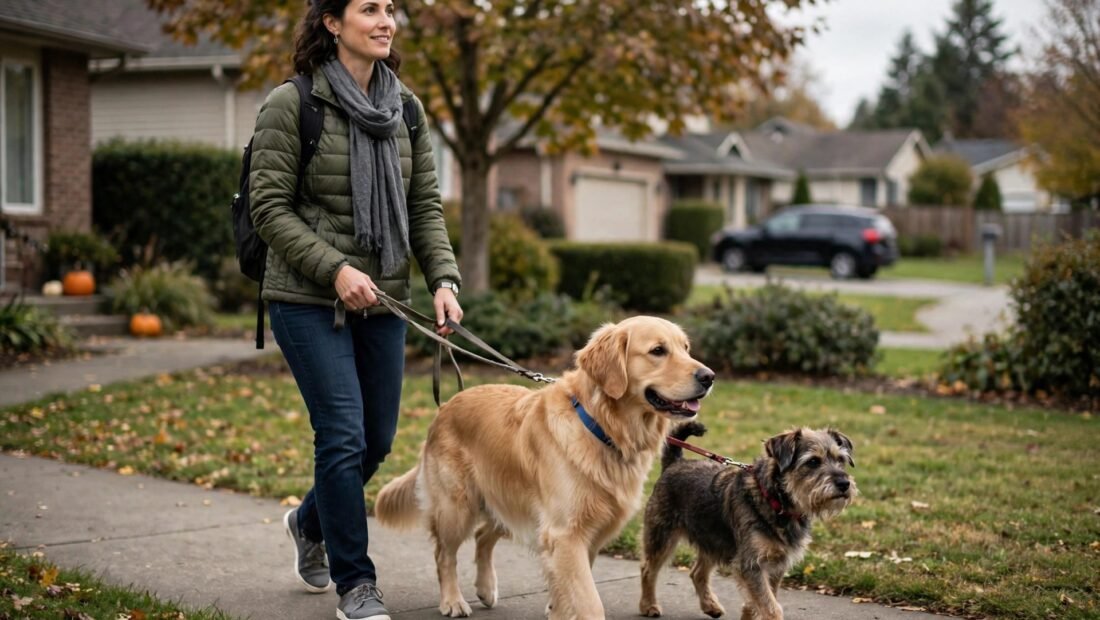
Your dog is lonely, you want a second one, and everyone says “they’ll work it out.” Sometimes they do. Sometimes you get six months of resource guarding, hallway standoffs, and a vet bill from the fight over a rawhide. Introducing a second dog into your home smoothly isn’t luck — it’s a protocol. The first two weeks set the tone for the entire relationship, and most multi-dog problems trace back to a rushed introduction. Here’s the method that gives two dogs the best possible start, with Texas-specific practicalities.
Before You Adopt: The Honest Assessment
A second dog multiplies, not adds. Two dogs mean twice the food, vet bills, and training — and roughly three times the management during the adjustment period. Ask honestly:
- Why do you want a second dog? “Companionship for my dog” is valid; “to fix my dog’s separation anxiety” is not — anxiety is contagious between dogs, and you’ll likely get two anxious dogs. Fix the first dog’s issues first.
- Can your current dog handle it? A dog-aggressive, severely resource-guarding, or highly anxious dog won’t be improved by a roommate. The ideal candidate is socially neutral-to-friendly with a stable temperament.
- What’s the right match? Opposite energy levels often work better than matching: a calm adult balances a bouncy young dog. Size compatibility matters less than temperament, but a 90-pound bruiser and a 10-pound senior need management. Age gap of 2+ years avoids littermate-style conflict. And in Texas’s heat, consider exercise compatibility — two high-energy dogs in August is a serious time commitment.
- Can you afford it? Two large dogs in Texas easily run $3,000–$5,000/year in food, vet care, and prevention. Run the numbers first.
The Introduction: Neutral Territory, Parallel Walking
The biggest mistake is the living-room ambush: bringing the new dog straight into the resident dog’s territory. Instead:
- Meet on neutral ground: a quiet park or wide sidewalk, not your home or yard. Both dogs leashed, with a helper handling one dog.
- Parallel walk first: walk the dogs in the same direction, 15–20 feet apart, for 10–15 minutes. No face-to-face greeting — just coexisting while moving. Movement defuses tension; standing and staring creates it.
- Gradually close distance: over the walk, let the gap shrink as both dogs stay relaxed — loose bodies, soft eyes, interest without fixation.
- Brief greeting, then move on: allow a 3-second sniff, then cheerfully move apart. Short, positive, no pressure. Repeat a few times.
- Enter the home together: walk both dogs into the house side by side, as if returning from a walk together. The new dog arrives as a walking companion, not an invader.
The American Kennel Club’s guidance on introducing dogs emphasizes the same principle: controlled, gradual, and on neutral ground before any home access. PetMD’s multi-pet household resources add the adjustment science — why the first month’s management predicts the first year’s harmony.
The First Two Weeks: Decompression Protocol
The new dog needs decompression (the 3-3-3 rule applies: 3 days to decompress, 3 weeks to settle, 3 months at home), and the resident dog needs to learn the newcomer is permanent and non-threatening. Run a structured two weeks:
- Separate resources, always: separate feeding areas (different rooms, doors closed), separate water bowls, separate sleeping spots, separate toy stashes. Resource guarding between new housemates is the #1 conflict trigger, and it’s entirely preventable by management. Pick up high-value items (bones, favorite toys) when dogs are together.
- Supervised together time: all interactions supervised for the first 2–4 weeks. Use baby gates to create safe separation when you can’t actively watch — management is not failure, it’s prevention.
- Individual attention: walk, train, and play with each dog separately as well as together. The resident dog must not feel replaced; the new dog needs bonding time with you independent of the other dog.
- Maintain the resident dog’s routine: same walk times, same feeding spot, same privileges. Routine stability tells the resident dog that the newcomer hasn’t cost them anything.
- Crate or separate at night: unsupervised overnight access is earned over weeks, not granted on night one.
Reading the Relationship: Good Signs vs. Warning Signs
Good signs (let it develop)
Parallel play, mutual sniffing with loose bodies, play bows, taking turns in chase games, sleeping in the same room (even at a distance), and — the gold standard — voluntarily choosing to rest near each other. These dogs are negotiating successfully; your job is to stay out of the way.
Warning signs (intervene and manage)
Stiffening over resources, hard stares, blocking doorways or the owner (“splitting”), one dog constantly pursuing while the other avoids, growling over resting spots. These need management: more separation, fewer shared high-value resources, and structured together-time. Consult a certified trainer (CPDT-KA, IAABC) if warning signs persist beyond the first month.
Red flags (professional help now)
Bite incidents breaking skin, sustained fights (not brief scuffles), one dog too terrified to eat or move normally, or escalating intensity. Don’t “let them fight it out” — serious inter-dog aggression needs a veterinary behaviorist (DACVB), and management for safety comes first.
The Practical Realities of Two Dogs
- Training doubles: train each dog separately first, then together. “Sit” means nothing if only one dog knows it and the other mugs the treats.
- Vet and travel costs double: two heartworm preventions, two vaccine series, two emergency funds. Boarding for two in Texas metros runs $60–$100/night — budget travel accordingly, or consult our pet-friendly travel guide for bringing both along.
- Your house takes more wear: two dogs mean twice the muddy paws, nail scratches, and accident risk during adjustment. Flooring built for dogs stops being a nice-to-have and becomes essential infrastructure.
- Texas heat × 2: two dogs walked in summer means earlier starts or split walks. High-energy pairs in August will test your 6 a.m. commitment.
Conclusion
A smooth second-dog introduction is 10% the first meeting and 90% the two weeks after: neutral-ground parallel introduction, then structured decompression with separated resources, supervised together-time, protected routines for the resident dog, and individual bonding for the newcomer. Most dogs negotiate the relationship successfully when humans manage the environment instead of forcing the friendship. Give it weeks, not days; manage resources like a professional; and intervene early on warning signs. Done right, you’ll wonder how the house ever felt complete with just one.
Frequently Asked Questions
How do I introduce a second dog into my home smoothly?
Meet on neutral ground with a parallel walk (no face-to-face greeting), enter the home together, then run a 2-week decompression: separate feeding/sleeping areas, supervised together-time, maintained routines for the resident dog, and individual attention for each.
Will my dog be jealous of a new dog?
Dogs don’t feel jealousy like humans, but they do guard resources — including you. “Jealous” behavior (pushing between you and the new dog, blocking) is resource guarding. Manage it with separate attention time and by not forcing shared affection.
How long does it take for two dogs to get used to each other?
The 3-3-3 rule is a baseline: 3 days to decompress, 3 weeks to settle, 3 months to feel fully at home. Most pairs find their rhythm within 4–8 weeks with proper management; some take months. Rushing causes most failures.
Should I get a male or female as a second dog?
Opposite-sex pairings statistically have fewer serious conflicts than same-sex pairs (male-male being the highest-risk combination). But temperament match matters far more than sex — a calm male beats a volatile female for a nervous resident dog.
What if my dogs fight?
Interrupt safely (loud noise, never hands between fighting dogs), separate calmly, and assess: a brief scuffle over a bone is management feedback; sustained fights or bites breaking skin need a veterinary behaviorist. Never let them “fight it out.”