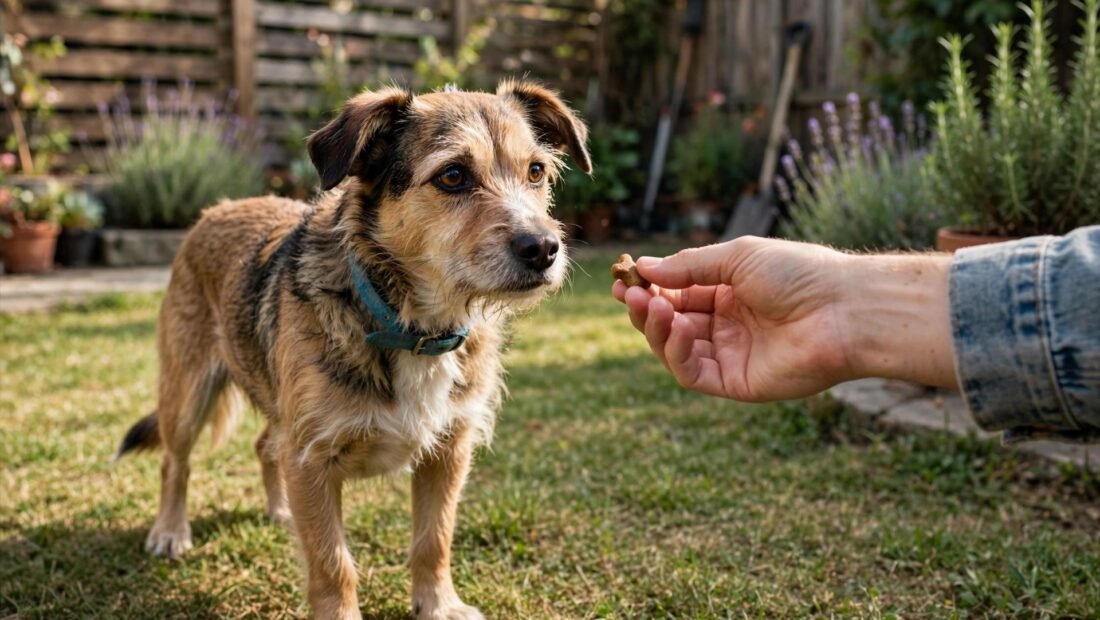
She presses herself into the corner of the kennel run, ears flat, eyes on the floor — and you choose her anyway. Two weeks later she’s still doing it in your living room: flinching at the dishwasher, bolting from visitors, shutting down on walks. Shy rescue dogs aren’t broken; they’re dogs whose early experiences taught them the world is unsafe, and they’re waiting for evidence to the contrary. Socializing a shy rescue dog is slower than socializing a confident puppy — but the transformation is one of the most rewarding things in dog ownership.
First: Understand What “Shy” Really Means
Shyness in rescue dogs usually combines undersocialization (missed the critical 3–14 week window), negative experiences (abuse, neglect, chaos), and sometimes genetics. Texas’s rescue population skews toward strays and hoarding cases — dogs that may never have been inside a house or heard a vacuum.
Readers can also follow related coverage through UK Journal Magazine’s in-depth features.
The critical reframe: your shy dog isn’t being stubborn. Freezing, fleeing, cowering, and snapping are fear responses. Punishing fear confirms the dog’s belief that the world is dangerous. Everything here flows from one principle: let the dog set the pace, and make every new experience predict good things.
The 3-3-3 Rule: Set Your Timeline Expectations
Rescue professionals use the 3-3-3 rule: 3 days to decompress (the dog may barely eat or show personality — normal), 3 weeks to start settling in, 3 months to feel at home. Shy dogs often run slower — think 3-3-6. The biggest mistake is rushing: a welcome party on day two, group class in week one. Each floods a shy dog past its coping capacity and sets trust-building back weeks.
For the first two weeks, be boring and predictable. Same schedule, same quiet routes, same calm energy. Let the dog learn that nothing bad happens here.
Building the Safety Foundation at Home
Create a sanctuary space
Give the dog a defined safe zone — a crate with the door open, a quiet corner — that is theirs and where nothing scary ever happens. Never drag the dog out of it; never let visitors corner the dog there. A guaranteed retreat paradoxically makes the dog braver everywhere else.
Hand-feeding and the trust economy
For the first weeks, hand-feed a portion of meals. Every kibble from your hand is a deposit in the trust account: human hands predict food, not grabbing. Sit on the floor near the dog, toss treats near rather than handing them over, and let the dog close the distance.
Learn the body language
Lip licking, yawning, turning the head away, “whale eye,” tucked tail, and freezing are stress signals saying “I’m uncomfortable.” When you see them, increase distance or reduce intensity. The dog that learns you’ll listen to its warnings stops needing to escalate.
The Socialization Protocol: Gradual Exposure Done Right
Proper socialization of a shy dog is desensitization plus counter-conditioning: expose the dog to the scary thing at an intensity low enough that the dog notices but doesn’t panic, while pairing it with something wonderful (high-value treats). Over sessions, gradually increase intensity. Slow, unglamorous — and the only method with solid behavioral science behind it.
People
Start with one calm person at a time, at a distance, ignoring the dog completely. Visitors should toss treats behind the dog so the dog retreats to get the reward — it teaches the dog that scary people predict treats and that moving away is allowed. Never let strangers pet a shy dog’s head; if the dog solicits contact, chest or side scratches only. Kids come last.
Other dogs
Not every shy dog needs dog friends, and forcing it is a common error. Start with parallel walks: a calm helper dog walking the same direction at a distance, gradually decreasing distance over sessions. No face-to-face greetings, no dog parks. One stable dog friend beats a hundred random encounters — and neutrality is a perfectly good outcome.
Sounds, surfaces, and the Texas environment
Introduce household sounds at low volume (recordings of vacuums, doorbells, thunder), novel surfaces, and outdoor stimuli, each paired with treats. For car rides — essential in car-dependent Texas — start with the dog just sitting in the parked car getting treats, then engine on, then around the block, building over days.
The walk problem
Many shy rescues shut down on walks — freezing, refusing to move. Don’t drag. Let the dog observe from a safe distance; ten minutes watching the world from the driveway is training. Choose quiet routes and off-peak hours, and use a long line (15–30 feet) in safe open areas so the dog can explore at its own pace.
Texas-Specific Considerations
- Heat limits training windows: summer outings must happen early morning or late evening — a stressed, overheated dog can’t learn.
- Storm desensitization matters more here: Texas thunderstorms are violent and frequent. Begin thunder desensitization with recordings at low volume paired with treats well before storm season; severe cases may need veterinary-prescribed situational anxiety medication. For dogs whose thunder panic includes howling at night, soundproofing a bedroom on a budget lowers everyone’s stress while the work progresses.
- Fencing and flight risk: shy dogs are flight risks — a panicked dog can clear or dig under inadequate fencing in seconds. Secure fencing, double-leashing on walks, and a GPS tracker collar are standard precautions for the first months.
- Heartworm-positive rescues: many Texas rescues arrive heartworm-positive, and treatment requires strict exercise restriction for months. Follow the vet’s protocol exactly, and focus on low-arousal indoor exercises during treatment.
Training Methods: What Helps, What Harms
Use reward-based training exclusively. Clicker or marker training is ideal for shy dogs — it gives them a clear, predictable communication system and lets them earn rewards through their own choices, which builds confidence. Teach simple behaviors (hand target, sit, “find it” treat scatters) — each success is confidence deposited.
Avoid punishment-based methods (prong collars, shock collars, leash corrections, flooding). These suppress behavior through fear without changing the underlying emotion, and in shy dogs they reliably make fear worse. If a trainer suggests corrective tools for your shy rescue, find a different trainer — look for CPDT-KA, KPA CTP, or IAABC credentials. The ASPCA’s behavioral help resources explain why aversive tools backfire with fearful dogs and what to look for in a qualified trainer.
When to Get Professional Help
Bring in a certified professional if: the dog isn’t eating normally after the first week, shows aggression, has panic episodes, or plateaus after a couple of months. For severe cases, a veterinary behaviorist (DACVB) can assess whether anti-anxiety medication would help — it lowers baseline arousal enough for training to work. PetMD’s rescue dog adjustment guides cover the decompression timeline and when professional intervention becomes necessary. Professional behavioral help is an investment, so build it into a family budget that plans for pet care costs.
Conclusion
Socializing a shy rescue dog means going slower than your instincts suggest: decompress first, build a sanctuary and trust at home, then systematically desensitize to people, dogs, sounds, and the environment — always at the dog’s pace, always paired with good things, never with force. Measure progress in months and celebrate the small wins. The dog hiding in the corner today can become the dog leaning against your leg on the couch — not because you fixed her, but because you gave her the safety and time to decide the world was okay.
Frequently Asked Questions
How long does it take to socialize a shy rescue dog?
Expect meaningful progress over 3–6 months, with continued improvement through the first year. The 3-3-3 rule is a baseline — shy dogs often need longer, and rushing causes setbacks.
Should I take my shy rescue dog to a dog park?
No — dog parks are uncontrolled and unpredictable, the worst setting for a shy dog. Use controlled parallel walks with one calm, known dog instead.
Why does my rescue dog cower when I reach for them?
Cowering usually reflects past negative experiences with hands or simple undersocialization. Toss treats rather than handing them over, approach at the dog’s level from the side, and let the dog initiate contact.
Can an adult rescue dog be socialized, or is it too late?
It’s not too late. The critical window (3–14 weeks) makes early exposure easiest, but adult dogs learn throughout life — it just takes more repetitions and patience.
Do shy dogs need anxiety medication?
Some do. Discuss it with a veterinary behaviorist when fear is severe, the dog can’t function, or training plateaus because baseline anxiety is too high to learn through.