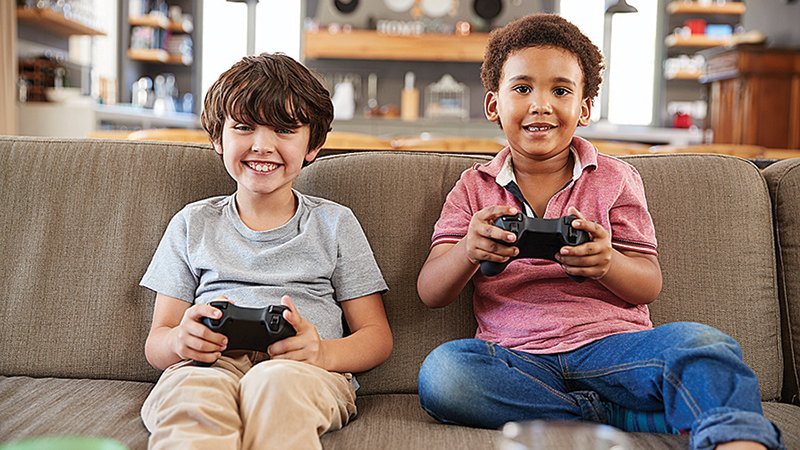
Finding video games for kids used to mean settling — watered-down, joyless ‘educational’ titles that nobody actually enjoyed. That era is over. Some of the best games being made right now are family-friendly, and they’re not compromises: they’re creative, beautiful, genuinely fun games that happen to be appropriate for kids.
The best family-friendly video games for kids share certain qualities: no predatory monetization (this is non-negotiable), cooperative or creative play, age-appropriate challenge, and — the secret criterion — games parents won’t hate watching or joining. Here are the picks by age, plus the safety setup every parent should do first.
By Age: The Best Family-Friendly Video Games for Kids
Ages 4–7: start with creativity and exploration. The LEGO games (Star Wars, Marvel, Harry Potter) are perfect — cooperative, funny, impossible to truly fail, and playable together with a parent. Nintendo’s catalog dominates this age: the Kirby games, Yoshi titles, and Mario’s gentle adventures are designed for young players, with forgiving difficulty and co-op modes. Avoid anything with chat, purchases, or timers — at this age, the game should be a toy, not a service.
Ages 8–12: the golden age of gaming childhood. Minecraft (in Creative or peaceful Survival mode) is the defining game of the generation — building, exploring, creating, with endless educational upside. The Mario platformers, Zelda’s gentler entries, Pokémon, and the endless excellent indie puzzlers all shine here. This is also the age for the first ‘real’ adventures: games with stories, quests, and mild challenge that build genuine gaming literacy. Check ESRB ratings (E for Everyone is your filter) and preview anything unfamiliar — ratings are guides, not guarantees.
Playing Together: The Real Magic
The best kid gaming happens together. Co-op games — where parent and child play as a team — turn screen time into bonding time: the LEGO series, Kirby’s co-op modes, Overcooked (chaotic kitchen teamwork that generates legendary family moments), and Minecraft played side by side. You’ll be surprised how much you enjoy them; these aren’t babysitting tools, they’re genuinely good games.
Set the safety foundation once: create child accounts (all major platforms offer them), disable or password-protect purchases — this is the big one, as accidental and intentional in-game spending is the number-one parent complaint — turn off voice chat with strangers, and use the platform’s playtime controls. The ESRB’s rating summaries (on their site, more detailed than the box label) tell you exactly what content triggered a rating. And play the first hour yourself: nothing replaces seeing the game through your own eyes before handing it to your kid.
Reference: ESRB ratings and parent resources.
Reference: Common Sense Media game reviews.
Parent’s Game Safety Checklist
Do this once per device:
- Create a child account with age-appropriate restrictions on every platform.
- Password-protect or disable all purchases — the number-one parent pitfall.
- Turn off voice/text chat with strangers; keep communication to approved friends only.
- Use built-in playtime limits and bedtime cutoffs — let the console be the enforcer.
- Check ESRB rating summaries (not just the letter) for content details.
- Play the first hour yourself before handing any new game to your kid.
- Favor games with no in-app purchases: check the listing before downloading anything ‘free.’
Beyond the Screen: What Gaming Gives Kids
It’s worth saying plainly: good games are good for kids. The research on well-designed games shows benefits for problem-solving, spatial reasoning, creativity, persistence, and even reading (many kids’ first voluntary reading is game text). Minecraft has been used in classrooms worldwide; puzzle games teach logic; story games build empathy and vocabulary. The ‘games rot brains’ narrative was always moral panic, not science — the content and context matter, not the medium.
The healthy approach isn’t restriction but curation and participation. Play with them sometimes. Talk about the games — what they’re building, what the story’s doing, what they’d do differently. Set the boundaries that fit your family (time, content, spending) and hold them consistently. And watch for the signs it’s working: the kid explaining redstone circuits, the elaborate world they’ve built, the story they’re dying to tell you. That’s not wasted time. That’s a mind at play — and play is how kids learn everything that matters.
Frequently Asked Questions
How much screen time is okay for kids?
The research consensus has shifted from strict hour-counts to content-and-context: what they’re playing and whether it’s balanced with sleep, activity, and offline life matters more than a number. The AAP recommends consistent limits that don’t displace sleep or physical activity, plus co-play when possible. A great game played together beats two hours of solo passive scrolling — judge the diet, not just the clock.
What about violent video games?
The ESRB ratings exist for this: E for Everyone is your filter for young kids, E10+ for the 10–12 range. The research linking game violence to real aggression is weak and contested; the practical approach is matching content to your child’s maturity (ratings summaries detail exactly what’s in the game) and playing the first hour yourself. Context and conversation matter more than the label.
My kid only wants to play one game. Is that okay?
Completely normal — deep engagement with one game (looking at you, Minecraft) builds mastery, creativity, and often social connection. The concern isn’t the single game; it’s whether gaming displaces everything else. If sleep, school, activity, and offline friendships are healthy, the 500th hour of their favorite game is fine. Passion isn’t pathology.
More from Daily USA Post
- how do I start collecting vinyl records on a budget — what you need to know
- Keep reading: how can I start a podcast with no expensive equipment
- Related: how can I make a grocery list that actually saves money
The best family-friendly video games for kids — LEGO co-ops, Nintendo’s gentle adventures, Minecraft, creative puzzlers — are genuinely great games, not compromises. Match to age, lock down purchases and chat once per device, play together when you can, and choose games without predatory monetization. Done right, gaming isn’t screen time to limit — it’s playtime to share.