Leftovers are either the best part of cooking or a science experiment — and the difference is entirely storage. The same chili that’s delicious on day three is a tragedy on day five, and the line between them is drawn by how you cooled it, what you put it in, and where it sits in your fridge.
Most people store leftovers wrong in small, fixable ways: the giant pot goes straight in the fridge, the container isn’t quite sealed, the leftovers sit out for three hours first. Here’s how to store leftovers so they stay fresh longer — the food-safety rules, the container strategy, and the fridge organization that makes it all work.
Cool It Fast: The Critical First Step to Store Leftovers So They Stay Fresh Longer
Bacteria multiply fastest between 40°F and 140°F — the danger zone — and they double roughly every 20 minutes in it. That means the clock starts the moment food comes off the heat. The rule: get leftovers into the fridge within 2 hours of cooking (1 hour if your kitchen is above 90°F). Leaving the pot out ‘to cool’ for four hours is the most common leftovers mistake, and it’s a genuine food-poisoning risk.
Cool large quantities fast by dividing them. A giant pot of soup stays warm in the center for hours; the same soup split into shallow containers chills in a fraction of the time. An ice bath (sink full of ice water, pot nested in) cools things dramatically faster. And contrary to old advice, you can put hot food directly in a modern fridge — it won’t ‘break’ the appliance, though it may warm nearby items slightly, which is why dividing into small containers first is still the better move.
Containers, Wrapping, and Fridge Zones
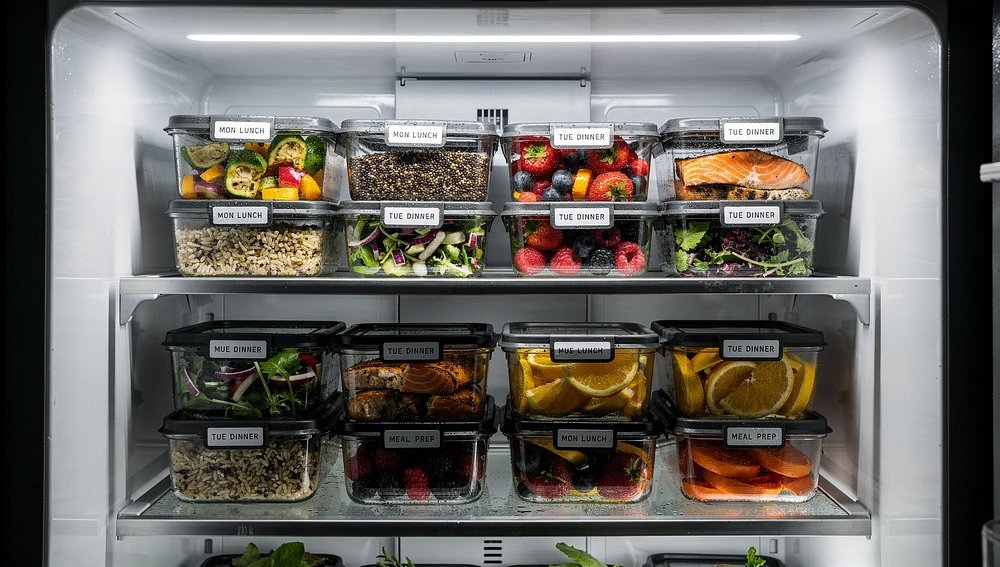
Use airtight containers — air is the enemy of freshness, causing both drying and odor absorption. Glass containers with locking lids are the gold standard: they don’t stain, don’t absorb odors, and go from fridge to microwave safely. Portion into single-serving or meal-size containers rather than one giant tub; smaller portions cool faster, reheat more evenly, and mean you only expose what you’ll eat.
Where food sits in the fridge matters. The door is the warmest spot (temperature swings every time it opens) — keep condiments there, not leftovers. Store leftovers on upper-middle shelves where temperatures are most stable and cold. Keep raw meat on the bottom shelf so it can’t drip onto ready-to-eat food. And label everything with contents and date — masking tape and a marker take five seconds and end the ‘is this still good?’ archaeology forever.
Reference: USDA leftovers and food safety.
Reference: FoodSafety.gov on safe storage.
How Long Leftovers Actually Last
Refrigerated at 40°F or below (USDA guidance):
- Cooked meat and poultry: 3–4 days. When in doubt, day 4 is the decision day.
- Soups and stews: 3–4 days. They often taste better on day 2 as flavors meld.
- Cooked rice and pasta: 3–4 days. Rice in particular must be cooled quickly — it can harbor Bacillus cereus.
- Pizza: 3–4 days, stored airtight (not in the delivery box).
- Deli salads (tuna, egg, chicken): 3–5 days, kept cold.
- Hard-boiled eggs (in shell): 1 week. Peeled: use within a few days.
- Opened canned goods: transfer to a container, 3–4 days. Never store in the opened can.
Freezing: The Pause Button
Anything you won’t eat within 3 days should go to the freezer, not the fridge — the freezer is a pause button, not a time machine, but it buys you months. Freeze in portion sizes you’ll actually use, squeeze out air (or vacuum-seal if you’re serious), and label with contents, date, and reheating notes. Most cooked foods keep 2 to 3 months at peak quality; they’re safe indefinitely at 0°F but slowly decline in texture and flavor.
Thaw in the fridge overnight — never on the counter — and reheat to 165°F throughout, bringing sauces and soups to a rolling boil. One reheat only: reheating the same leftovers repeatedly is both a quality and safety downgrade. And here’s the habit that ties it all together: a weekly ‘eat the leftovers’ night. It clears the fridge before shopping day, turns would-be waste into a free meal, and makes the whole storage system self-maintaining.
Frequently Asked Questions
Can I put hot food directly in the fridge?
Yes — modern fridges handle it fine, despite the old advice. The real best practice is dividing large quantities into shallow containers first (faster cooling, less warming of nearby foods), but hot food won’t break your fridge. What you must not do is leave food out for hours ‘to cool’ — the 2-hour rule (1 hour above 90°F) is the actual safety line.
How many times can I reheat leftovers?
Once — that’s the safe and quality-smart limit. Each reheat cycle degrades texture and gives bacteria another window. Reheat only the portion you’ll eat, to 165°F throughout (sauces and soups to a rolling boil). The ‘reheat the whole pot nightly’ habit is how leftovers become both sad and risky.
What’s the best way to reheat leftovers?
Match the method to the food: oven or toaster oven for anything that should be crisp (pizza, fried foods, casseroles — 350–375°F), stovetop for soups and saucy dishes (with a splash of water or broth to loosen), microwave for speed (stir halfway, let stand a minute for even heat). Add moisture back where needed — leftover rice loves a sprinkle of water under a lid.
More from Daily USA Post
- what are the best animated movies for adults — what you need to know
- Keep reading: what are fun things to do at home on a Friday night
- Related: how do I plan a music festival trip on a budget
To store leftovers so they stay fresh longer: cool them within 2 hours by dividing into shallow containers, seal airtight (glass with locking lids is best), refrigerate on stable middle shelves with date labels, and freeze anything you won’t eat in 3 days. Most leftovers last 3 to 4 days refrigerated. Label, date, and run a weekly leftovers night — and the mystery containers in the back of your fridge become a thing of the past.