
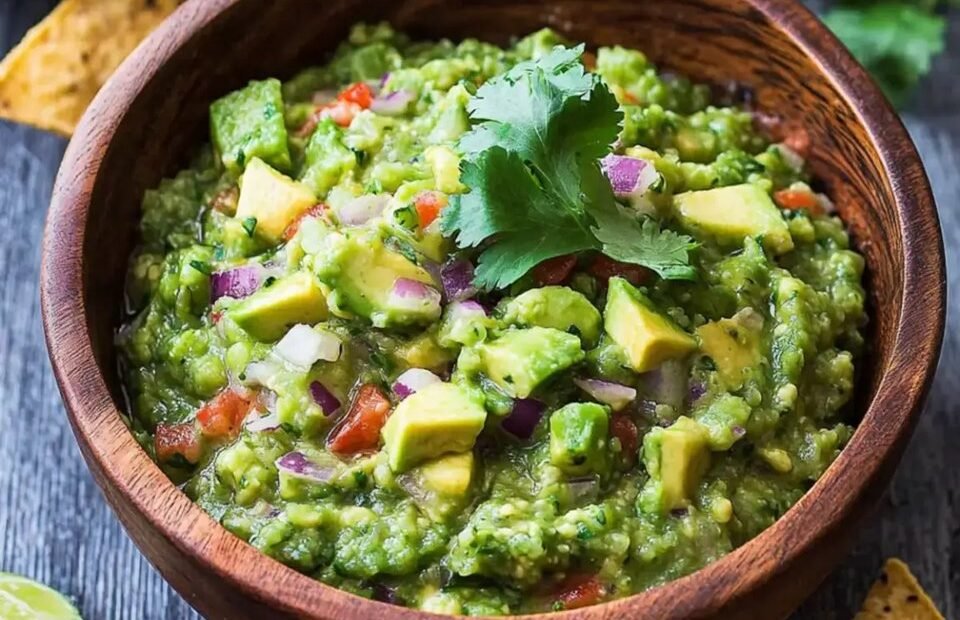
Restaurant guacamole has something yours doesn’t — and it’s not a secret ingredient. It’s a handful of small decisions: the ripeness of the avocado, the texture of the mash, the order of seasoning, and serving it within minutes. Get those right and your homemade guacamole will embarrass the $14 restaurant version.
I’ve reverse-engineered guacamole at some genuinely great Mexican restaurants, and the pattern is consistent. The best versions are simple — avocado, lime, salt, onion, cilantro, chile — executed with care. Here’s how to make restaurant-quality guacamole at home, including the mistakes that keep yours tasting like a sad dip instead of an event.
Avocado Selection: Where Restaurant-Quality Guacamole at Home Begins
Everything starts with ripe Hass avocados. They should yield to gentle pressure at the stem end but not feel mushy — think ripe peach, not ripe banana. The color trick: pop off the little stem cap. Green underneath means good to go; brown means overripe inside. Buy them a few days ahead if they’re hard — they ripen on the counter in 2 to 4 days, faster in a paper bag with a banana.
Plan on one avocado per two people as a snack portion, plus lime and salt scaled accordingly. And here’s a restaurant secret: they make guacamole to order, in small batches, all day long. You should do the same — make it right before serving. Guacamole’s enemy is time and air; even 30 minutes of sitting dulls the bright flavors that make it sing.
Texture and Seasoning: The Two Things Most Home Cooks Get Wrong
Mash, don’t purée. The ideal guacamole is chunky — roughly mashed avocado with distinct pieces, not baby food. Use a fork or a molcajete, mash about two-thirds of the avocado smooth, and leave the rest in chunks. Over-mashing is the number-one texture crime; it turns guacamole gummy and one-dimensional. Restaurants often mash tableside in a molcajete precisely because the rough stone gives perfect chunky texture.
Season aggressively and in layers. Salt is the most underused ingredient in home guacamole — it should taste vividly seasoned, not blandly avocado-y. Lime juice goes in early (the acid also slows browning), then finely diced white onion, minced serrano or jalapeño, chopped cilantro, and diced tomato if you like it. Taste and adjust: more salt, more lime, more heat. Restaurant guac tastes bold because it’s seasoned boldly. Timid seasoning makes timid guacamole.
Reference: California Avocado Commission recipes and tips.
Reference: Rick Bayless’s guacamole guidance.
Restaurant-Quality Guacamole Rules
The complete method, start to finish:
- Choose ripe Hass avocados: gentle give at the stem end, green under the stem cap.
- Dice onion, chile, and cilantro finely before you cut the avocado — speed matters once it’s exposed to air.
- Mash two-thirds smooth, leave one-third chunky. Fork or molcajete, never a food processor.
- Add lime juice immediately — about 1 tablespoon per 2 avocados — to slow browning and brighten flavor.
- Salt boldly: about ½ teaspoon kosher salt per 2 avocados, then taste and adjust upward.
- Fold in onion, serrano, cilantro, and tomato (if using) last, so they stay distinct.
- Serve within 15 minutes with warm tortilla chips. Freshness is the whole game.
Keeping It Green (and What to Skip)
If you must make guacamole ahead, press plastic wrap directly onto the surface — no air gaps — and refrigerate. The lime juice and the airtight seal buy you a few hours. A thin layer of water or extra lime juice on top also works; just pour it off and stir before serving. But honestly, nothing beats fresh, and the whole recipe takes 10 minutes — just make it when guests arrive and let them watch. Tableside theater is part of the restaurant experience anyway.
What to skip: garlic powder, cumin, sour cream, mayonnaise, peas — the internet’s weirder additions. Traditional guacamole is avocado, lime, salt, onion, chile, cilantro. That’s it. Every addition moves you further from restaurant-quality and closer to ‘dip with identity issues.’ And please, serve it at room temperature — cold mutes flavor, which is why refrigerator-cold guacamole always disappoints.
Frequently Asked Questions
Why does my guacamole turn brown so fast?
Oxidation — air exposure darkens the avocado’s surface. Lime juice slows it (acid inhibits the browning enzymes), and pressing plastic wrap directly onto the surface blocks air. But the real answer is timing: guacamole is a make-and-serve dish. Make it 15 minutes before guests arrive and browning never becomes a problem worth solving.
Should guacamole have tomatoes and onions in it?
Traditional Mexican guacamole is minimalist: avocado, lime, salt, onion, chile, cilantro. Tomato is a common American addition and perfectly delicious — it’s a matter of taste, not authenticity law. Onion and chile are closer to essential; they provide the sharp and heat contrasts that make guacamole more than mashed avocado. Skip the cumin, garlic powder, and sour cream, though.
How do I pick ripe avocados at the store?
Gentle pressure at the stem end should give slightly — like a ripe peach. Then pop the stem cap: green underneath means ready, brown means overripe inside. Buying hard avocados a few days ahead is smart planning; they ripen on the counter in 2–4 days, faster in a paper bag with a banana. Never buy all your avocados rock-hard the morning you need guacamole.
More from Daily USA Post
- Also see: what are the best family movies on Netflix for a weekend
- Our complete guide: how do I cancel my streaming subscriptions easily
- how can I watch old TV shows that are not on streaming — what you need to know
Restaurant-quality guacamole at home comes down to ripe Hass avocados, chunky hand-mashing, bold seasoning with lime and salt, and serving it within minutes of making it. No secret ingredients, no gadgets — just ripe fruit, confident seasoning, and fresh timing. Make it tableside, serve it immediately, and watch it disappear faster than the chips.
The real test is tonight: buy three ripe Hass avocados, make it tableside, serve within fifteen minutes. Watch how fast it disappears compared to the store-bought tub. That gap — between good enough and genuinely great — is what ten minutes and ripe fruit buy you. Your chip deserves better.



