
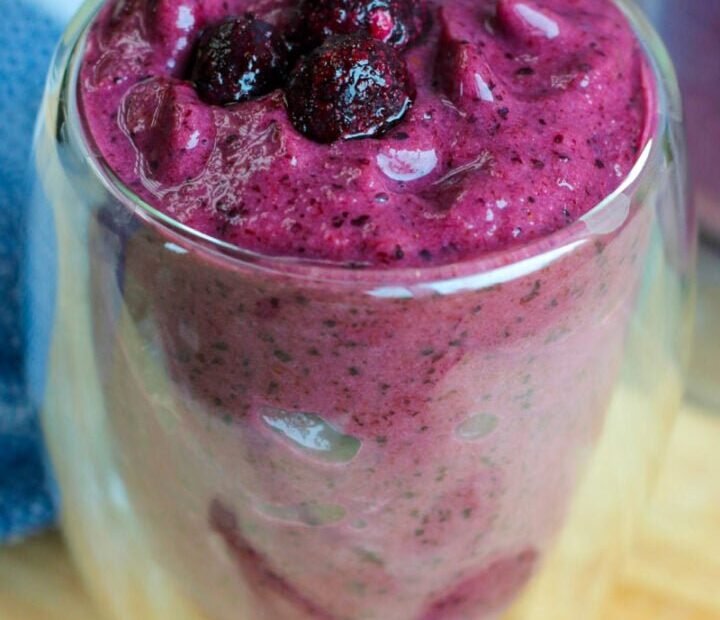
The classic smoothie trap: you blend up something delicious and virtuous, feel great for 45 minutes, and then you’re starving — hungrier, somehow, than if you’d skipped breakfast. So you grab a muffin, and the ‘healthy’ smoothie has now added 500 calories to your day instead of replacing a meal. Sound familiar?
A smoothie that leaves you hungry is just flavored sugar water with good marketing. A smoothie that keeps you full is a formula: protein plus fat plus fiber plus volume. Get those four right and your smoothie becomes a genuine meal that holds you for 3 to 4 hours. Here’s the exact formula and the recipes that prove it.
The Formula: How to Make a Smoothie That Actually Keeps You Full
Protein is the foundation — aim for 20 to 30 grams, roughly what you’d get from a real meal. Greek yogurt (15 to 20g per cup), protein powder (20 to 25g per scoop), silken tofu (10g per half cup, undetectable in blends), or cottage cheese (14g per half cup, surprisingly smooth when blended) all work. Without adequate protein, no smoothie will satisfy you — this is the step most thin, unsatisfying smoothies skip.
Fat slows digestion and adds staying power: a tablespoon of peanut or almond butter, a quarter avocado, or a tablespoon of chia or flax seeds. Fiber adds bulk and feeds the fullness signals: a cup of berries, a handful of spinach (you won’t taste it), half a banana, or oats blended right in. And volume matters — use ice and water or milk to make a big, thick 20-ounce shake. A large-volume smoothie physically fills your stomach in a way a dense 8-ounce one doesn’t, even at the same calories.
Three Fill-You-Up Recipes
The Peanut Butter Banana Power Shake: 1 banana, 2 tablespoons peanut butter, 1 cup Greek yogurt, 1 tablespoon chia seeds, milk and ice. Around 550 calories, 35g protein — this is a legitimate meal replacement that holds me until lunch without a thought of snacking.
The Berry Green Machine: 1 cup mixed berries, a big handful of spinach, 1 scoop vanilla protein powder, 1 tablespoon almond butter, half a banana, water and ice. About 400 calories, 30g protein, and a full day’s worth of smugness about eating greens for breakfast.
The Chocolate Oatmeal Shake: ½ cup rolled oats, 1 tablespoon cocoa powder, 1 scoop chocolate protein powder, 1 tablespoon peanut butter, half a banana, milk and ice. Tastes like a milkshake, performs like a meal — around 500 calories and 32g protein. Dessert for breakfast that actually works as breakfast.
Reference: Harvard T.H. Chan School on protein and satiety.
Reference: Mayo Clinic on healthy smoothie building.
Smoothie Satiety Rules
The principles behind every filling smoothie:
- Hit 20–30g protein minimum. This is non-negotiable for meal-level fullness.
- Add a real fat source — nut butter, avocado, or seeds. Fat-free smoothies digest too fast.
- Include fiber: berries, oats, chia, flax, or greens. Fiber is fullness you can measure.
- Make it big: 16 to 24 ounces with ice. Volume is a fullness signal on its own.
- Limit juice and sweeteners. A cup of orange juice adds 26g sugar with zero satiety benefit — use whole fruit instead.
- Add vegetables freely: spinach, kale, frozen cauliflower, or zucchini blend invisibly into fruity shakes.
- Prep freezer packs: portion fruit, greens, and seeds into bags, then dump-and-blend on busy mornings.
Mistakes That Leave You Hungry
The number-one satiety killer is the fruit-and-juice smoothie: banana, berries, orange juice, maybe some honey. Delicious? Absolutely. Filling? For about an hour. It’s 60 grams of sugar with 3 grams of protein — your blood sugar spikes, crashes, and you’re raiding the pantry by 10 a.m. If your current smoothie looks like this, adding Greek yogurt and nut butter will transform it.
Second mistake: making it too small. A dainty 10-ounce smoothie, however nutritious, doesn’t trigger the stomach-stretch fullness signals that a big thick shake does. Don’t be shy with ice and liquid. And third: drinking it in 90 seconds flat. It takes about 20 minutes for fullness hormones to register — sip your smoothie slowly, or better yet, make it thick enough to need a spoon. Your stomach will thank you.
Frequently Asked Questions
Can a smoothie really replace a meal?
Yes — if it’s built like one. A meal-replacement smoothie needs 20–30g protein, a real fat source, fiber, and enough volume (16–24 oz) to trigger fullness signals — roughly 400–550 calories. A fruit-and-juice blend is a snack, not a meal. Build it with the formula and it holds you 3–4 hours like any solid breakfast.
Is it bad to have a smoothie every day?
Not at all, if it’s well-built. Daily smoothies are an excellent vehicle for protein, fiber, fruit, and greens. The caveats: vary your ingredients (don’t drink the identical smoothie for a year), watch total sugar if you load up on juice and sweeteners, and chew something occasionally — your jaw and digestion appreciate the work. Balance, not fear.
What’s the best protein powder for smoothies?
Whey isolate blends smoothest and tastes most neutral — the default choice if you tolerate dairy. Plant-based blends (pea + rice) have improved enormously and work well in fruity shakes. Unflavored versions give you control over sweetness. Avoid powders with long additive lists; the ingredient panel should be short. Or skip powder entirely — Greek yogurt plus nut butter hits 25g+ protein without it.
More from Daily USA Post
- Related: how do I make creamy mac and cheese from scratch
- how can I make a weeknight dinner in under 30 minutes, explained in detail
- Also see: what are fun party games for a group of ten adults
A smoothie that actually keeps you full follows the formula: 20 to 30 grams of protein, a real fat source, fiber-rich fruit and greens, and big volume with ice. Build it like a meal — Greek yogurt or protein powder, nut butter, berries, banana, spinach — and it will hold you 3 to 4 hours. Skip the protein and fat and you’ve got flavored sugar water. The formula is the difference.



