
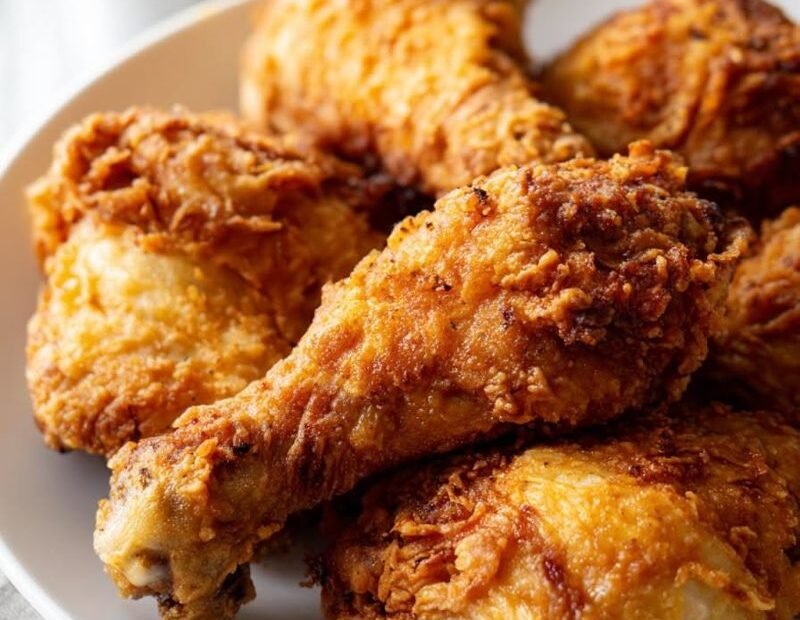
My first attempt at fried chicken produced something best described as chicken-scented sadness: pale, greasy, with breading that slid off like a bad toupee. It took me a dozen batches to learn that crispy fried chicken is not about a secret ingredient. It is about temperature control, moisture management, and patience at every step.
How to make crispy fried chicken at home that actually crunches: brine it, dry it, dredge it right, fry it at the right temperature, and rest it properly. Here is the full method.
How Do I Make Crispy Fried Chicken at Home?
Start with a buttermilk brine, the foundation of juicy chicken. Soak bone-in pieces in buttermilk with salt (and hot sauce if you like heat) for 4-24 hours in the fridge. The acid tenderizes, the salt seasons deeply, and the buttermilk helps the coating adhere. After brining, and this is critical, let the chicken drain and come toward room temperature for 30 minutes, then pat the surface so it is tacky, not dripping. Wet chicken steams its coating off; tacky chicken grips it.
The dredge is where crispiness is built. How do I make crispy fried chicken at home with maximum crunch? Seasoned flour (flour plus salt, pepper, paprika, garlic powder, and a pinch of baking powder, which promotes browning and crispness), then the double-dredge for extra craggy coating: flour, back into buttermilk, back into flour, pressing firmly. Those craggy bits are the crunch. Some cooks add cornstarch (up to 25% of the flour) for an even crispier, lighter crust; it works beautifully.
- Buttermilk brine 4-24 hours. Tenderizes, seasons, helps coating stick.
- Dry to tacky before dredging. Wet = coating slides off. Tacky = grip.
- Seasoned flour + baking powder. Salt, pepper, paprika, garlic. Baking powder aids browning.
- Double dredge for crunch. Flour, buttermilk, flour. Press firmly for craggy bits.
- Oil at 325-350F, verified. Thermometer, not guessing. Temperature is everything.
- Do not crowd the pan. Crowding drops oil temp = greasy chicken. Batches.
- Dark meat first, longer. Thighs and drumsticks need 12-15 min; breasts 8-10.
- Rest on a rack, not paper. Paper steams the crust. Rack keeps it crisp.
Frying temperature is the make-or-break variable. Heat peanut or vegetable oil to 350F (use a thermometer; guessing is how greasy chicken happens), fry in uncrowded batches, and maintain 325-350F throughout. Too cool and the chicken absorbs oil; too hot and the crust burns before the inside cooks. Bone-in dark meat takes 12-15 minutes, breasts 8-10; verify with a thermometer (165F internal). Rest on a wire rack over a sheet pan, never on paper towels, which trap steam and soften the crust you worked for.
Troubleshooting: What Went Wrong
Breading falls off: the chicken was too wet going into the flour, or you skipped the rest after dredging (15 minutes of resting lets the coating hydrate and adhere). Greasy chicken: oil temperature too low, or overcrowding dropped it. Pale crust: oil not hot enough or not enough time; also, crowded pans steam instead of fry. Burnt outside, raw inside: oil too hot; lower to 325F and consider finishing in a 350F oven. Soggy after resting: rested on paper instead of a rack, or covered while hot (trapped steam is the enemy).
The oven-finish trick deserves mention: for very thick pieces, fry to golden (about 8 minutes) then finish in a 350F oven to 165F internal. You get the fried crust with guaranteed doneness, and it is how many restaurants handle the thickest cuts.
Quick Answers to Common Questions
What oil is best for frying chicken?
Peanut oil (high smoke point, neutral) is the classic. Vegetable, canola, or shortening all work. Avoid olive oil; its smoke point is too low and flavor too strong.
How do I keep fried chicken crispy?
Rest on a wire rack, never paper. Serve within an hour. Reheat in a 400F oven or air fryer, never the microwave, which destroys crispness.
Can I make crispy chicken without buttermilk?
Yes: regular milk with a tablespoon of vinegar or lemon juice per cup mimics buttermilk. Or use a saltwater brine. The acid tenderizing matters more than the specific dairy.
Why is my fried chicken greasy?
Oil temperature too low (below 325F) or overcrowding the pan. Both let oil soak in instead of crisping the crust. Thermometer and batches fix it.
My Fried Chicken Checklist
- Brine in buttermilk 4-24h. Season deeply, tenderize, aid adhesion.
- Dry to tacky, double dredge. Craggy coating = crunch.
- Oil at 325-350F, thermometer-verified. Temperature is the whole game.
- Fry in batches. Crowding = greasy. Patience = crispy.
- Rest on a rack. Never paper. Steam is the enemy.
What I Would Do Next
Batch twelve was the one: shatteringly crisp, juicy inside, the kind of crunch you hear across the room. My family now requests it monthly, and I have stopped ordering fried chicken out because mine is better. The secret was never an ingredient; it was the thermometer, the rack, and respecting every step. Crispy is a process, not a product.
How to make crispy fried chicken at home: brine, dry to tacky, double-dredge in seasoned flour, fry at 325-350F in batches, rest on a rack. Every step matters; none is difficult.
Buy the thermometer. Respect the temperature. Taste the crunch.
The resting step after dredging is the secret most recipes skip: after coating, let the dredged chicken rest on a rack for 15-20 minutes before frying. During the rest, the flour hydrates from the buttermilk underneath, forming a paste-like layer that adheres far better in hot oil. Skip the rest and the coating is dry powder that slides off on contact with oil; include it and the crust locks on. This single step fixed my sliding-breading problem permanently.
Oil management across batches matters too: after each batch, let the oil return to 350F before adding more chicken, and skim out fallen coating bits between batches with a slotted spoon. Burnt bits in the oil transfer bitter flavors and darken subsequent batches. And strain and save the oil if you fry often; properly strained frying oil keeps for several uses, stored cool and dark. Good oil stewardship makes frequent frying economical.
Related reading: How Do I Choose Between a Cruise and an All-inclusive Resort.
Related reading: How Do I Reseal a Driveway without Hiring a Contractor.
Related reading: What Is the Cheapest Way to Heat a Garage in Winter.
For official guidance, check out the FDA consumer food resources and USDA food safety guidance.



