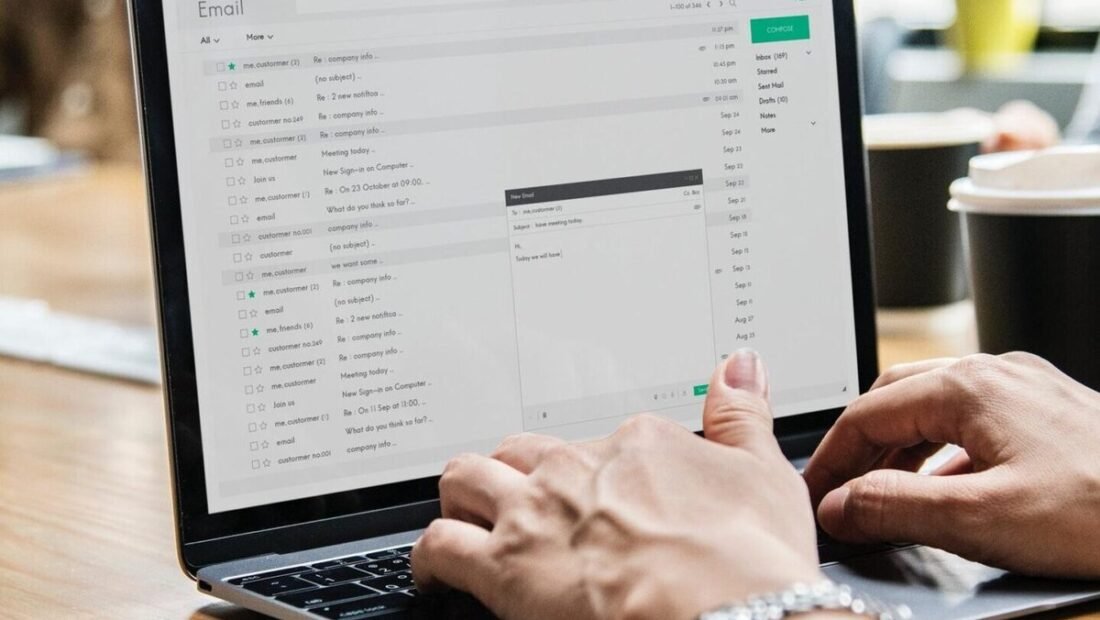
The proposal went out on Tuesday. It is now the following Monday morning, and your inbox has answered with a silence so complete it feels personal. So: how do you follow up with a potential client without becoming the person they quietly start avoiding? Here is the short answer first, in plain terms. Follow up on a calm schedule — roughly five to seven touches spread over three to four weeks — make absolutely every single message carry something useful or specific to them, keep each one short enough to read on a phone in twenty seconds, end with one small, easy question, and finish the whole sequence with a polite “closing the file” message that gives them permission to say no. Persistence done this way is not annoying. It is, most of the time, simply how business gets won — because the silence you are staring at is almost never a rejection.
What the silence usually means
Start by discarding the story your anxiety is telling you. When a potential client goes quiet after a good conversation, the true reasons are unglamorous: your email is sitting under forty others, the decision needs a partner or a finance person who is away, a bigger fire took the week, or the project slid from “this month” to “soon” without anyone telling you. People rarely ghost a proposal they actively disliked — they just say no, briefly. Silence is a scheduling fact, not a verdict. This matters practically, not just emotionally: a follow-up written by someone who assumes rejection sounds defensive and needy, while one written by someone who assumes a busy week sounds professional and easy to answer. Write the second kind.
A cadence that works: spaced, varied, finite
The exact pattern matters less than its three properties. It is spaced — days apart, widening as the sequence goes on, never two chases in one day. It is varied — each message comes from a different angle rather than repeating the same ask in new words. And it is finite — the sequence has an end, which you will signal clearly, so the client never feels hunted by an endless drip. A typical shape: a short nudge two or three days after the proposal; a value message around the one-week mark; a different-angle message a week later; a check-in with a genuine new reason near week three; and a closing message at about a month. Five touches over four weeks reads as organized. The same five touches inside one week reads as desperation — because it signals that you need the work more than they need the result, which quietly lowers your price before you have even been hired.
What to put in each message
Every follow-up should contain three things, and most contain none of them. Something specific: a reference to their situation — the launch date they mentioned, the problem in their own words, the team member who will use the thing. Specificity proves the message is for them, not a template blasted at twenty prospects. Something useful: a relevant article, a quick observation about their website or process, an answer to a question adjacent to the one they asked, a short example of a similar problem solved. It does not need to be large. It needs to make the reader marginally better off for having opened the email — that is the entire difference between following up and pestering. (It is also the skill behind winning the client in the first place: our guide to how to find your first clients as a new consultant covers the conversations that come before the proposal.) And one small next step: not “let me know your thoughts” — which asks them to do your thinking for you — but a question answerable in five words: “Does Thursday at 10 still work for a quick call?” “Should I send the two-option version?” “Is this parked until January, or dead?” Small questions get answers; open-ended ones get postponed.
The message that gets the most replies: the last one
The highest-responding follow-up in most salespeople’s experience is the closing message, sent when the sequence ends. It goes something like this: “I’ve sent a few notes about the proposal and I don’t want to keep filling your inbox, so I’ll close the file on this for now. If it becomes a priority later, just reply to any of these and we’ll pick it up.” Three things make it work. It removes pressure completely, which makes replying safe. It creates a gentle deadline — now is the moment to speak or lose the thread. And it is genuinely courteous, so even the “no” it earns usually arrives warm, with a reason and an open door. A clear no is a good outcome, by the way. It frees your time and your head, and the reason inside it — budget, timing, a competitor — is market information you could not have bought.
Three of the messages, written out
To make all of this concrete, here is the sequence at its three key points, for a consultant who has sent a proposal to redesign a company’s booking process. The first nudge (day 3): “Morning Sarah — just floating the booking proposal back up in case it has been buried. Everything in it still stands, including the March start. Happy to walk through the two options on a ten-minute call whenever suits.” Short, unbothered, and it repeats the two facts that matter: what it is, and when it starts. The value message (day 9): “Sarah — I was looking at your current booking page ahead of our decision and noticed the confirmation email doesn’t include a change-my-booking link, which is probably where a share of the phone calls your team mentioned come from. That’s an easy fix inside the proposal either way, but worth knowing. Shall I hold the March slot until Friday, or is timing slipping?” Every element from the section above is in there: something specific, something genuinely useful given away free, and a five-word question at the end. The closing message (day 28): as written in the section above — polite, final, and easy to answer with yes, no, or later. Notice what none of the three contains: an apology for existing, a complaint about silence, or the phrase “just checking in.” Adapt the shape, write your own content, and the sequence will never read like a script even when it follows one.
What actually makes follow-up annoying
Annoyance has specific causes, and none of them is the mere fact of writing again. It is the empty bump — “just checking in,” “circling back,” “floating this to the top of your inbox” — which costs the reader time and gives them nothing, repeatedly. It is guilt and grievance: “I’ve written four times now…” It is fake urgency and invented deadlines. It is the immediate chase, the message sent the same afternoon as the proposal. And it is sameness: five identical asks teach the reader that opening your emails is never rewarded. Avoid those five habits and you can follow up more often than your competitors dare — free help is available for the wider selling craft, incidentally, from SCORE’s free mentoring for small business owners, whose mentors have sat through decades of exactly these silences.
Quick answers to the questions everyone asks
How many follow-ups is too many? With the spacing and variety above, five to seven touches over about a month is normal professional practice, not harassment. The number is rarely the problem; empty repetition is.
What if they said “not now”? Believe them, ask what “later” looks like, and put one reminder at that date — a single message, referencing their timing. Following up once at the moment they themselves named is the least annoying message in the world.
Email, phone, or LinkedIn? Email is the default because it can be answered in the reader’s own time. A call is fair game if the relationship is already phone-based. LinkedIn works as a light variation late in the sequence — not a second front opened in week one.
What if they reply with a complaint about the chasing? Apologize once, briefly, mean it, and stop. One graceful exit costs you nothing; arguing costs you the reputation with everyone they ever mention it to.
The mindset underneath the method
Follow-up works when it is built on a true belief: that the client has a problem you can solve, and that your message is a service to a busy person — a reminder, a shortcut, a piece of help — rather than a demand on their attention. Write every touch so that even if they never hire you, they are slightly glad you sent it. Do that, on a calm and finite schedule, and the silence after Tuesday’s proposal stops being a wall. It becomes what it usually was all along: a busy person’s crowded inbox, waiting for the easiest reply they will get all week.