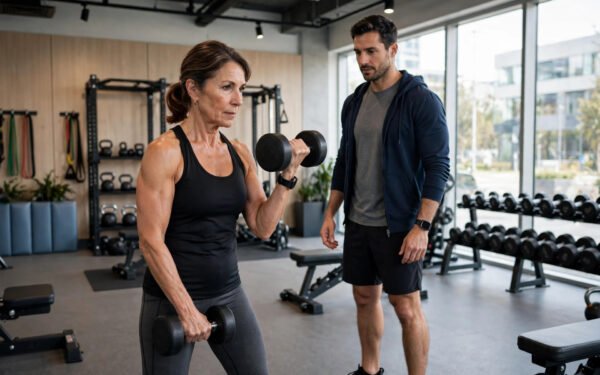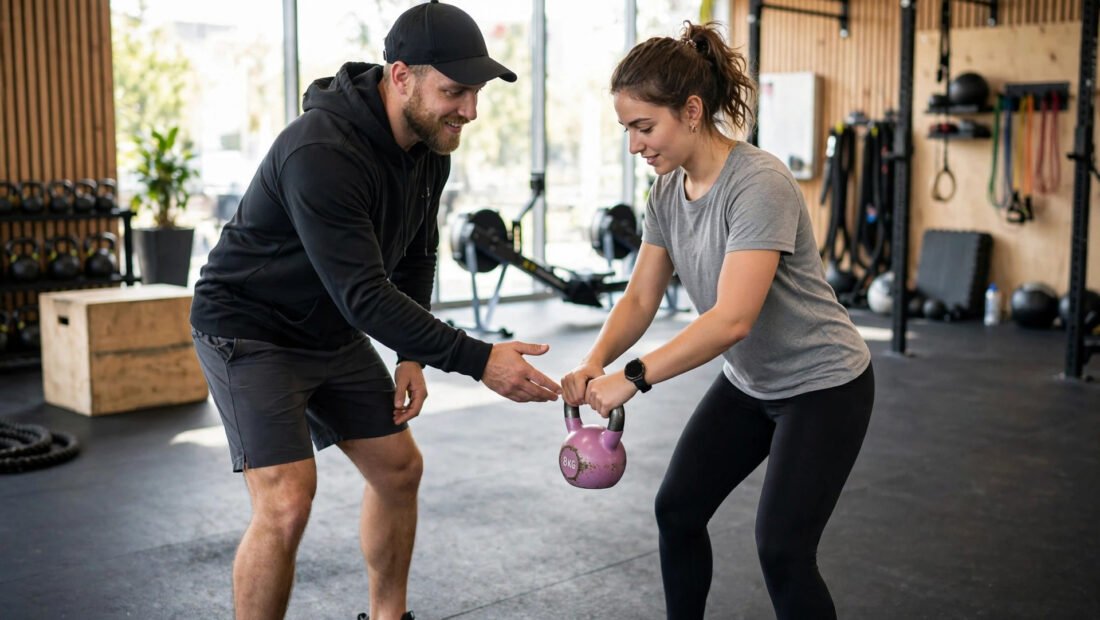
Every CrossFit conversation starts with someone saying it wrecks your joints, usually someone who has never set foot inside a box. The warning sounds confident, and it contains just enough truth to be misleading. CrossFit can hurt people when coaching is poor and beginners are pushed too hard. It can also be a safe, well-scaled place for a complete beginner to get stronger, including in Houston, Austin, and Dallas. The honest answer depends less on the name over the door than on what happens in the room, so the questions below work through it the way a newcomer actually worries about it.
What Is CrossFit, Once You Strip Away the Stereotype?
CrossFit is constantly varied functional movements performed at high intensity. A typical program mixes weightlifting, gymnastics-style bodyweight work, and cardio into daily workouts known as WODs. None of that is exotic on its own. Squats, presses, hinges, running, and rowing are ordinary training ingredients, and the mix changes from day to day rather than repeating one fixed routine.
The risk lives in one specific combination: intensity plus complexity plus fatigue. A technical Olympic lift performed fresh is one thing. The same lift performed for time, exhausted, on a high rep late in a workout is another, because tired form breaks down and breakdown is where injuries happen. That distinction is the key to the whole safety question. A good beginner program removes exactly those risk factors. There are no timed heavy technical lifts, no max-effort attempts, and movements are scaled down, with coaches watching every rep. A bad program throws a newcomer into the regular class on day one and counts shouting as coaching.
What Do the Injury Numbers Actually Say?
Peer-reviewed research on CrossFit injury rates lands around 2–4 injuries per 1,000 training hours. That range is comparable to recreational weightlifting and lower than most team sports such as soccer or basketball. Shoulders, lower back, and knees top the list of injury sites, and the common causes are predictable: lifting too heavy with poor form, an inadequate warm-up, and returning from an injury too aggressively.
Two findings matter most for a beginner. First, injury risk tracks closely with coaching quality and scaling. Beginners at gyms with structured on-ramp programs get hurt far less than drop-ins thrown straight into advanced classes. Second, a previous injury is the strongest predictor of a new one, which is why being honest with a coach about your history is not optional paperwork. It directly shapes what you should and should not be given to do in your first months. General guidance for adults supports vigorous exercise, and the American Council on Exercise’s fitness resources is a solid place to read about training intensity and progression in plain terms. The open question was never whether intensity can be healthy. It is whether a given gym manages that intensity responsibly.
How Can You Spot a Bad Box Before You Sign?
Visit before you commit, and watch a full class rather than taking a tour at a quiet hour. Walk away if there is no on-ramp or foundations course. Legitimate boxes require beginners to complete several sessions learning basic movements before joining regular classes. A gym that lets you jump straight into an advanced named workout on day one has told you everything about its priorities.
Test the coaching with one question. Ask what a 55-year-old beginner would do instead of a muscle-up. A good coach answers instantly with scaled options. A poor one tells you to just try your best. Watch the room as well. If rounded-back deadlifts get cheered because the clock is running, the culture values intensity over safety, and culture is set by the head coach. It will not change for you. Two more warnings round out the picture. A proper intake asks about injuries, medical conditions, and experience, so a gym that skips those questions is not individualizing anything. And pressure to sign a long contract on the spot is a tell: confident gyms offer trial weeks or month-to-month starts because they expect you to stay.
What Does a Good Beginner Experience Look Like?
The gold standard is a foundations course of 4–8 sessions covering squats, hinges, presses, and basic gymnastics, with a coach correcting your positions on every rep. After that, in regular classes, expect the coach to offer scaled versions before you have to ask, to cap your weights when your form wavers, and to check in about how you feel rather than only about your time or score.
Learn one distinction early, because it guides almost every decision in your first months. Soreness is dull, felt on both sides, and fades in 48–72 hours. Pain is sharp, one-sided, or specific to a joint, and it is a stop signal, not something to train through. Speak up when you feel the second kind, and expect a good coach to adjust the workout on the spot. Class size matters here too. A coach watching 20 athletes cannot see your deadlift form. A coach watching 10 can. Smaller classes cost more, and for your first six months that difference is worth paying for. If training at home on off days appeals to you, the best home workout routine for building muscle pairs sensibly with coached sessions, as long as the home work stays light enough to leave you fresh for class.
What About Rhabdo and the Scary Stories?
Rhabdomyolysis, shortened to rhabdo, is a condition where extreme exertion breaks down muscle tissue to a dangerous degree. It is real and serious. It is also extremely rare, and it occurs almost exclusively when deconditioned people perform maximal eccentric exercise without scaling, the classic example being a huge set of pull-ups on a first day. In other words, the scary stories nearly always trace back to the exact failure a good beginner program is built to prevent.
A responsible coach prevents it the same way other injuries get prevented: scale the volume for beginners, enforce rest, and watch for warning signs such as cola-colored urine or extreme swelling. You can test this directly. Ask the head coach how the gym handles rhabdo prevention. A knowledgeable, specific answer is a green flag. A blank stare is a reason to keep looking at other gyms.
Do You Need to Be Fit Before You Start?
No. Getting fit first is not a prerequisite, because scaling exists precisely to meet you at your current level. Every workout can be adjusted, in load, in movement choice, and in volume. The only real prerequisite is a gym willing to do that adjusting properly, which is exactly what the on-ramp process reveals. A foundations course is a test of the gym as much as it is training for you.
How Often Should a Beginner Train?
Start with 2–3 sessions a week, with rest days between them. Connective tissue adapts more slowly than enthusiasm, and jumping to 4–5 days a week too fast is the classic beginner injury pathway. A realistic shape for the early months helps. Early on, expect a foundations course plus 2–3 scaled classes a week, where everything feels challenging but controlled and you leave energized rather than destroyed. After that, build gradually toward 3–4 classes a week, start tracking your weights, and keep learning the difference between productive discomfort and a warning sign. By around the end of that ramp, you will know whether the programming, the coaching, and the community fit you.
Is CrossFit Bad for Your Joints?
Not inherently. With good coaching, injury rates sit in line with other recreational exercise, and joints are not singled out for damage by the method itself. The highest-risk element is high-rep Olympic lifting performed under fatigue, which is why a good coach scales or substitutes those movements for beginners instead of handing over a heavy barbell and a running clock. Joint trouble in beginners usually comes from load and volume rising faster than technique, and both of those are coaching decisions. If pain shows up, especially sharp or joint-specific pain, the general guidance is simple: scale back, tell the coach, rest, and see a doctor if it persists rather than pushing through it.
What Should You Eat Before a Workout?
Keep it familiar. A normal meal with carbohydrates and some protein, eaten 2–3 hours before class, works well. If you need something closer to the session, a light snack such as a banana or toast 30–60 minutes beforehand is a sensible option. Avoid training fasted as a beginner. Low blood sugar combined with high intensity is a miserable mix, and it makes learning new movements harder at exactly the moment you need your attention on form.
How Much Does CrossFit Cost in Texas?
Typical Texas boxes charge $130–$200 a month for unlimited classes, and foundations courses often run $100–$200 on top of that or as a starting package. That is pricier than a big-box gym, and the reason is straightforward: you are paying for coaching, programming, and small-group attention, not just access to equipment. Weighed against the safety picture above, the coaching is the product. A cheaper membership at a gym with no on-ramp and crowded classes is not the same purchase at a lower price. It is a different and riskier one.
So, Is It Safe for a Beginner With No Gym Experience?
Yes, when three conditions hold. The gym runs a real on-ramp program. The coaches scale aggressively and correct form without letup. And you, the beginner, check your ego at the door, speak up about pain, and treat the early months as school rather than sport. The method itself is not the variable. The coaching is. Tour two or three boxes in your Texas city, watch how each one treats its newest members, and trust what you see over what a website promises. Handled that way, a beginner can reasonably expect to be stronger, fitter, and more capable after a few months than most unsupervised gym routines would deliver, without the wrecked joints of the standard warning story.