
How much phone storage do I need for photos and apps? It’s a fair question, and the honest answer is: it depends — but not in the annoying way. It depends on a handful of specific factors, and once you know what they are, you can figure out your situation in about five minutes. That’s what this article is for.
I’ve seen too many people overpay, waste a weekend, or pick the wrong option simply because nobody gave them the full picture. So here it is: the full picture, written like I’d explain it to a friend over coffee.
How Much Phone Storage do I Need for Photos and Apps: What You Need to Know
Standing in the phone aisle, the storage question always feels like a gamble: 128GB is cheaper, but will you regret it in a year? Here’s the practical math. For most people in 2026, 128GB is the comfortable minimum, 256GB is the sweet spot, and 512GB is for specific power users. Let’s figure out which one you are.
Start with the system itself: iOS or Android plus preinstalled apps eats 15 to 25GB before you install anything. Your essential apps — social media, banking, maps, music — add another 10 to 20GB, and they grow over time as caches accumulate. So a 128GB phone really gives you about 85 to 100GB of usable space. That’s the number to plan around. For more on this topic, see How do I Change my Home Wifi Password — it pairs well with what you just read.
The Part Most People Miss
Photos are the big variable. A typical smartphone photo is 3 to 5MB, but if you shoot in high-resolution or ProRAW modes, individual shots hit 25 to 75MB each. The average person takes about 1,000 to 1,500 photos a year — at normal quality that’s only 5 to 7GB annually, trivial. But 4K video is the real storage monster: one minute of 4K footage eats about 400MB, so a 10-minute birthday video is 4GB gone in a flash. For the official guidance, see Consumer Reports’ buying advice.
Here’s my rule of thumb by user type. Light users — mostly calls, texts, browsing, under 500 photos a year, streaming music instead of downloading — are genuinely fine with 128GB. Average users — active photo-takers, some downloaded playlists and podcasts, a couple of games — should get 256GB for breathing room. Heavy users — 4K video shooters, offline media hoarders, mobile gamers with 10GB titles — need 512GB or aggressive cloud management.
Smart Moves to Make Now
- 128GB: fine for light users; ~85–100GB actually usable after system and apps.
- 256GB: the sweet spot for most people — worth the usual $100 upgrade.
- 512GB: for 4K video shooters, offline media hoarders, heavy mobile gamers.
- 4K video is the storage killer: ~400MB per minute vs 3–5MB per photo.
- Cloud photo backup (iCloud/Google Photos) lets a 128GB phone hold a huge library.
- Keep 10–15% free — full phones run slower and can’t install updates.
What Actually Affects the Outcome
The cloud changes the equation enormously. With iCloud, Google Photos, or similar set to back up and offload originals, your phone keeps lightweight previews while full files live online — a 128GB phone can comfortably hold a 50,000-photo library this way. The catch: you need reliable internet to view full-resolution originals, and the cloud subscription itself costs $1 to $10 a month. Factor that into the ‘cheaper phone’ math.
Price-wise, the jump from 128GB to 256GB is usually $100 — the single best-value upgrade on any phone, and I recommend it to almost everyone. The jump to 512GB is often another $200, which is harder to justify unless you know you’re a heavy user. Manufacturers price storage upgrades steeply because they can; don’t pay for space you’ll never fill. Worth reading next: What Should I Look for When Buying a Used Ipad.
One more consideration: resale value. Higher-storage phones hold their value noticeably better on the used market — a 256GB model often resells for $50 to $80 more than the 128GB version, recovering over half the upgrade cost. And phones with full storage run slower, since the system needs free space for updates and virtual memory. Keeping 10 to 15 percent free isn’t just tidy, it’s functional.
Common Mistakes to Avoid
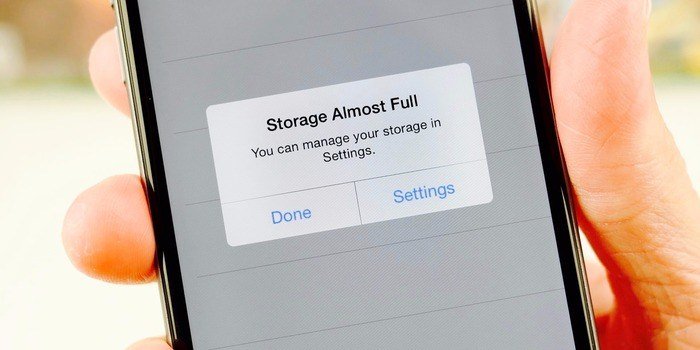
- Buying 128GB to save $100, then paying for cloud storage and fighting ‘storage full’ warnings for two years.
- Paying $200 extra for 512GB ‘just in case’ when 256GB plus cloud backup would do.
- Forgetting that 4K video — not photos — is what actually fills phones.
- Assuming you can add storage later; most modern phones have no SD card slot, so the decision is permanent.
Questions People Ask
Is 64GB enough in 2026?
Barely, and I don’t recommend it. After the system and basic apps, you’d have ~40GB left — one iOS update plus a few apps and you’re managing storage constantly.
Does cloud storage completely solve small phone storage?
Mostly, for photos and videos. But apps, games, and downloaded media still need local space, and you need internet to access cloud originals.
Why is phone storage so expensive to upgrade?
Manufacturers charge far above the actual cost of flash memory — it’s one of their highest-margin upsells. That’s exactly why choosing wisely upfront matters.
How often should I restart my phone and computer?
A weekly restart is a good habit for both phones and computers. It clears temporary memory glitches, finishes pending updates, and kills runaway background processes that drain battery and slow things down. You don’t need to power off nightly — modern devices handle standby well — but if something starts acting strangely, a restart is always the first troubleshooting step worth trying.
Is it safe to buy refurbished electronics?
Yes, when you buy from reputable sources. Manufacturer-refurbished programs (Apple, Dell, Samsung) include new batteries or thorough testing plus a full one-year warranty — often indistinguishable from new. Third-party refurbishers like Back Market add their own warranties. Avoid no-name sellers with 30-day warranties and no return policy; the seller matters more than the ‘refurbished’ label.
The Bottom Line
Get 256GB — the $100 step up from 128GB is the best-value upgrade on any phone and covers nearly everyone comfortably. Go 512GB only if you shoot lots of 4K video or hoard offline media. Pair any choice with cloud photo backup and keep 10–15 percent free for the phone to run well.
For more on this topic, see Is it Worth Hiring a Bookkeeper for a Small Business — it pairs well with what you just read.
The takeaway is simple — know your options before you’re forced to pick one under pressure. Bookmark this guide, follow the action plan, and you’ll handle it like a pro.



